Xuan Do Thi Minh, Yeh I-Jeng, Liu Hsin-Liang, Su Che-Yu, Ko Ching-Chung, Ta Hoang Dang Khoa, Jiang Jia-Zhen, Sun Zhengda, Lin Hung-Yun, Wang Chih-Yang, Yen Meng-Chi
Faculty of Pharmacy, Van Lang University, 69/68 Dang Thuy Tram Street, Ward 13, Binh Thanh District, Ho Chi Minh City 70000, Vietnam.
Department of Emergency Medicine, Kaohsiung Medical University Hospital, Kaohsiung Medical University, Kaohsiung 80708, Taiwan.
Int J Med Sci. 2025 Jan 1;22(1):1-16. doi: 10.7150/ijms.100696. eCollection 2025.
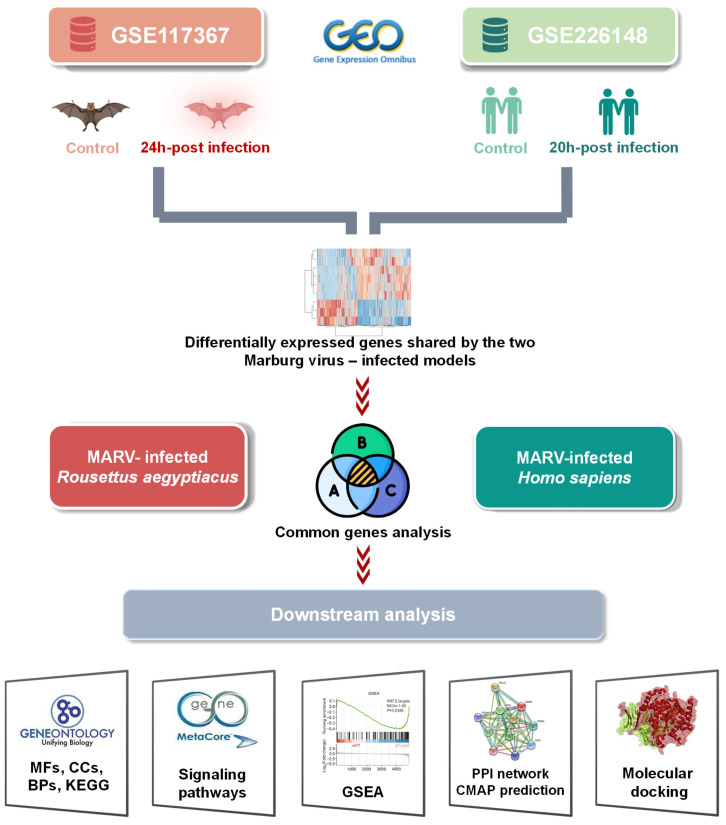
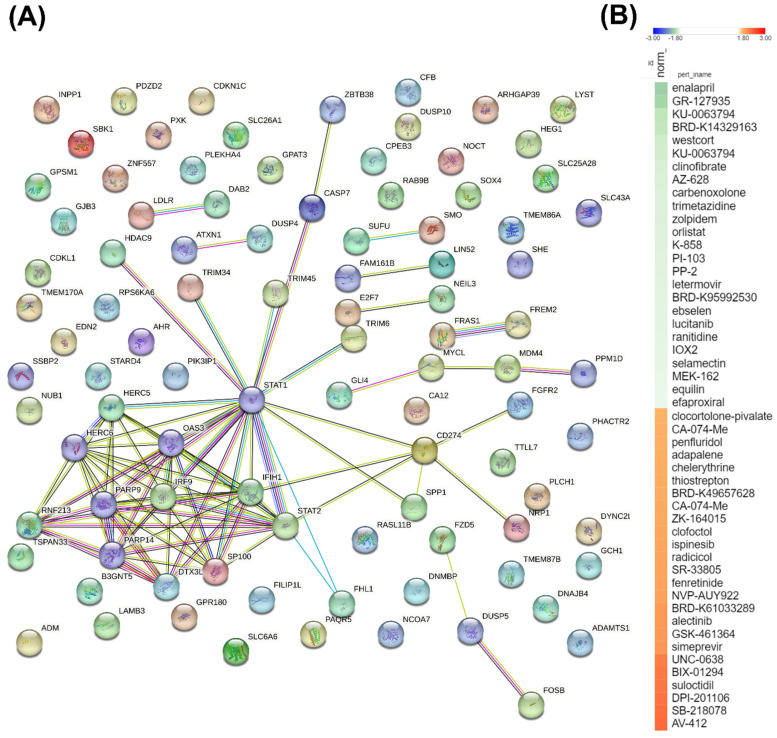
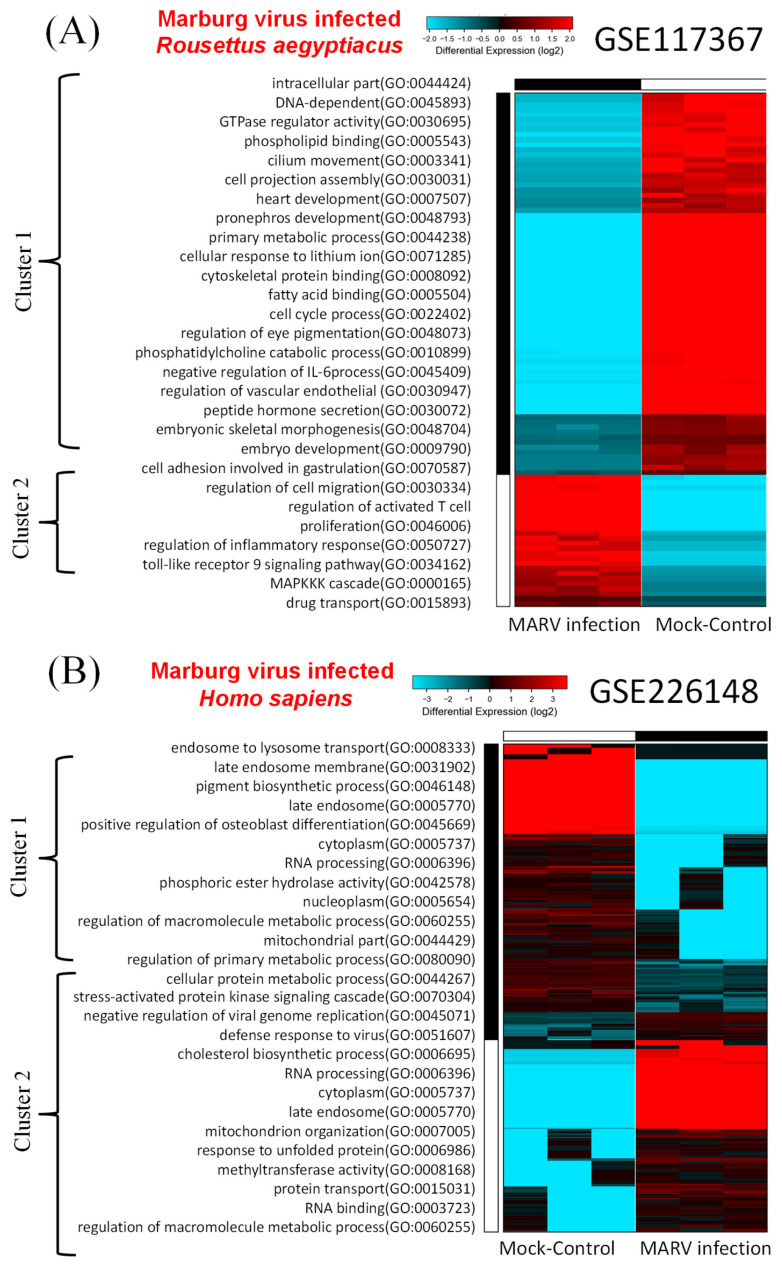
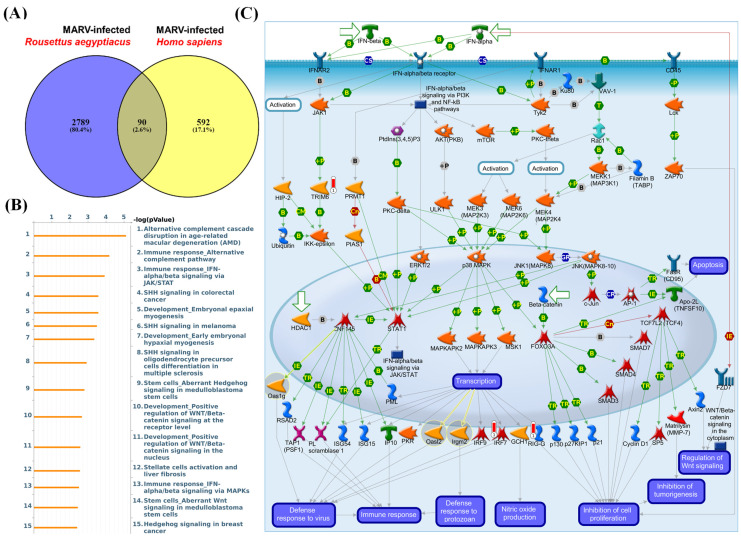
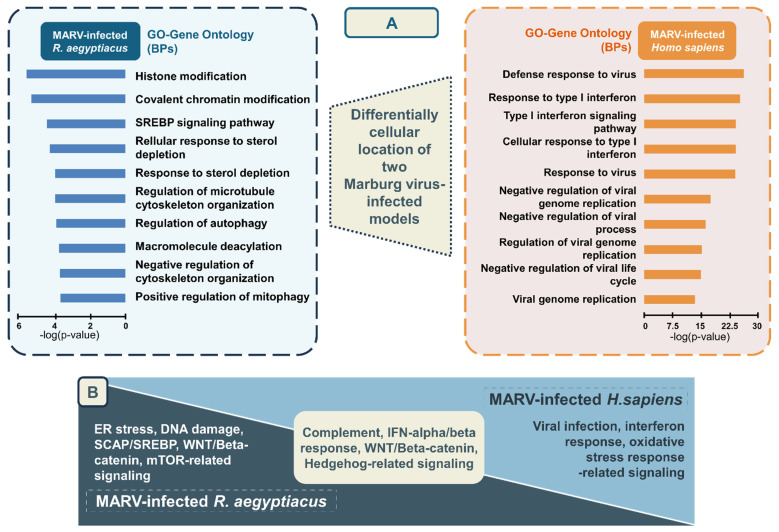
Marburg virus (MARV) disease (MVD) is an uncommon yet serious viral hemorrhagic fever that impacts humans and non-human primates. In humans, infection by the MARV is marked by rapid onset, high transmissibility, and elevated mortality rates, presenting considerable obstacles to the development of vaccines and treatments. Bats, particularly , are suspected to be natural hosts of MARV. Previous research reported asymptomatic MARV infection in bats, in stark contrast to the severe responses observed in humans and other primates. Recent MARV outbreaks highlight significant public health concerns, underscoring the need for gene expression studies during MARV progression. To investigate this, we employed two models from the Gene Expression Omnibus, including kidney cells from and primary proximal tubular cells from . These models were chosen to identify changes in gene expression profiles and to examine co-regulated genes and pathways involved in MARV disease progression. Our analysis of differentially expressed genes (DEGs) revealed that these genes are mainly associated with pathways related to the complement system, innate immune response via interferons (IFNs), Wnt/β-catenin signaling, and Hedgehog signaling, which played crucial roles in MARV infection across both models. Furthermore, we also identified several potential compounds that may be useful against MARV infection. These findings offer valuable insights into the mechanisms underlying MARV's pathophysiology and suggest potential strategies for preventing transmission, managing post-infection effects, and developing future vaccines.
马尔堡病毒(MARV)病(MVD)是一种罕见但严重的病毒性出血热,可感染人类和非人类灵长类动物。在人类中,MARV感染的特点是发病迅速、传播性高和死亡率上升,这给疫苗和治疗方法的开发带来了巨大障碍。蝙蝠,尤其是 ,被怀疑是MARV的自然宿主。先前的研究报告了蝙蝠中无症状的MARV感染,这与在人类和其他灵长类动物中观察到的严重反应形成鲜明对比。最近的MARV疫情凸显了重大的公共卫生问题,强调了在MARV病程中进行基因表达研究的必要性。为了对此进行研究,我们使用了来自基因表达综合数据库的两个模型,包括来自 的肾细胞和来自 的原代近端肾小管细胞。选择这些模型是为了识别基因表达谱的变化,并检查参与MARV疾病进展的共调控基因和途径。我们对差异表达基因(DEG)的分析表明,这些基因主要与补体系统、通过干扰素(IFN)的固有免疫反应、Wnt/β-连环蛋白信号传导和Hedgehog信号传导相关的途径有关,这些途径在两个模型的MARV感染中都起着关键作用。此外,我们还确定了几种可能对MARV感染有效的潜在化合物。这些发现为MARV病理生理学的潜在机制提供了有价值的见解,并提出了预防传播、处理感染后影响和开发未来疫苗的潜在策略。