Sarsenova Meruert, Boggavarapu Nageswara Rao, Kask Keiu, Modhukur Vijayachitra, Samuel Külli, Karro Helle, Gemzell-Danielsson Kristina, Lalitkumar Parameswaran Grace Luther, Salumets Andres, Peters Maire, Lavogina Darja
Department of Obstetrics and Gynaecology, Institute of Clinical Medicine, University of Tartu, Tartu, Estonia.
Department of Women's and Children's Health, Division of Obstetrics and Gynecology, Karolinska Institutet, and Karolinska University Hospital, Stockholm, Sweden.
Front Endocrinol (Lausanne). 2024 Dec 18;15:1465393. doi: 10.3389/fendo.2024.1465393. eCollection 2024.
Endometriosis is characterized by the ectopic growth of endometrial-like cells, causing chronic pelvic pain, adhesions and impaired fertility in women of reproductive age. Usually, these lesions grow in the peritoneal cavity in a hypoxic environment. Hypoxia is known to affect gene expression and protein kinase (PK) activity. We aimed to explore the changes in the transcriptome and PK activity characteristic of eutopic and ectopic endometrium in endometriosis under hypoxia.
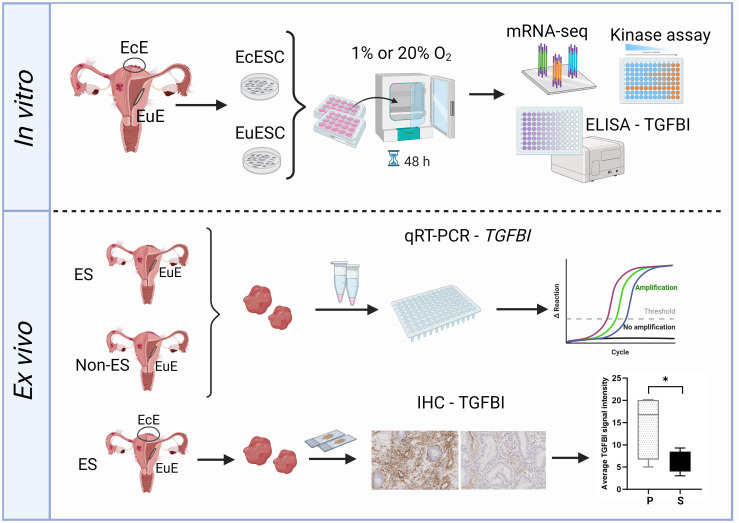
Eutopic (EuESCs) and ectopic (EcESCs) endometrial stromal cells were exposed to hypoxia (1% O) or normoxia (20% O) for 48 hours. We assessed PK activity and examined transcriptome using mRNA-seq in cells cultured under hypoxic or normoxic conditions. Enzyme-linked immunosorbent assay, quantitative reverse transcription-PCR and immunohistochemistry were performed for the downstream analysis of Transforming Growth Factor Beta Induced (TGFBI) expression.
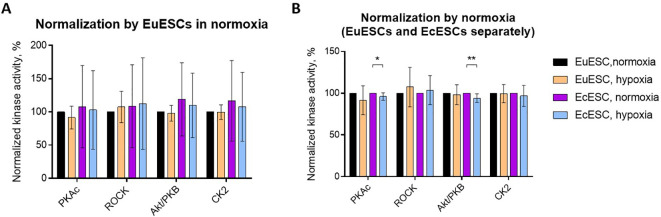
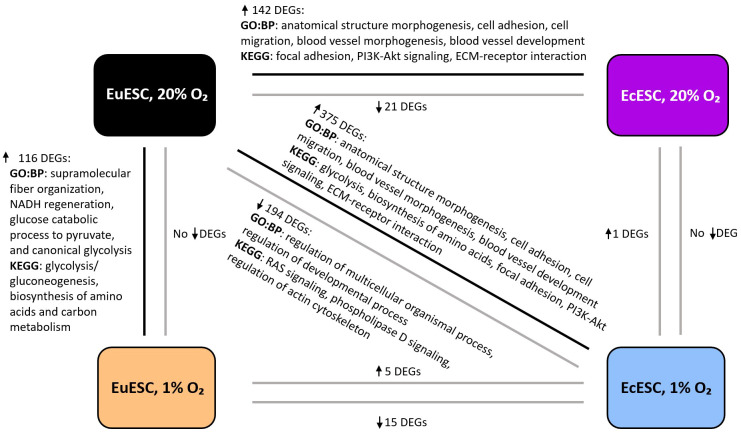
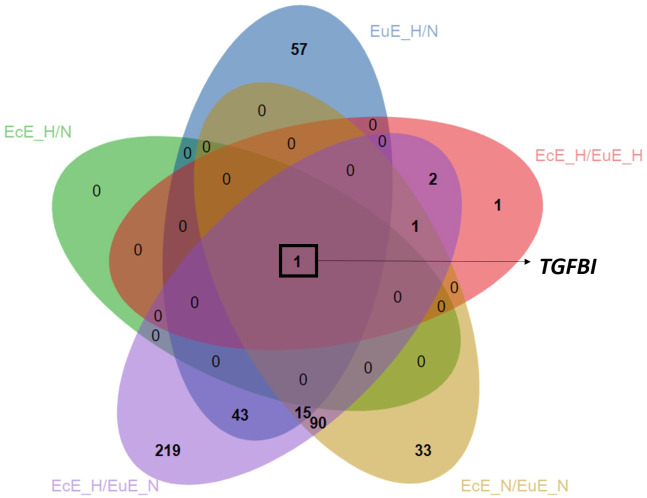
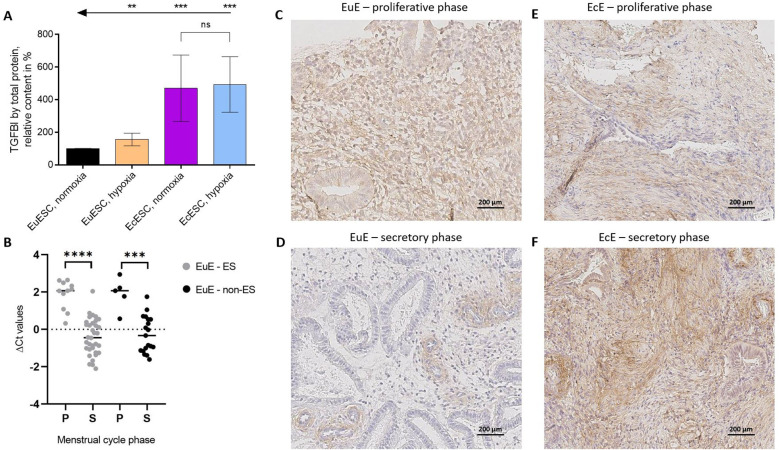
The kinase assay revealed a minor decrease in cAMP-dependent PK (PKAc) and Akt activity and a trend towards an increase in Rho-dependent PK (ROCK) activity in response to exposure to hypoxic conditions in EcESCs. A wider examination of the hypoxia-mediated changes in transcriptomes of cultured cells revealed that the genes related to aerobic glycolysis and cellular metabolism were upregulated in EuESCs exposed to hypoxia. In contrast, EcESCs had a single differentially expressed gene () upregulated under hypoxic conditions. This gene was also found to be overexpressed in EuESCs exposed to hypoxia vs normoxia, and in EcESCs vs EuESCs in normoxia. The level of secreted TGFBI in the spent culture media was accordingly high in the EcESC cultures and in the EuESC culture exposed to hypoxia. In the eutopic endometrial tissue biopsies, mRNA and protein expression depended on the menstrual cycle phase, with higher levels observed in the proliferative phase. TGFBI staining showed the protein localized to the stroma and around the blood vessels. In the secretory phase, TGFBI protein expression was stronger in ectopic endometrium compared to paired eutopic endometrium.
Within this study, we showed hypoxia-mediated transcriptome changes characteristic of EuESCs and EcESCs and identified TGFBI as a potential therapeutic target for endometriosis due to its role in fibrosis and angiogenesis.
子宫内膜异位症的特征是子宫内膜样细胞的异位生长,导致育龄期女性出现慢性盆腔疼痛、粘连和生育能力受损。通常,这些病变在腹膜腔的低氧环境中生长。已知低氧会影响基因表达和蛋白激酶(PK)活性。我们旨在探讨低氧条件下子宫内膜异位症中在位和异位子宫内膜的转录组变化及PK活性特征。
将在位(EuESCs)和异位(EcESCs)子宫内膜基质细胞暴露于低氧(1% O₂)或常氧(20% O₂)环境中48小时。我们评估了PK活性,并在低氧或常氧条件下培养的细胞中使用mRNA测序检测转录组。进行酶联免疫吸附测定、定量逆转录PCR和免疫组织化学以对转化生长因子β诱导(TGFBI)表达进行下游分析。
激酶测定显示,在低氧条件下,EcESCs中cAMP依赖性PK(PKAc)和Akt活性略有下降,而Rho依赖性PK(ROCK)活性有增加趋势。对培养细胞转录组中低氧介导变化的更广泛检测表明,在暴露于低氧的EuESCs中,与有氧糖酵解和细胞代谢相关的基因上调。相比之下,EcESCs在低氧条件下只有一个差异表达基因上调。该基因在暴露于低氧的EuESCs与常氧的EuESCs相比,以及在常氧条件下EcESCs与EuESCs相比时也被发现过表达。因此,在EcESC培养物和暴露于低氧的EuESC培养物中,用过的培养基中分泌的TGFBI水平较高。在在位子宫内膜组织活检中,TGFBI mRNA和蛋白表达取决于月经周期阶段,在增殖期水平较高。TGFBI染色显示该蛋白定位于基质和血管周围。在分泌期,异位子宫内膜中TGFBI蛋白表达比配对在位子宫内膜更强。
在本研究中,我们展示了低氧介导的EuESCs和EcESCs的转录组变化特征,并确定TGFBI因其在纤维化和血管生成中的作用而作为子宫内膜异位症的潜在治疗靶点。