Tang Xiaoxing, Sun Xin, Ji Yun, Huang Xuehua, Xiao Shilin, Zhou Yanjing, Ma Ke, Yuan Hongjie
Department of Radiology, Nantong Hospital of Traditional Chinese Medicine, Nantong Hospital to Nanjing University of Chinese Medicine, Nantong, China.
Department of Anesthesiology, Affiliated Hospital 2 of Nantong University, Nantong, China.
Front Chem. 2024 Dec 18;12:1503330. doi: 10.3389/fchem.2024.1503330. eCollection 2024.
Compression of the nerve root by a lumbar disc herniation can cause radiating pain in the lower limbs, and the nerve root decompression treatment may leave some patients with motor dysfunction and reduced sensory function. Studies have shown that nerve growth factor (NGF) can promote nerve growth and repair, but high doses, long duration, and immune response have become bottlenecks of its clinical application.
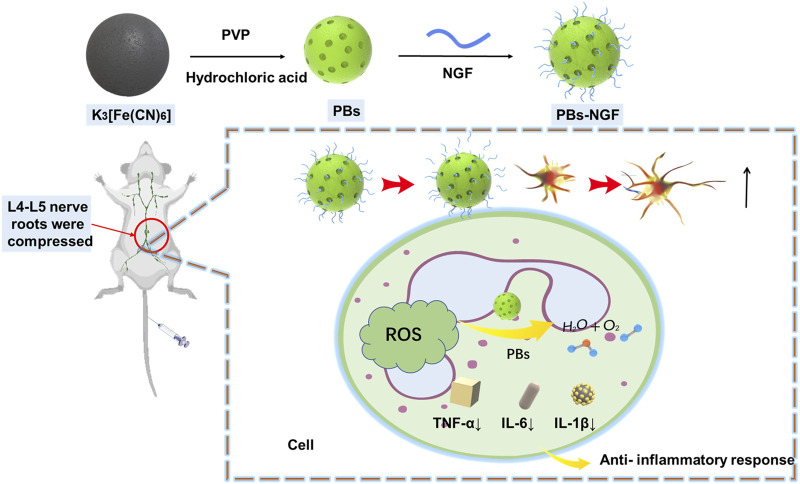
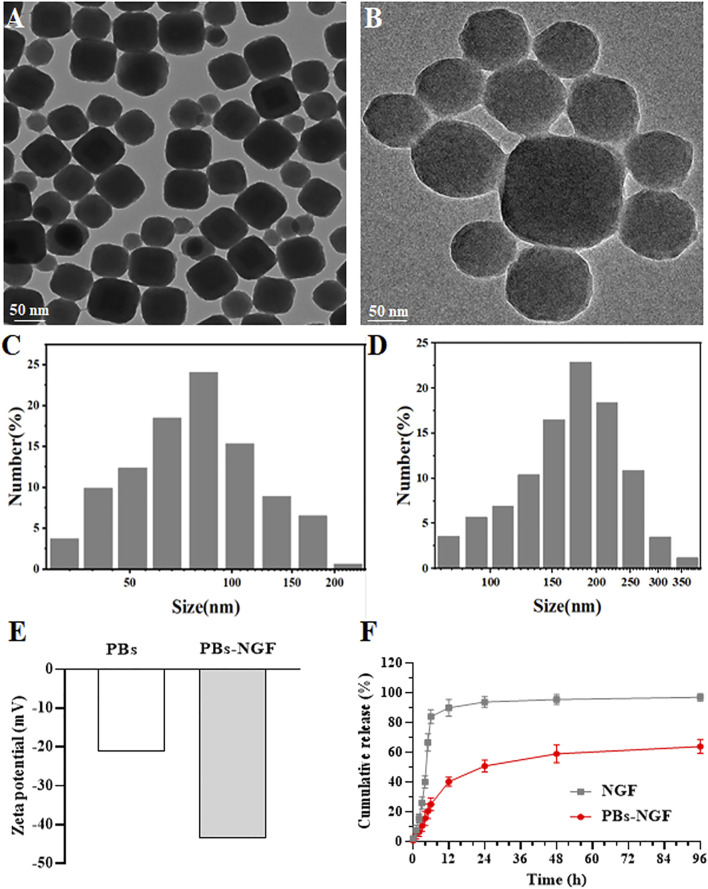
To overcome this obstacle, we developed Prussian blue (PBs) nanoparticles with the bio-delivery function and antioxidant effects of nanoenzymes. NGF was conjugated to the surface of PBs nanoparticles (PBs-NGF), which can be directly delivered to nerve cells.
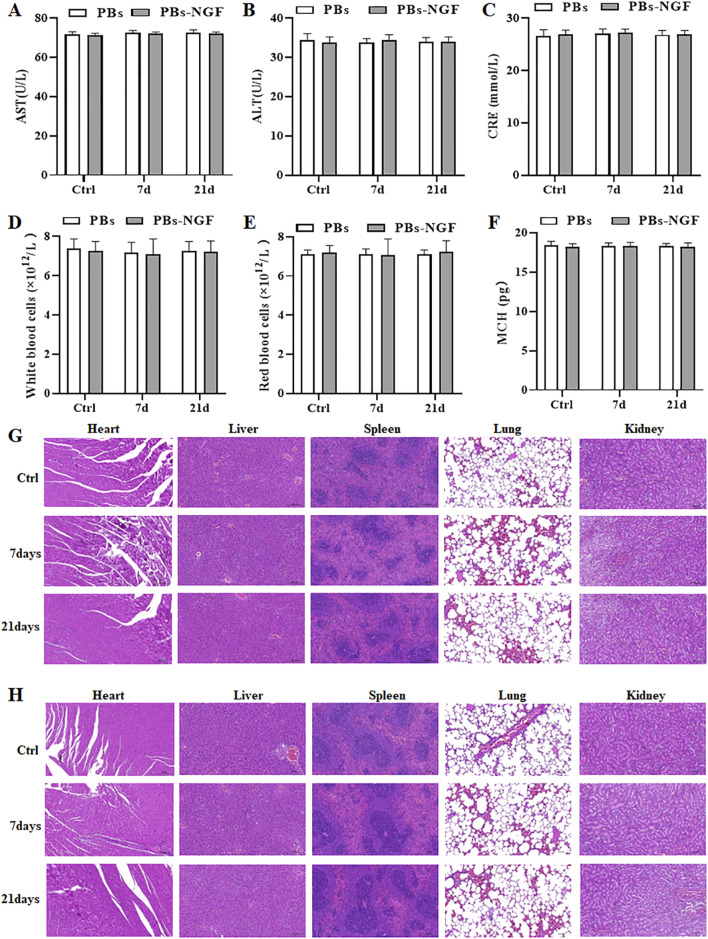
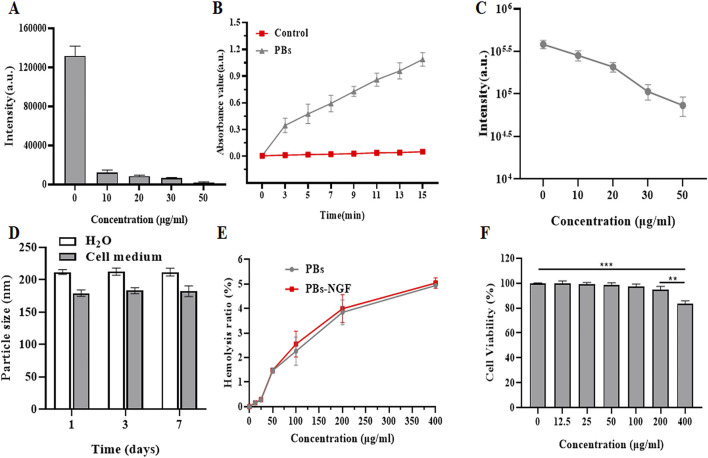
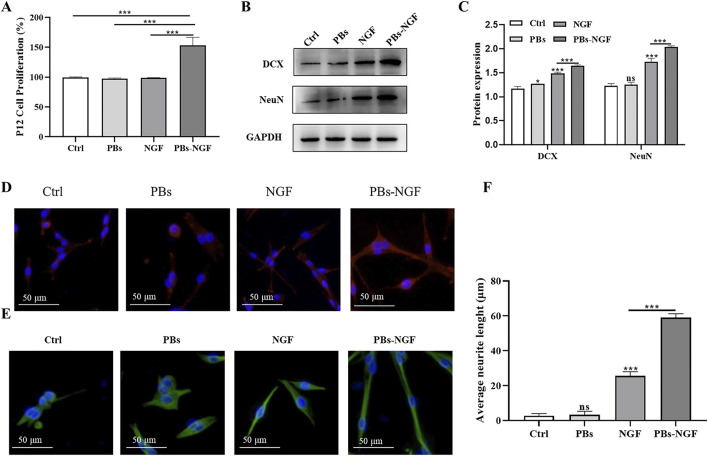
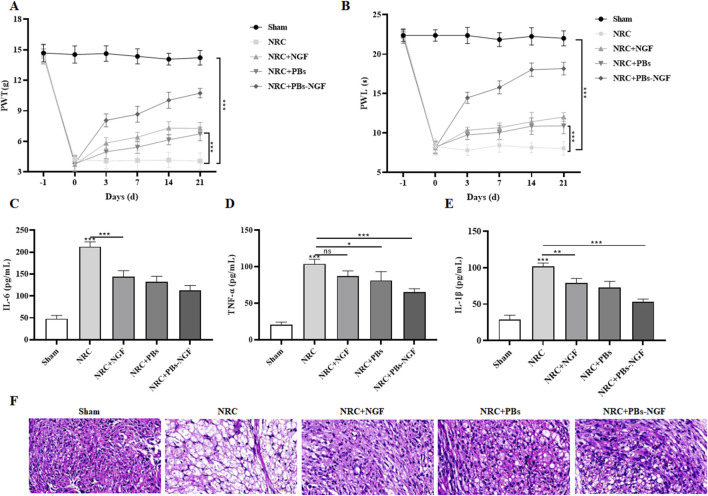
The results showed that free PBs showed great advantages in scavenging oxygen free radicals and antioxidants, while PBs-NGF showed good biocompatibility. At the cellular level, cell proliferation assay and fluorescence microscopy analysis confirmed that PBs-NGF significantly promoted the proliferation, differentiation, and neurite outgrowth of neuron-like PC12 cells compared with free NGF. In a nerve root compression (NRC) rat model, behavioral observations (paw withdrawal threshold, PWT, and paw withdrawal latency, PWL) confirmed that PBs-NGF eased the pain caused by nerve root compression. H&E staining showed that PBs-NGF could significantly reduce the inflammatory infiltration of nerve roots, and ELISA results showed that the concentrations of inflammatory markers (IL-6, IL-1β, and TNF-α) were also significantly reduced.
In summary, the developed functional nanoplatform provides a basis for the clinical application of NGF in lumbar nerve root injury with disc herniation compression and a new treatment strategy for patients.
腰椎间盘突出症导致的神经根受压可引起下肢放射性疼痛,神经根减压治疗可能会使一些患者出现运动功能障碍和感觉功能减退。研究表明,神经生长因子(NGF)可促进神经生长和修复,但高剂量、长时间使用以及免疫反应已成为其临床应用的瓶颈。
为克服这一障碍,我们开发了具有生物递送功能和纳米酶抗氧化作用的普鲁士蓝(PBs)纳米颗粒。将NGF偶联到PBs纳米颗粒(PBs-NGF)表面,其可直接递送至神经细胞。
结果表明,游离的PBs在清除氧自由基和抗氧化方面具有显著优势,而PBs-NGF具有良好的生物相容性。在细胞水平上,细胞增殖实验和荧光显微镜分析证实,与游离NGF相比,PBs-NGF显著促进了神经元样PC12细胞的增殖、分化和神经突生长。在神经根压迫(NRC)大鼠模型中,行为观察(缩爪阈值,PWT,和缩爪潜伏期,PWL)证实PBs-NGF减轻了神经根压迫引起的疼痛。苏木精-伊红(H&E)染色显示PBs-NGF可显著减轻神经根的炎症浸润,酶联免疫吸附测定(ELISA)结果表明炎症标志物(白细胞介素-6,IL-6,白细胞介素-1β,IL-1β,和肿瘤坏死因子-α,TNF-α)的浓度也显著降低。
综上所述,所开发的功能性纳米平台为NGF在腰椎间盘突出症压迫所致神经根损伤的临床应用提供了依据,并为患者提供了一种新的治疗策略。