Wang Bryan Z, Morsink Margaretha Aj, Kim Seong Won, Luo Lori J, Zhang Xiaokan, Soni Rajesh Kumar, Lock Roberta I, Rao Jenny, Kim Youngbin, Zhang Anran, Neyazi Meraj, Gorham Joshua M, Kim Yuri, Brown Kemar, DeLaughter Daniel M, Zhang Qi, McDonough Barbara, Watkins Josephine M, Cunningham Katherine M, Oudit Gavin Y, Fine Barry M, Seidman Christine E, Seidman Jonathan G, Vunjak-Novakovic Gordana
Department of Biomedical Engineering, Columbia University, New York, New York, USA.
Department of Genetics, Harvard Medical School, Boston, Massachusetts, USA.
J Clin Invest. 2025 Jan 2;135(1):e181630. doi: 10.1172/JCI181630.
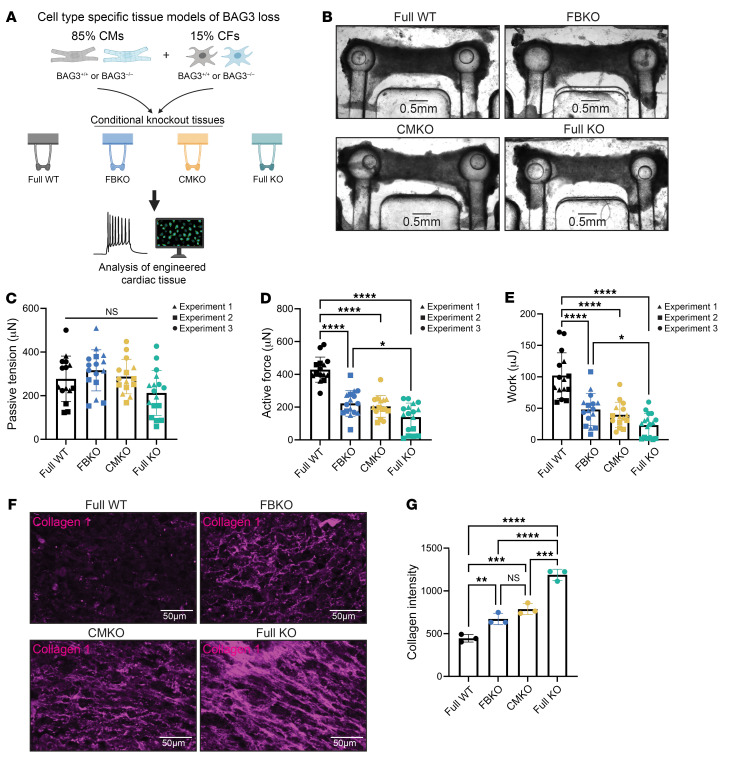
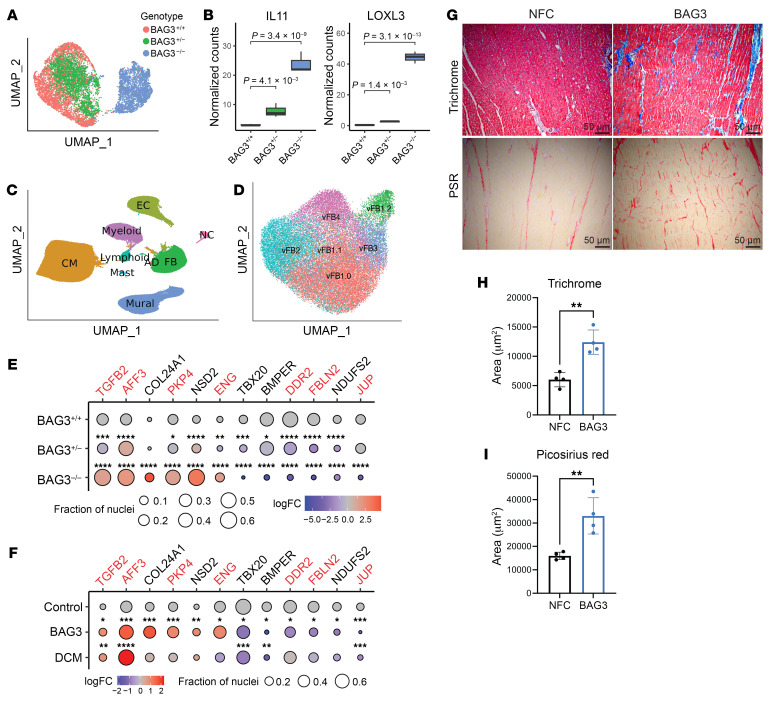
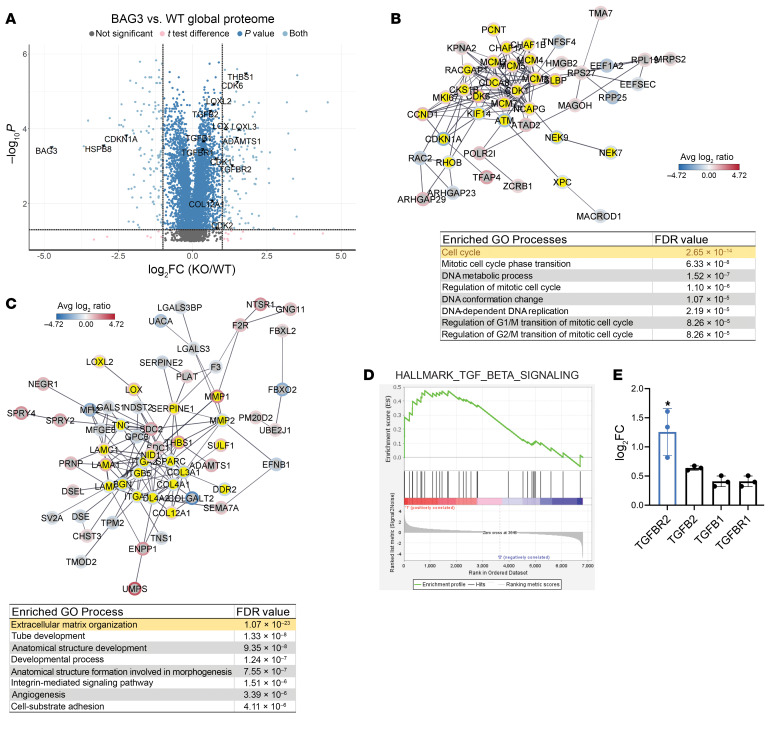
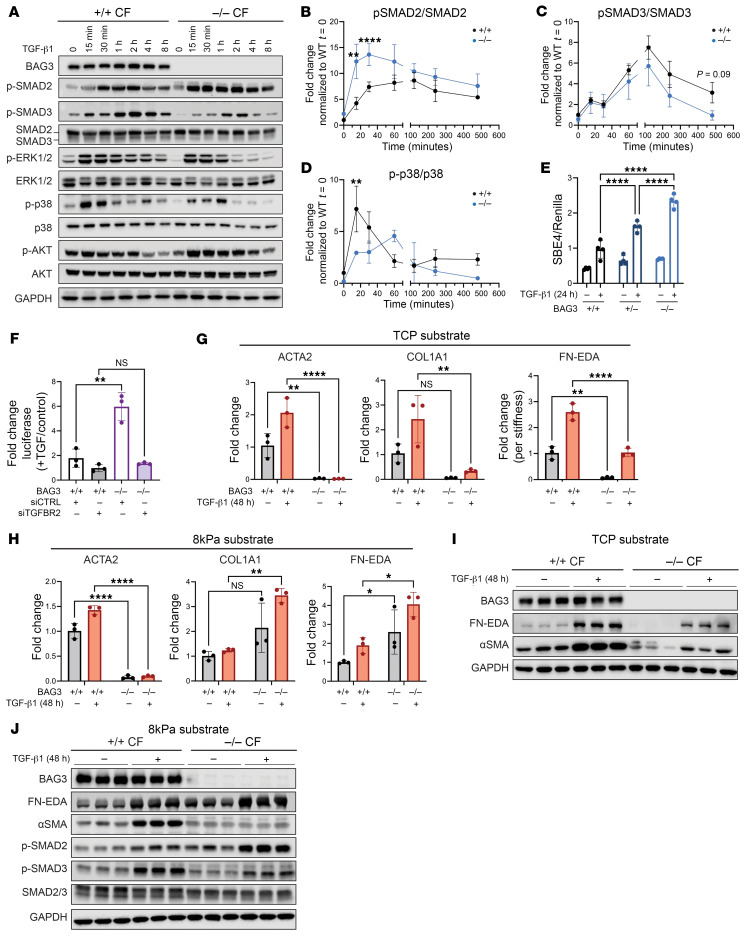
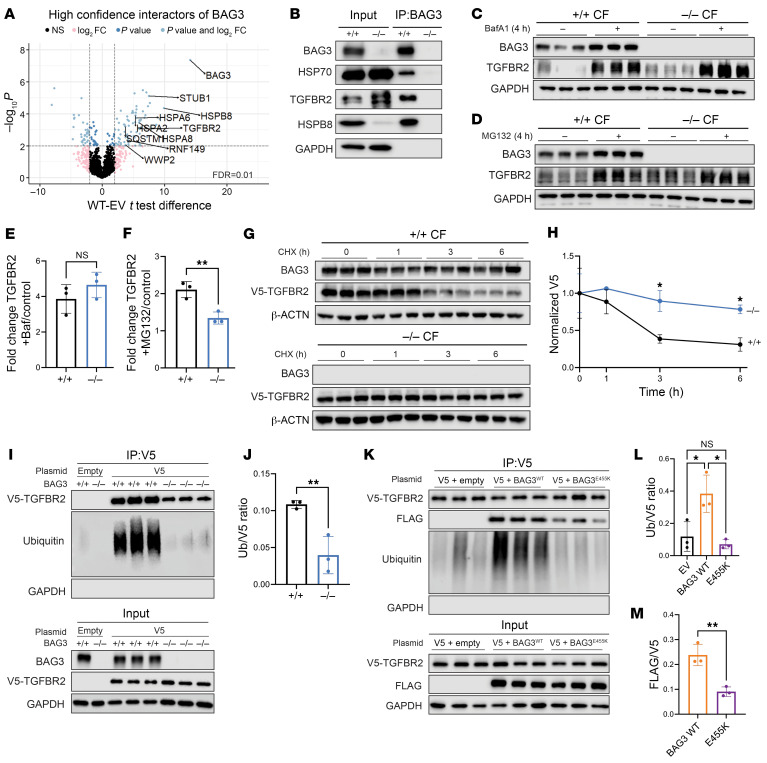
Loss of Bcl2-associated athanogene 3 (BAG3) is associated with dilated cardiomyopathy (DCM). BAG3 regulates sarcomere protein turnover in cardiomyocytes; however, the function of BAG3 in other cardiac cell types is understudied. In this study, we used an isogenic pair of BAG3-knockout and wild-type human induced pluripotent stem cells (hiPSCs) to interrogate the role of BAG3 in hiPSC-derived cardiac fibroblasts (CFs). Analysis of cell type-specific conditional knockout engineered heart tissues revealed an essential contribution of CF BAG3 to contractility and cardiac fibrosis, recapitulating the phenotype of DCM. In BAG3-/- CFs, we observed an increased sensitivity to TGF-β signaling and activation of a fibrogenic response when cultured at physiological stiffness (8 kPa). Mechanistically, we showed that loss of BAG3 increased transforming growth factor-β receptor 2 (TGFBR2) levels by directly binding TGFBR2 and mediating its ubiquitination and proteasomal degradation. To further validate these results, we performed single-nucleus RNA sequencing of cardiac tissue from DCM patients carrying pathogenic BAG3 variants. BAG3 pathogenic variants increased fibrotic gene expression in CFs. Together, these results extend our understanding of the roles of BAG3 in heart disease beyond the cardiomyocyte-centric view and highlight the ability of tissue-engineered hiPSC models to elucidate cell type-specific aspects of cardiac disease.
Bcl2相关抗凋亡基因3(BAG3)的缺失与扩张型心肌病(DCM)相关。BAG3调节心肌细胞中的肌节蛋白周转;然而,BAG3在其他心脏细胞类型中的功能研究较少。在本研究中,我们使用了一对同基因的BAG3基因敲除和野生型人诱导多能干细胞(hiPSC)来探究BAG3在hiPSC衍生的心脏成纤维细胞(CF)中的作用。对细胞类型特异性条件性敲除工程化心脏组织的分析表明,CF中的BAG3对收缩性和心脏纤维化至关重要,重现了DCM的表型。在BAG3基因敲除的CF中,当在生理硬度(8 kPa)下培养时,我们观察到对TGF-β信号的敏感性增加以及纤维化反应的激活。从机制上讲,我们表明BAG3的缺失通过直接结合转化生长因子-β受体2(TGFBR2)并介导其泛素化和蛋白酶体降解来增加TGFBR2水平。为了进一步验证这些结果,我们对携带致病性BAG3变体的DCM患者的心脏组织进行了单核RNA测序。BAG3致病性变体增加了CF中纤维化基因的表达。总之,这些结果扩展了我们对BAG3在心脏病中的作用的理解,超越了以心肌细胞为中心的观点,并突出了组织工程化hiPSC模型阐明心脏病细胞类型特异性方面的能力。