Zhu Shuzhen, Li Hualin, Huang Zifeng, Zeng Yiheng, Huang Jianmin, Li Guixia, Yang Shujuan, Zhou Hang, Chang Zihan, Xie Zhenchao, Que Rongfang, Wei Xiaobo, Li Minzi, Liang Yanran, Xian Wenbiao, Li Mengyan, Pan Ying, Huang Fanheng, Shi Lin, Yang Chengwu, Deng Chao, Batzu Lucia, Poplawska-Domaszewicz Karolina, Chen Shuhan, Chan Ling-Ling, Ray Chaudhuri K, Tan Eng-King, Wang Qing
Department of Neurology, Zhujiang Hospital of Southern Medical University, Guangzhou, Guangdong, 510282, People's Republic of China.
Department of Neurology, Sun Yat-Sen Memorial Hospital of Sun Yat-sen University, Guangzhou, Guangdong, People's Republic of China.
NPJ Parkinsons Dis. 2025 Jan 2;11(1):1. doi: 10.1038/s41531-024-00865-1.
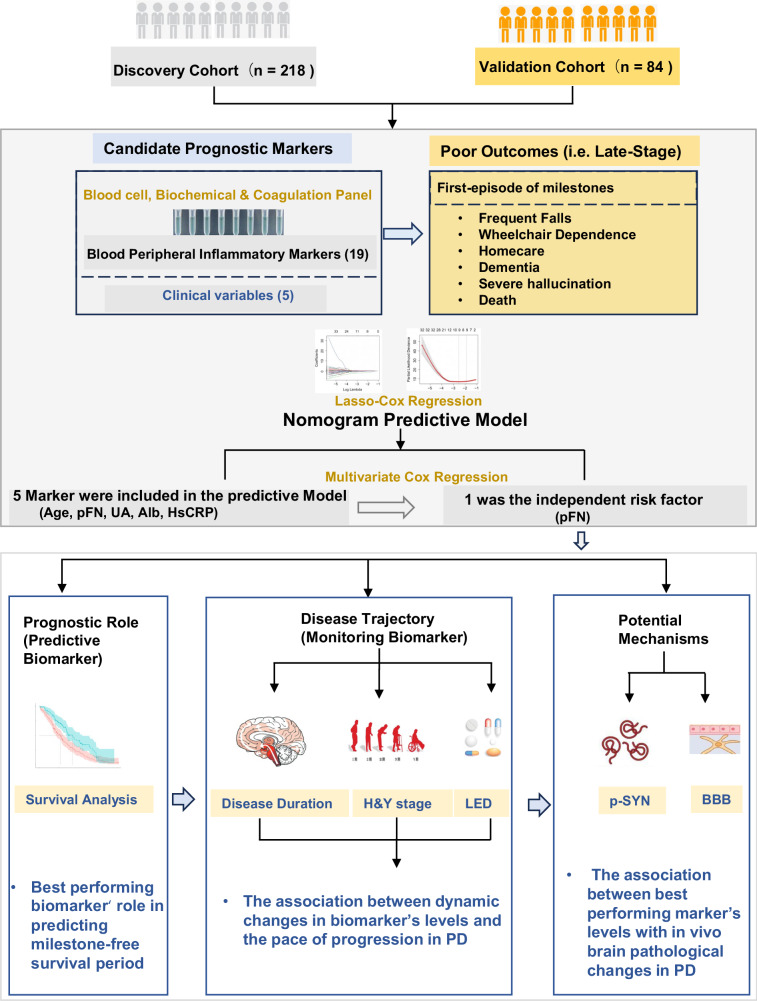
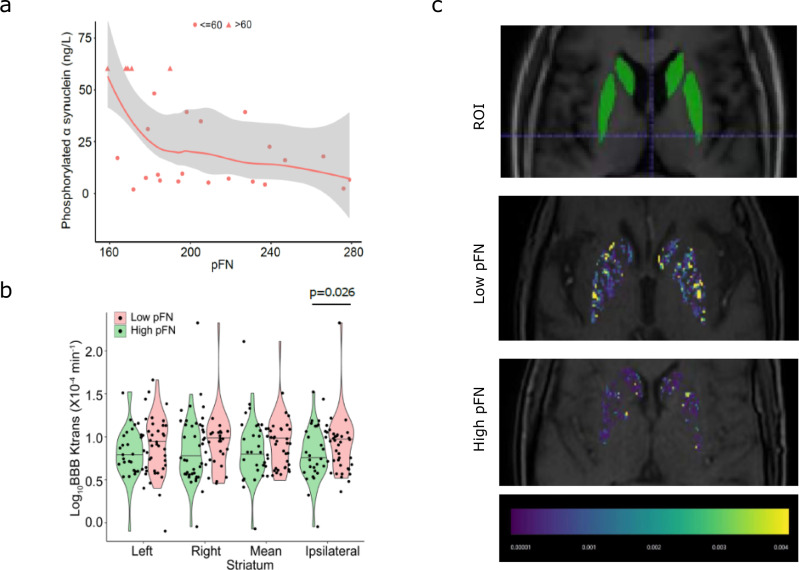
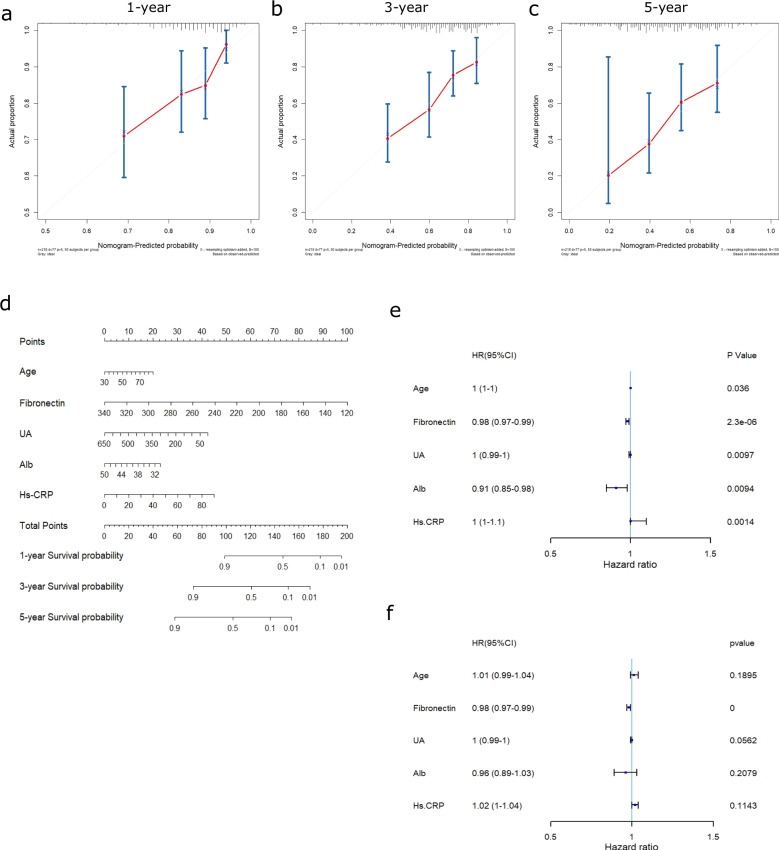
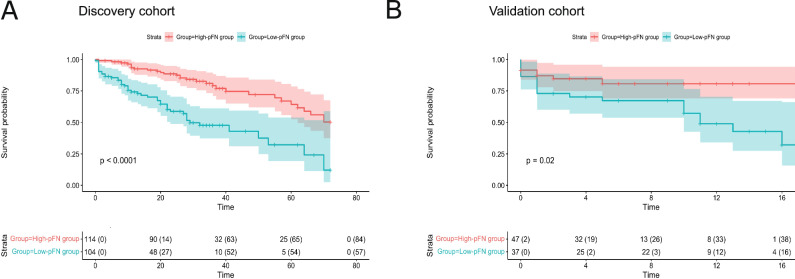
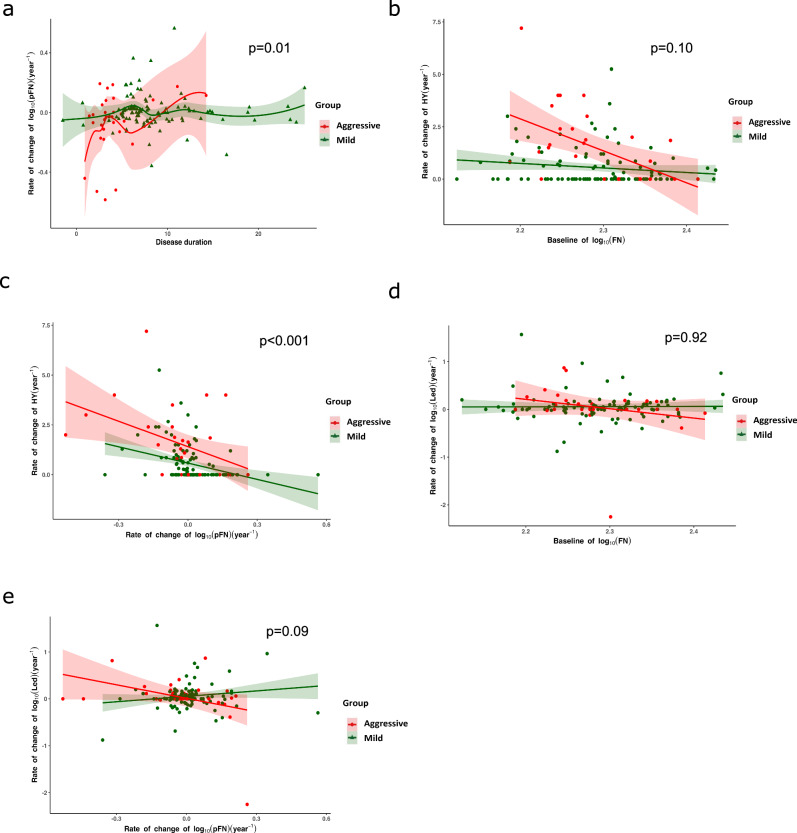
In a prospective longitudinal study with 218 Parkinson's disease (PD) patients in the discovery cohort and 84 in the validation cohort, we aimed to identify novel blood biomarkers predicting disability milestones in PD. Through Least Absolute Shrinkage and Selection Operator-Cox (Lasso-Cox) regression, developed nomogram predictive model and Linear mixed-effects models, we identified low level of plasma fibronectin (pFN) as one of the best-performing risk markers in predicting disability milestones. A low level of pFN was associated with a short milestone-free survival period in PD. Longitudinal analysis showed an annual decline in the rate of pFN was significantly associated with the annual elevation rate in the Hoehn-Yahr stage. Moreover, pFN level was negatively correlated with phosphorylated α-synuclein, and a low level of pFN was associated with BBB disruption in the striatum on neuroimaging, providing evidence for pFN's role in PD progression. We finally identified pFN as a novel blood biomarker that predicted first-milestone disability in PD.
在一项前瞻性纵向研究中,发现队列有218名帕金森病(PD)患者,验证队列有84名患者,我们旨在识别预测PD患者残疾里程碑的新型血液生物标志物。通过最小绝对收缩和选择算子-考克斯(Lasso-Cox)回归、开发的列线图预测模型和线性混合效应模型,我们确定血浆纤连蛋白(pFN)水平低是预测残疾里程碑表现最佳的风险标志物之一。pFN水平低与PD患者无里程碑生存期短相关。纵向分析显示,pFN水平的年下降率与Hoehn-Yahr分期的年升高率显著相关。此外,pFN水平与磷酸化α-突触核蛋白呈负相关,pFN水平低与神经影像学上纹状体的血脑屏障破坏有关,这为pFN在PD进展中的作用提供了证据。我们最终确定pFN是一种预测PD患者首次出现里程碑式残疾的新型血液生物标志物。