Dai Qiwen, Chen Jinglian, Zheng Yanqiao
School of Economics and Management, Guangxi Normal University, Guilin, 541004, China.
Institute of Population and Labor Economics, Chinese Academy of Social Science, Beijing, 100006, China.
Sci Rep. 2025 Jan 2;15(1):122. doi: 10.1038/s41598-024-84075-y.
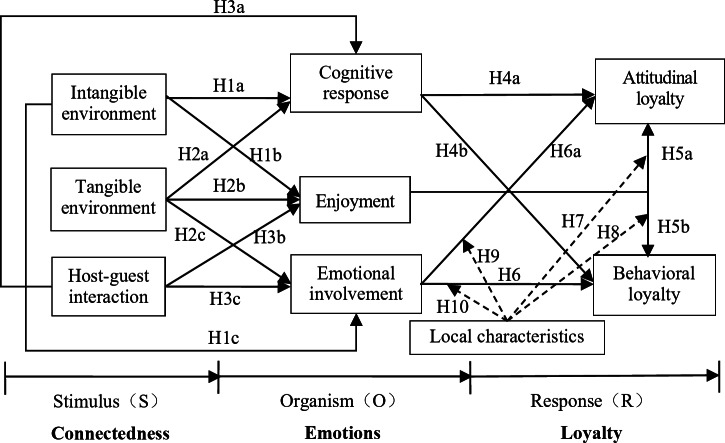
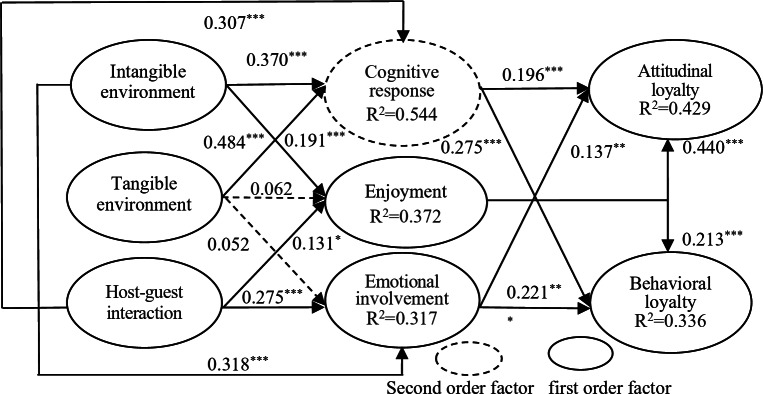
In the context of community-based tourism, this study investigates the determinants of tourist loyalty to homestays, with a focus on sustainable rural tourism development in China. Using the stimulus-organism-response (SOR) framework, we propose a conceptual model to examine how connected experiences influence tourist emotions and, in turn, their loyalty. Data were gathered through onsite surveys of tourists, and structural equation modeling was applied to assess the relationships between key variables. The analysis reveals that tourists' emotions mediate the effect of connected experiences on loyalty, while the unique local characteristics of homestays significantly moderate the link between emotions and loyalty. These findings provide valuable insights for policymakers and practitioners aiming to enhance the sustainability of rural tourism through strategic management of community-based homestays.
在社区旅游的背景下,本研究调查了游客对民宿忠诚度的决定因素,重点关注中国乡村旅游的可持续发展。运用刺激-机体-反应(SOR)框架,我们提出了一个概念模型,以检验关联体验如何影响游客的情感,进而影响他们的忠诚度。通过对游客进行实地调查收集数据,并应用结构方程模型来评估关键变量之间的关系。分析表明,游客的情感在关联体验对忠诚度的影响中起中介作用,而民宿独特的地方特色显著调节了情感与忠诚度之间的联系。这些发现为政策制定者和从业者提供了宝贵的见解,他们旨在通过对社区民宿的战略管理来提高乡村旅游的可持续性。