Pybus Hannah J, Dangarh Prakrati, Ng Man Yin Melanie, Lloyd Clare M, Saglani Sejal, Tanaka Reiko J
Department of Bioengineering, Imperial College London, London, SW7 2AZ, UK.
National Heart and Lung Institute, Imperial College London, London, SW7 2AZ, UK.
Sci Rep. 2025 Jan 2;15(1):368. doi: 10.1038/s41598-024-83204-x.
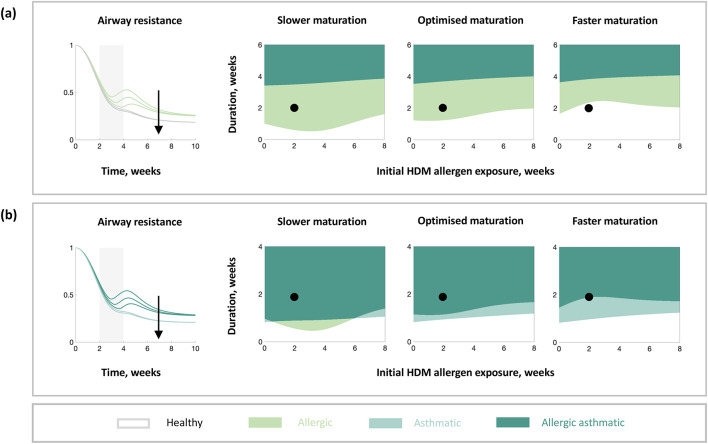
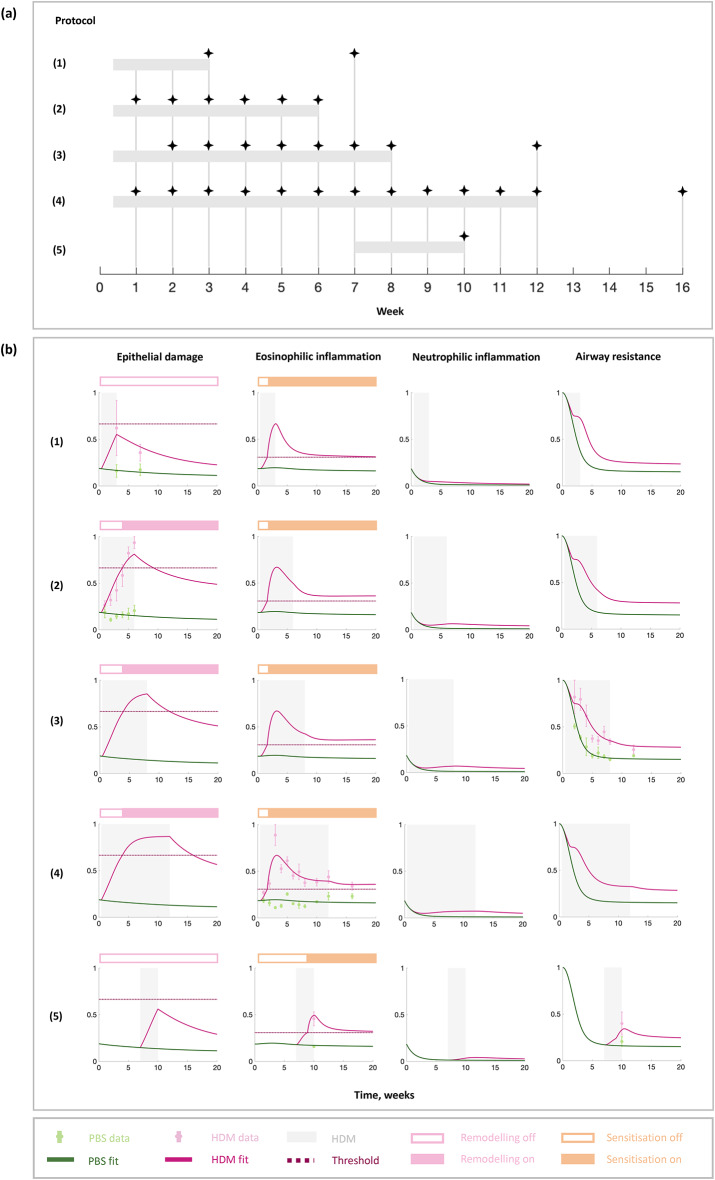
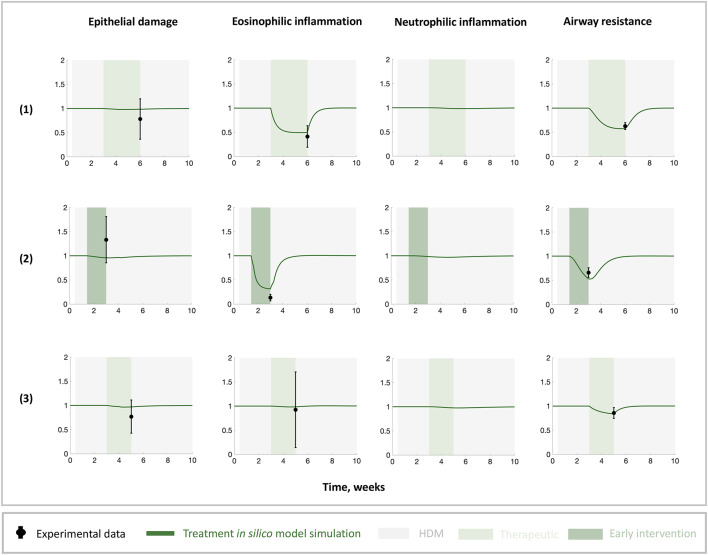
Asthma affects approximately 300 million individuals worldwide and the onset predominantly arises in childhood. Children are exposed to multiple environmental irritants, such as viruses and allergens, that are common triggers for asthma onset, whilst their immune systems are developing in early life. Understanding the impact of allergen exposures on the developing immune system and resulting alterations in lung function in early life will help prevent the onset and progression of allergic asthma in children. In this study, we developed an in silico model describing the pulmonary immune response to a common allergen, house dust mite, to investigate its downstream impact on the pathophysiology of asthma, including airway eosinophilic inflammation, remodelling, and lung function. We hypothesised that altered epithelial function following allergen exposure determines the onset of airway remodelling and abnormal lung function, which are irreversible with current asthma therapies. We calibrated the in silico model using age appropriate in vivo data from neonatal and adult mice. We validated the in silico model using in vivo data from mice on the effects of current treatment strategies. The in silico model recapitulates experimental observations and provides an interpretable in silico tool to assess airway pathology and the underlying immune responses upon allergen exposure. The in silico model simulations predict the extent of bronchial epithelial barrier damage observed when allergen sensitisation occurs and demonstrate that epithelial barrier damage and impaired immune maturation are critical determinants of reduced lung function and asthma development. The in silico model demonstrates that both epithelial barrier repair and immune maturation are potential targets for therapeutic intervention to achieve successful asthma prevention.
哮喘影响着全球约3亿人,其发病主要始于儿童期。儿童会接触多种环境刺激物,如病毒和过敏原,这些都是哮喘发病的常见诱因,而此时他们的免疫系统正处于早期发育阶段。了解过敏原暴露对发育中的免疫系统的影响以及由此导致的早期肺功能改变,将有助于预防儿童过敏性哮喘的发病和进展。在本研究中,我们开发了一种计算机模拟模型,描述肺部对常见过敏原屋尘螨的免疫反应,以研究其对哮喘病理生理学的下游影响,包括气道嗜酸性粒细胞炎症、重塑和肺功能。我们假设,过敏原暴露后上皮功能的改变决定了气道重塑和异常肺功能的发生,而目前的哮喘治疗方法对此是不可逆的。我们使用来自新生小鼠和成年小鼠的适合年龄的体内数据对计算机模拟模型进行了校准。我们使用来自小鼠的关于当前治疗策略效果的体内数据对计算机模拟模型进行了验证。该计算机模拟模型概括了实验观察结果,并提供了一个可解释的计算机模拟工具,以评估过敏原暴露后的气道病理和潜在的免疫反应。计算机模拟模型的模拟预测了过敏原致敏时观察到的支气管上皮屏障损伤程度,并表明上皮屏障损伤和免疫成熟受损是肺功能降低和哮喘发展的关键决定因素。该计算机模拟模型表明,上皮屏障修复和免疫成熟都是实现成功预防哮喘的治疗干预的潜在靶点。