Osborne Augustus, Yillah Regina Mamidy, Bangura Camilla, Ahinkorah Bright Opoku
Institute for Development, Freetown, Western Area, Sierra Leone.
Department of Biological Sciences, School of Basic Sciences, Njala University,PMB, Freetown, Sierra Leone.
BMC Public Health. 2025 Jan 2;25(1):9. doi: 10.1186/s12889-024-20990-z.
Unintended pregnancy is a significant public health concern in Sierra Leone, with far-reaching consequences for both mothers and children. This issue impacts individual well-being, strains healthcare systems, and hinders socioeconomic development. This study examined the prevalence and factors associated with unintended pregnancy in Sierra Leone.
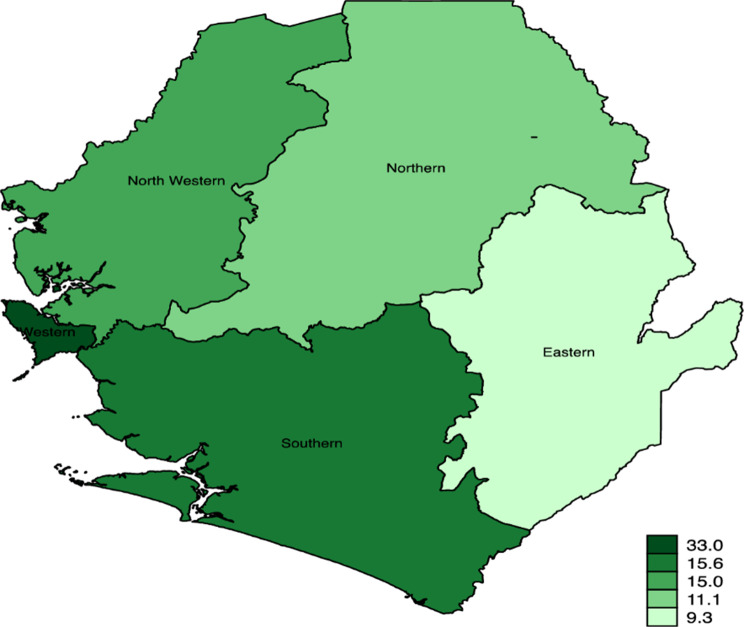
Data from the 2019 Sierra Leone Demographic and Health Survey was used for the study. Provincial variations in the prevalence of unintended pregnancy was presented using a spatial map. A mixed-effect multilevel binary logistic regression models was fitted to examine the factors associated with unintended pregnancy. The results were presented as adjusted odds ratios (aOR) with a 95% confidence interval (CI) and intra-cluster correlation coefficients.
In Sierra Leone, the national prevalence of unintended pregnancy was 16.4% in 2019. Women aged 20-49 exhibit lower odds of unintended pregnancy compared to those aged 15-19, with the lowest odds found among those aged 30-34. Factors associated with decreased odds include being employed, married or cohabiting, and belonging to the Fullah tribe, while living in various provinces outside the Western area also correlates with lower odds. Conversely, women with secondary education, listened to the radio, those with more children (5+), contraceptive users, larger household sizes (six or more), and those in the middle wealth index had increased odds of unintended pregnancies.
The results from Sierra Leone indicate that various socio-economic and demographic factors significantly influence the prevalence of unintended pregnancies, suggesting critical areas for intervention. For women in the 20-49 age group, the lower odds of unintended pregnancies compared to younger women suggest that targeted educational and health initiatives could further enhance their reproductive health outcomes. The protective factors associated with employment, marital status, and tribal affiliation highlight the importance of promoting stable family structures and economic opportunities. Also, women living in the Eastern, Northwestern, Northern, and Southern provinces, the results imply a need for province-specific interventions. These areas may require tailored outreach programs that address cultural and socio-economic barriers to contraceptive use and reproductive health education. The increased odds linked to secondary education, listening to radio, those with more children, contraceptive users, and larger household sizes suggest that educational initiatives should also address family planning and reproductive health. A focused approach that considers the unique needs of these women could lead to more effective strategies in reducing unintended pregnancies in Sierra Leone.
意外怀孕是塞拉利昂一个重大的公共卫生问题,对母亲和儿童都产生深远影响。这个问题影响个人福祉,给医疗系统带来压力,并阻碍社会经济发展。本研究调查了塞拉利昂意外怀孕的患病率及其相关因素。
本研究使用了2019年塞拉利昂人口与健康调查的数据。通过空间地图展示意外怀孕患病率的省级差异。采用混合效应多级二元逻辑回归模型来研究与意外怀孕相关的因素。结果以调整后的优势比(aOR)、95%置信区间(CI)和组内相关系数呈现。
2019年,塞拉利昂全国意外怀孕患病率为16.4%。20至49岁的女性意外怀孕几率低于15至19岁的女性,其中30至34岁的女性意外怀孕几率最低。与意外怀孕几率降低相关的因素包括就业、已婚或同居以及属于富拉部落,同时居住在西部地区以外的各个省份也与较低的意外怀孕几率相关。相反,接受过中等教育、收听广播、子女较多(5个及以上)、使用避孕药具、家庭规模较大(6人或更多)以及处于中等财富指数的女性意外怀孕几率增加。
塞拉利昂的研究结果表明,各种社会经济和人口因素对意外怀孕患病率有显著影响,这表明了关键的干预领域。对于20至49岁年龄组的女性,与年轻女性相比意外怀孕几率较低,这表明有针对性的教育和健康举措可以进一步改善她们的生殖健康结果。与就业、婚姻状况和部落归属相关的保护因素凸显了促进稳定家庭结构和经济机会的重要性。此外,研究结果表明居住在东部、西北部、北部和南部省份的女性需要针对各省的干预措施。这些地区可能需要量身定制的外展项目,以解决避孕药具使用和生殖健康教育方面的文化和社会经济障碍。与中等教育、收听广播、子女较多、使用避孕药具和家庭规模较大相关的意外怀孕几率增加表明,教育举措还应涉及计划生育和生殖健康。一种考虑到这些女性独特需求的针对性方法可能会产生更有效的策略来减少塞拉利昂的意外怀孕情况。
