Lu Fangqi, Yan Guorong, Zhao Zijun, Zheng Zhe, Wu Yuhao, Wen Long, Liu Yeqaing, Zeng Qingyu, Zhang Guolong
Institute of Photomedicine, Shanghai Skin Disease Hospital, Tongji University School of Medicine, Shanghai, 200443, China.
Department of Pathology, Shanghai Skin Disease Hospital, Tongji University School of Medicine, Shanghai, 200443, China.
Cancer Immunol Immunother. 2025 Jan 3;74(2):67. doi: 10.1007/s00262-024-03921-0.
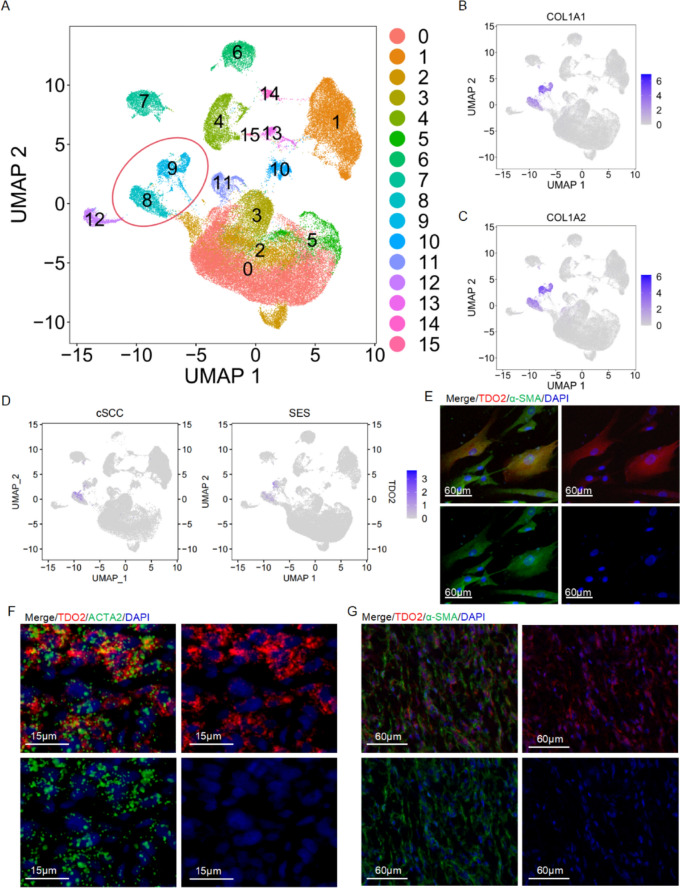
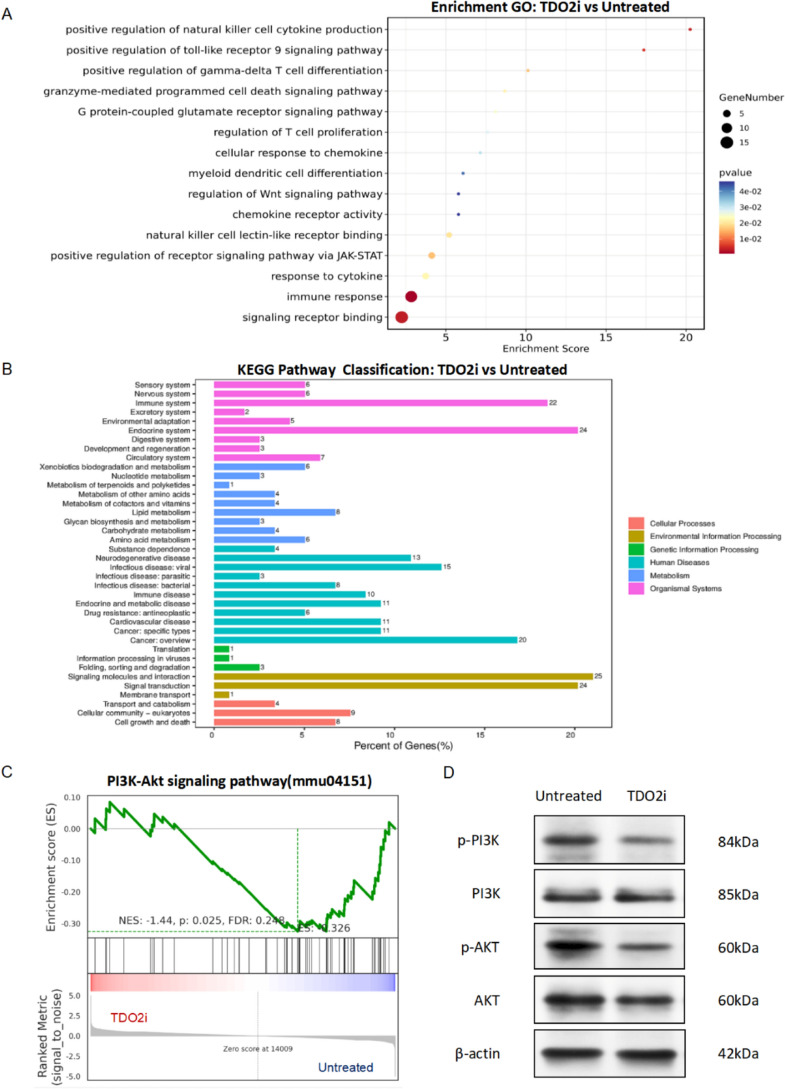
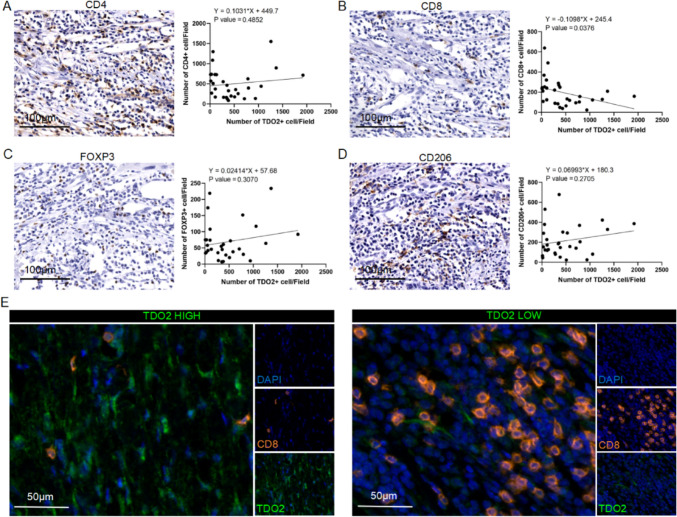
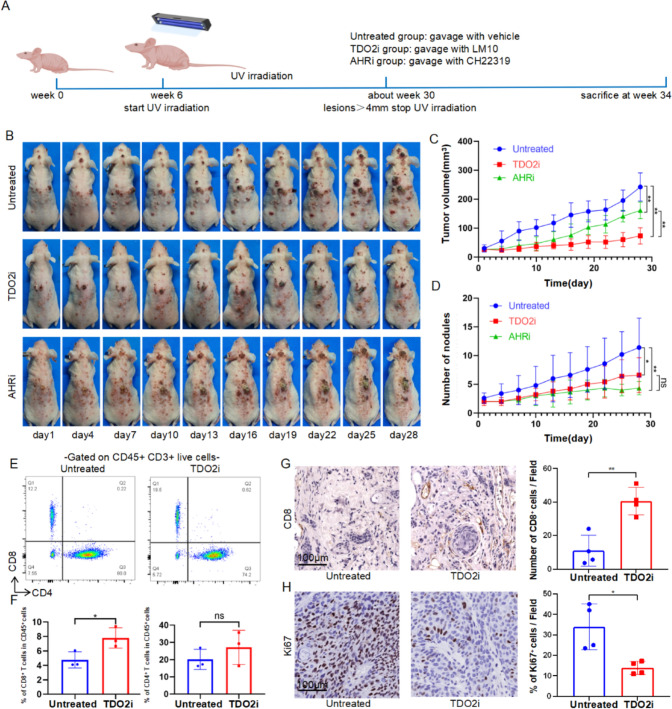
Cutaneous squamous cell carcinoma (cSCC) is the second most common skin cancer, originating from the malignant proliferation of squamous epithelial cells. However, its pathogenesis remains unclear. To further explore the mechanisms underlying cSCC, we analyzed the data from one single-cell RNA sequencing study and discovered a significant upregulation of tryptophan 2,3-dioxygenase (TDO2) in the cancer-associated fibroblasts (CAFs). Nonetheless, the specific expression and potential biological significance of TDO2 in cSCC have not yet been reported. In this study, we confirmed that TDO2 is highly expressed in CAFs of cSCC. Clinical correlation analysis indicated that high TDO2 expression was significantly associated with poor tumor differentiation. Furthermore, increased TDO2 expression in cSCC correlated with reduced CD8 + T cell infiltration, suggesting its role in modulating immune responses. TDO2 inhibitors significantly reduced the size and number of tumors in mice and effectively increased CD8 + T cell infiltration. RNA sequencing analysis revealed that TDO2 inhibitors modulate immune cell activity and downregulate the PI3K-Akt signaling pathway. In summary, our study demonstrates that TDO2 + CAFs induce immune evasion by inhibiting CD8 + T cell infiltration in cSCC. Inhibiting TDO2 could enhance antitumor immune responses, providing a promising strategy to improve treatment outcomes in cSCC.
皮肤鳞状细胞癌(cSCC)是第二常见的皮肤癌,起源于鳞状上皮细胞的恶性增殖。然而,其发病机制仍不清楚。为了进一步探索cSCC的潜在机制,我们分析了一项单细胞RNA测序研究的数据,发现色氨酸2,3-双加氧酶(TDO2)在癌相关成纤维细胞(CAF)中显著上调。尽管如此,TDO2在cSCC中的具体表达及潜在生物学意义尚未见报道。在本研究中,我们证实TDO2在cSCC的CAF中高表达。临床相关性分析表明,TDO2高表达与肿瘤低分化显著相关。此外,cSCC中TDO2表达增加与CD8 + T细胞浸润减少相关,提示其在调节免疫反应中的作用。TDO2抑制剂显著减小了小鼠肿瘤的大小和数量,并有效增加了CD8 + T细胞浸润。RNA测序分析显示,TDO2抑制剂可调节免疫细胞活性并下调PI3K-Akt信号通路。总之,我们的研究表明,TDO2 + CAF通过抑制cSCC中CD8 + T细胞浸润诱导免疫逃逸。抑制TDO2可增强抗肿瘤免疫反应,为改善cSCC的治疗效果提供了一种有前景的策略。