Biomedical Pioneering Innovation Center (BIOPIC), School of Life Sciences, Academy for Advanced Interdisciplinary Studies (AAIS), and Peking University-Tsinghua University-National Institute of Biological Sciences Joint Graduate Program (PTN), Peking University, Beijing, China.
Hospital of Stomatology, Guanghua School of Stomatology, Guangdong Provincial Key Laboratory of Stomatology, and Zhongshan School of Medicine, Sun Yat-Sen University, Guangzhou, Guangdong, China.
J Clin Invest. 2022 Oct 3;132(19):e157649. doi: 10.1172/JCI157649.
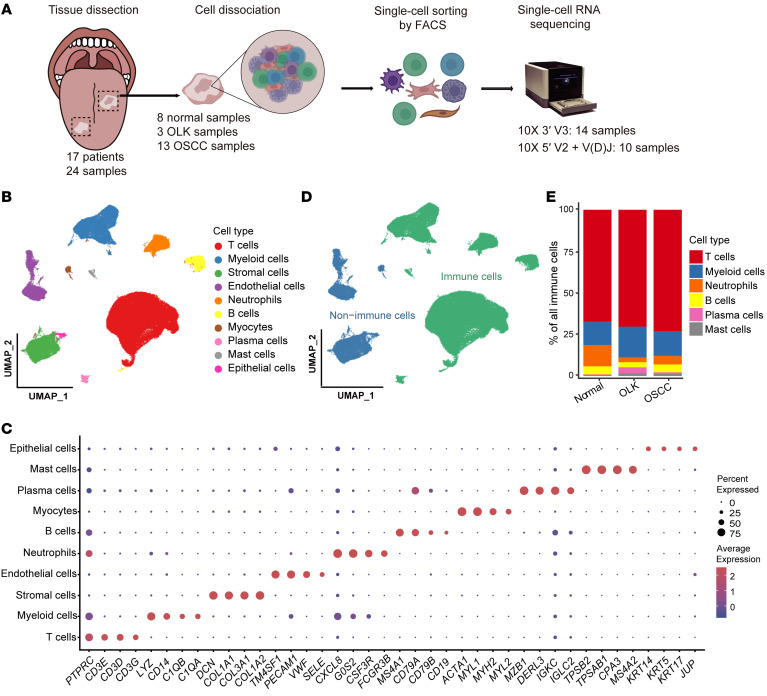
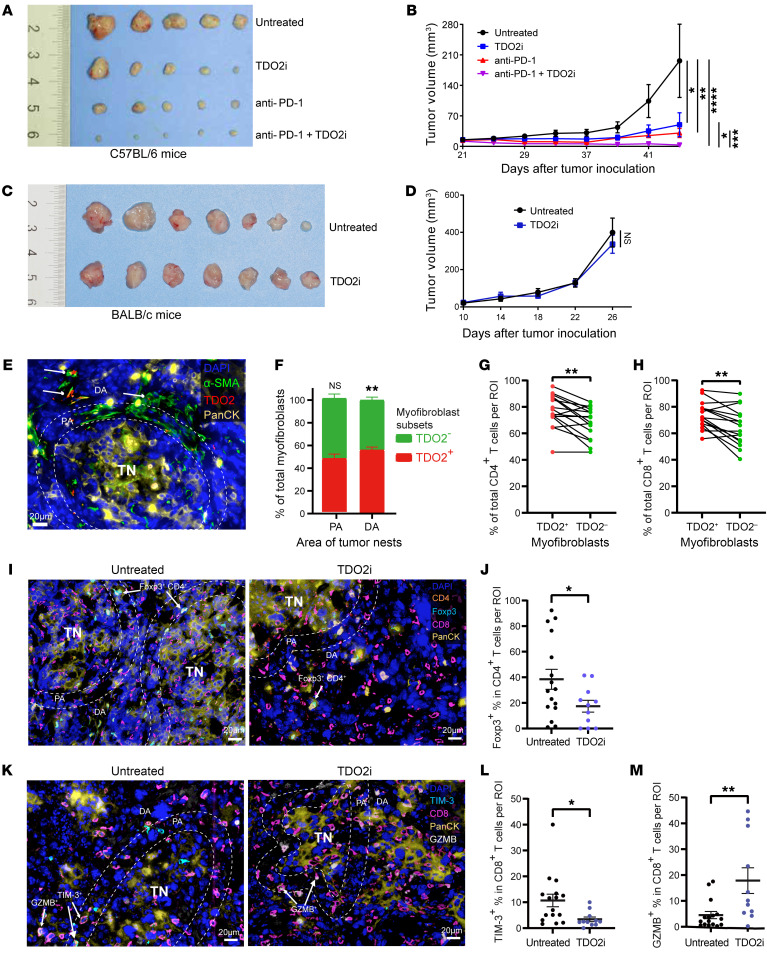
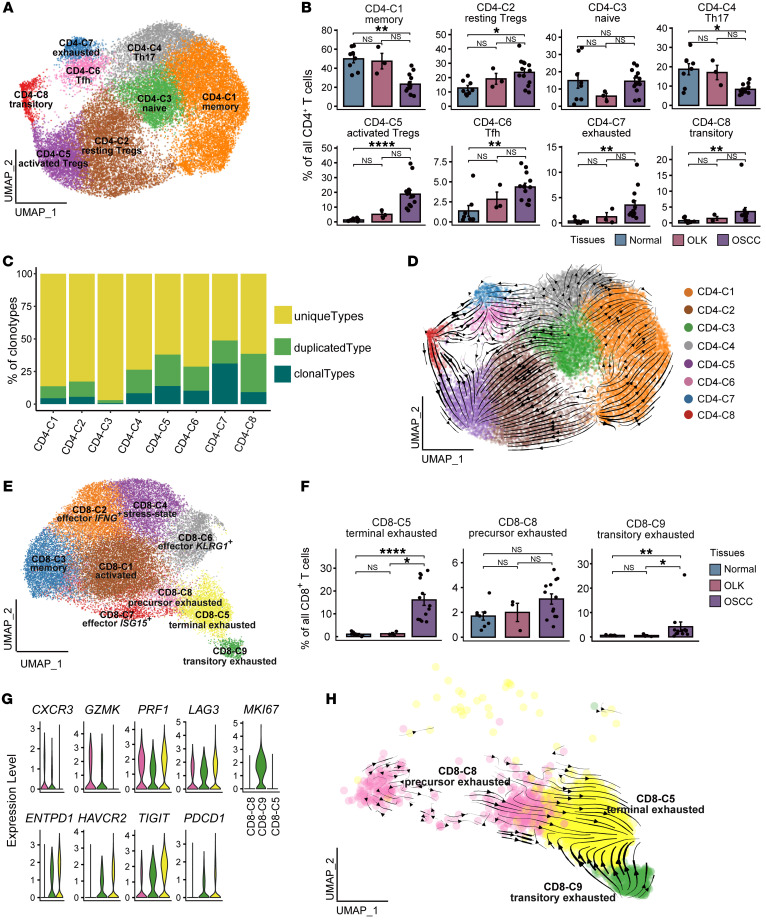
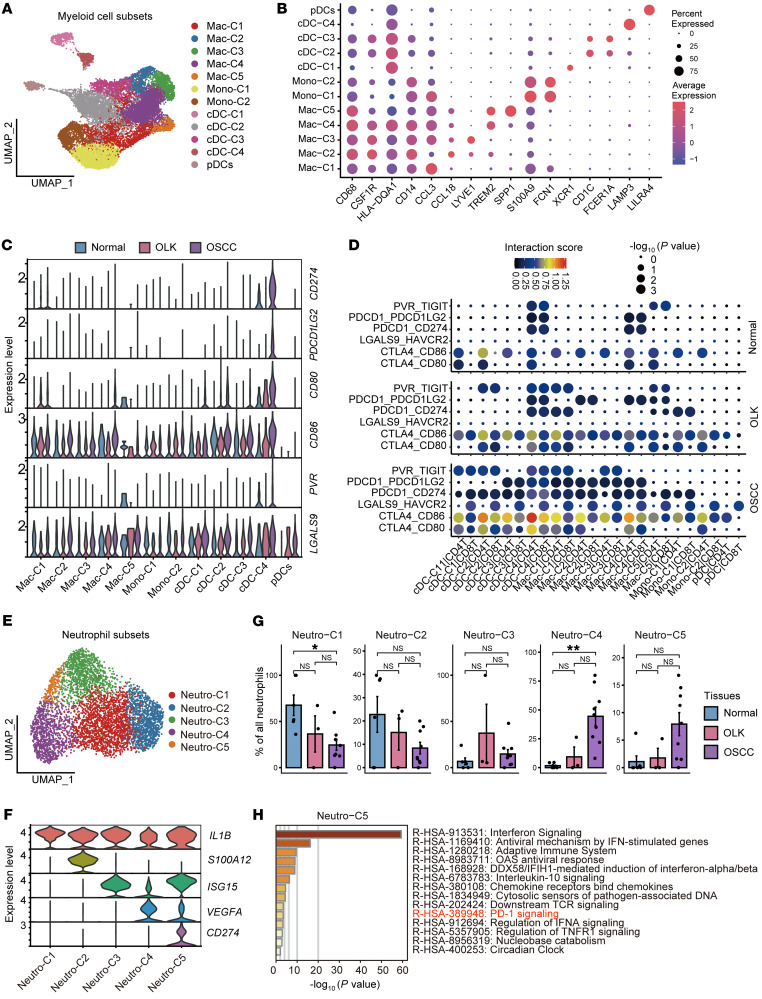
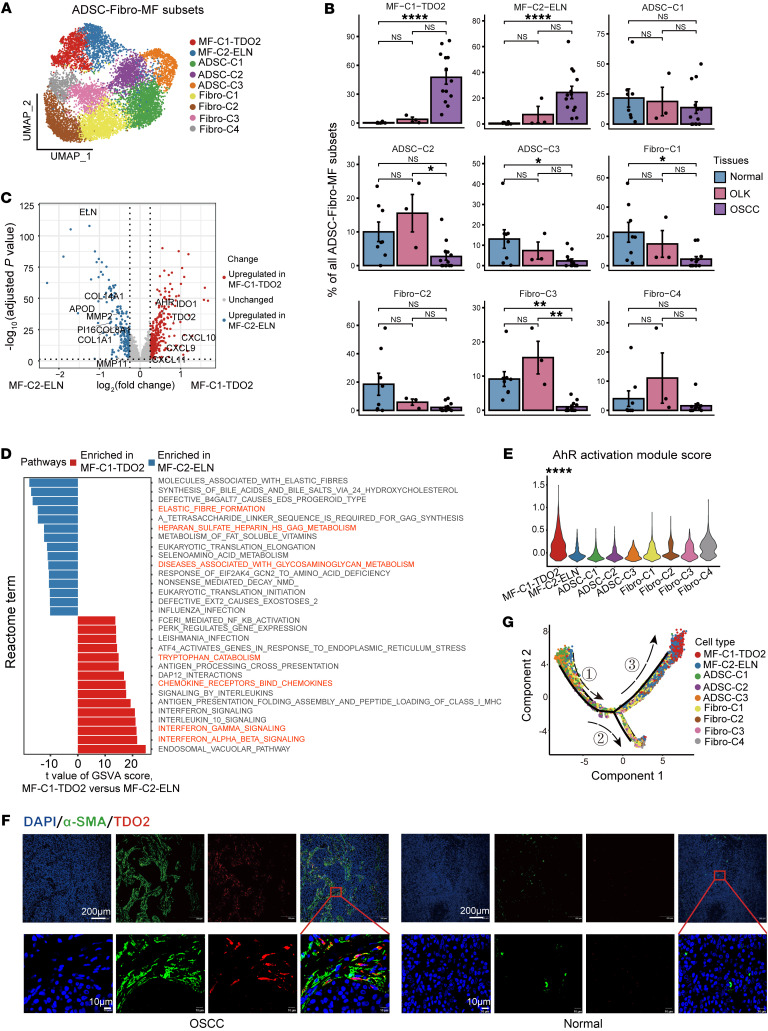
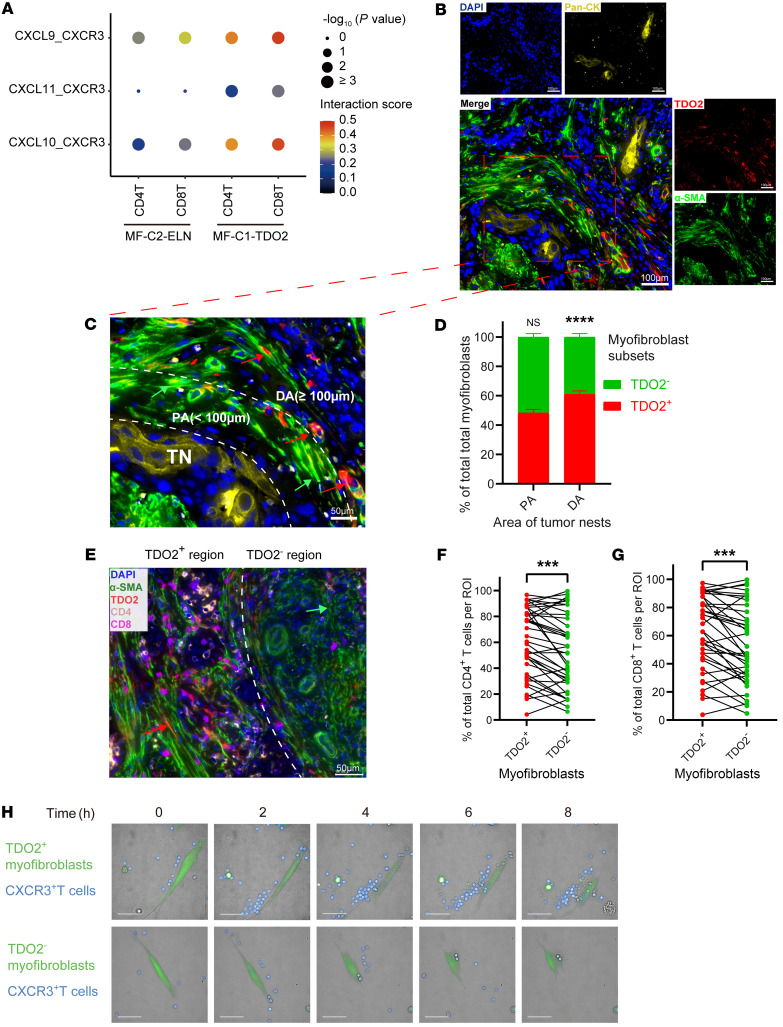
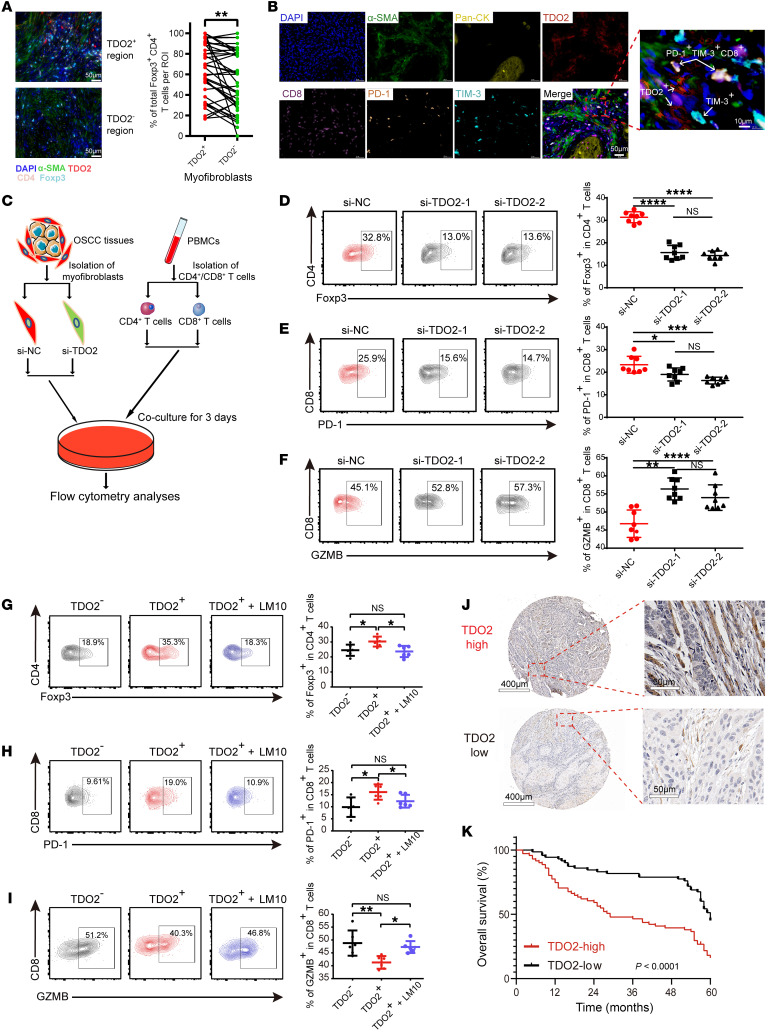
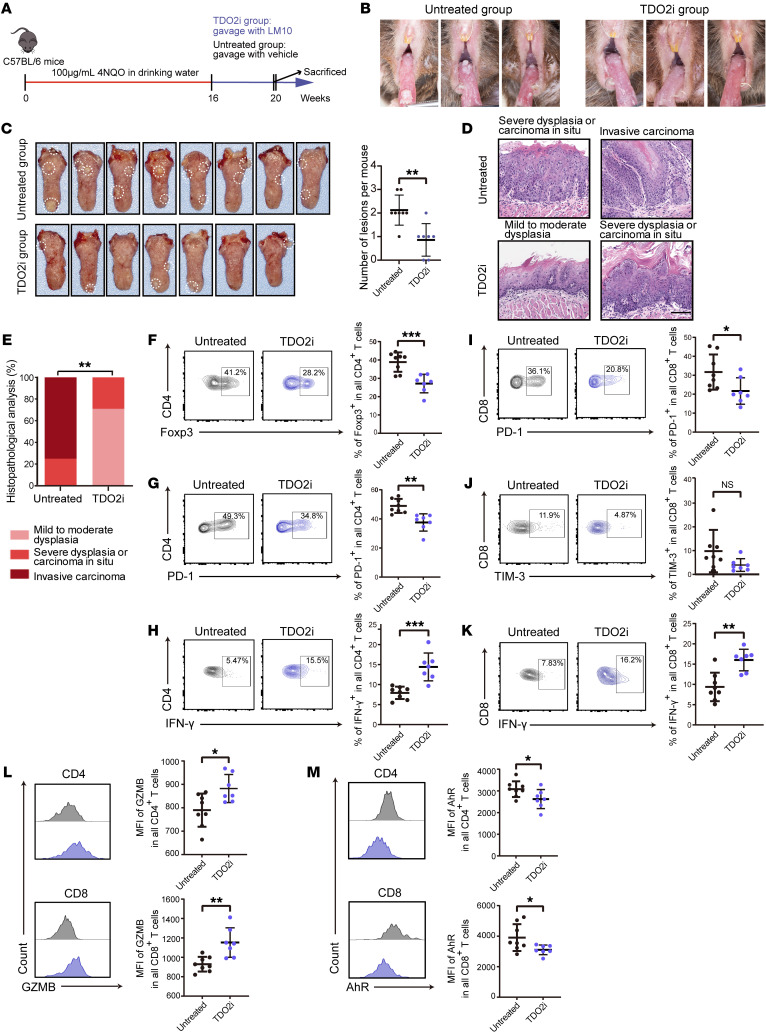
Characterization of the dynamic change in the immunological landscape during malignant transformation from precancerous lesions to cancerous lesions in squamous cell carcinoma (SCC) is critical for the application of immunotherapy. Here, we performed single-cell RNA-Seq (scRNA-Seq) of 131,702 cells from 13 cancerous tissues of oral squamous cell carcinoma (OSCC), 3 samples of precancerous oral leukoplakia, and 8 adjacent normal samples. We found that tumor-infiltrating CD4+ and CD8+ T cells were functionally inhibited by immunosuppressive ligands expressed on various types of myeloid cells or neutrophils in the process of oral carcinogenesis. Notably, we identified a subset of myofibroblasts that exclusively expressed tryptophan 2,3-dioxygenase (TDO2). These TDO2+ myofibroblasts were located distally from tumor nests, and both CD4+ and CD8+ T cells were enriched around them. Functional experiments revealed that TDO2+ myofibroblasts were more likely to possess the ability for chemotaxis toward T cells but induced the transformation of CD4+ T cells into Tregs and caused CD8+ T cell dysfunction. We further showed that use of the TDO2 inhibitor LM10 attenuated the inhibitory states of T cells, restored the T cell antitumor response, and prevented the progression of OSCC malignant transformation in murine models. Our study reveals a multistep transcriptomic landscape of OSCC and demonstrates that TDO2+ myofibroblasts are potential targets for immunotherapy.
在鳞状细胞癌 (SCC) 中,从癌前病变到癌变过程中的免疫景观动态变化的特征对于免疫疗法的应用至关重要。在这里,我们对 13 例口腔鳞状细胞癌 (OSCC) 癌组织、3 例癌前口腔白斑和 8 例相邻正常样本中的 131,702 个细胞进行了单细胞 RNA-Seq (scRNA-Seq) 分析。我们发现,在口腔癌变过程中,肿瘤浸润的 CD4+和 CD8+T 细胞被各种类型的髓样细胞或中性粒细胞上表达的免疫抑制配体所抑制。值得注意的是,我们鉴定出一组肌成纤维细胞,其特异性表达色氨酸 2,3-双加氧酶 (TDO2)。这些 TDO2+肌成纤维细胞位于肿瘤巢的远端,CD4+和 CD8+T 细胞都在其周围富集。功能实验表明,TDO2+肌成纤维细胞更有可能具有趋化 T 细胞的能力,但诱导 CD4+T 细胞向 Treg 转化,并导致 CD8+T 细胞功能障碍。我们进一步表明,使用 TDO2 抑制剂 LM10 可减轻 T 细胞的抑制状态,恢复 T 细胞的抗肿瘤反应,并防止 OSCC 恶性转化在小鼠模型中的进展。我们的研究揭示了 OSCC 的多步转录组景观,并表明 TDO2+肌成纤维细胞是免疫治疗的潜在靶点。