Hossain Aniqa Tasnim, Rahman Md Hafizur, Manna Ridwana Maher, Akter Ema, Islam S M Hasibul, Hossain Md Alamgir, Ara Tasnu, Usmani Nasimul Ghani, Chandra Pradip, Khan Maruf Ahmed, Rahman S M Mustafizur, Ahmed Helal Uddin, Mozumder Muhammad Kamruzzaman, Juthi Jesmin Mahmuda, Shahrin Fatema, Shams Sadia Afrose, Afroze Fahmida, Banu Mukta Jahan, Ameen Shafiqul, Jabeen Sabrina, Ahmed Anisuddin, Amin Mohammad Robed, Arifeen Shams El, Shomik Mohammad Sohel, Rahman Ahmed Ehsanur
International Centre for Diarrhoeal Disease Research, Bangladesh, Dhaka, Bangladesh.
Director General of Health Services, Ministry of Health and Family Welfare, Dhaka, Bangladesh.
JMIR Pediatr Parent. 2025 Jan 3;8:e65912. doi: 10.2196/65912.
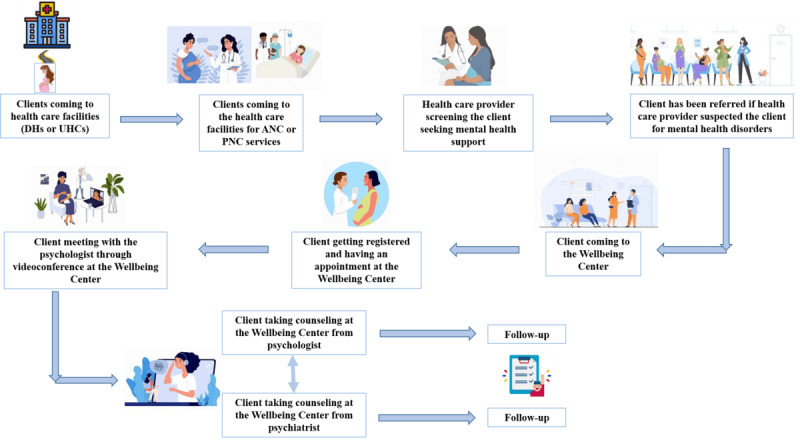
Globally, 10% of pregnant women and 13% of postpartum women experience mental disorders. In Bangladesh, nearly 50% of mothers face common mental disorders, but mental health services and trained professionals to serve their needs are scarce. To address this, the government of Bangladesh's Non-Communicable Disease Control program initiated "Wellbeing Centers," telemental health services in selected public hospitals.
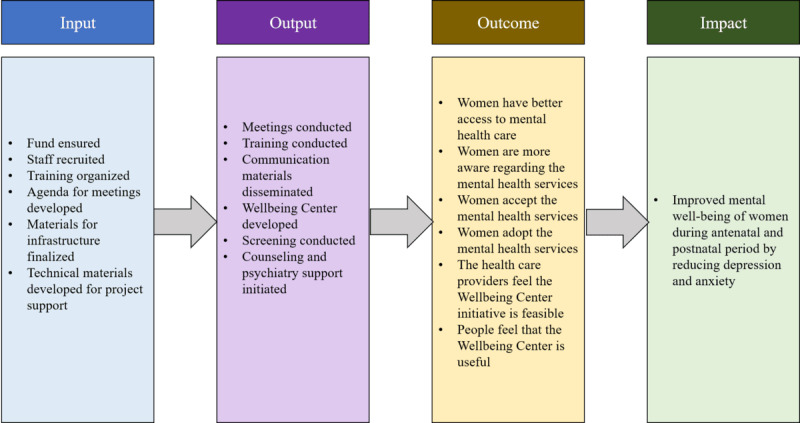
This study examines implementation outcomes, including adoption, accessibility, acceptability, feasibility, usefulness, need, experience, perception, and expectations of the Wellbeing Centers, with a focus on antepartum and postpartum women.
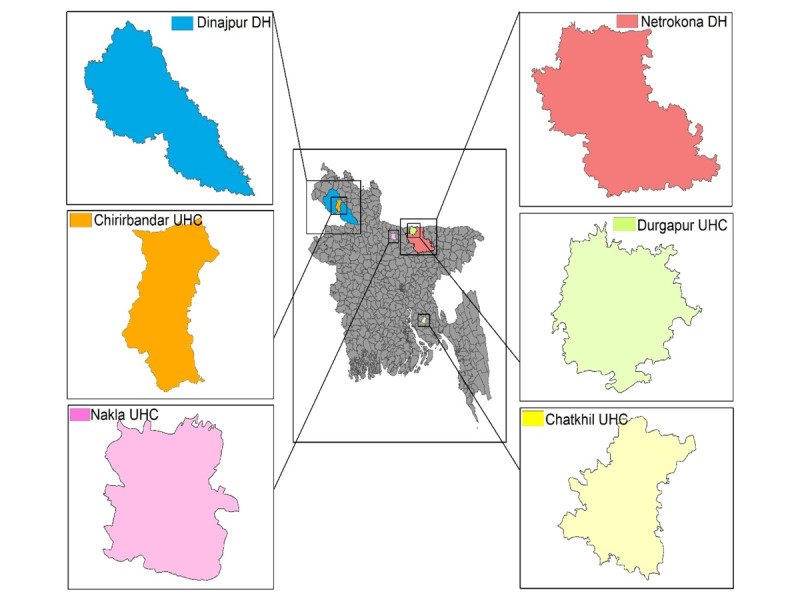
Between January 2023 and August 2024, we interviewed 911 antepartum and postpartum women receiving mental health services and 168 health care providers at 6 Wellbeing Centers in 4 districts in Bangladesh. Data collection involved both quantitative and qualitative methods. Implementation outcomes were measured following the World Health Organization's implementation research framework. Depression and anxiety symptoms were assessed using the Patient Health Questionnaire-9 and Generalized Anxiety Disorder-7 questionnaires. Descriptive statistics and adjusted odds ratios (aORs) with 95% CIs were used to evaluate the implementation outcomes. Qualitative information was obtained through in-depth interviews and key-informant interviews.
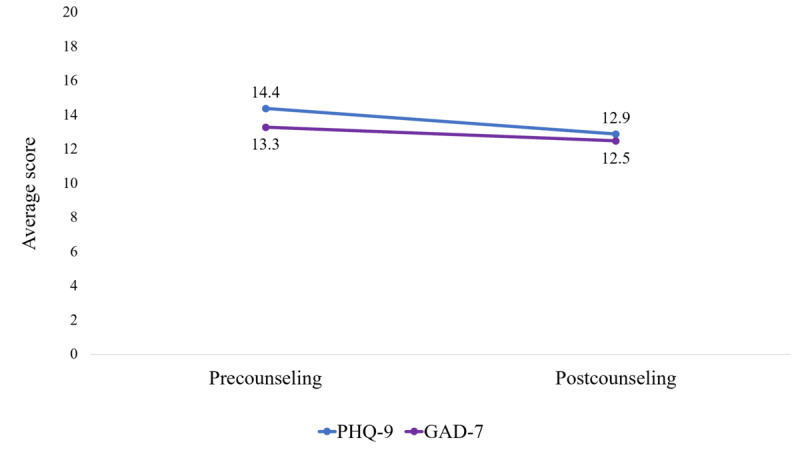
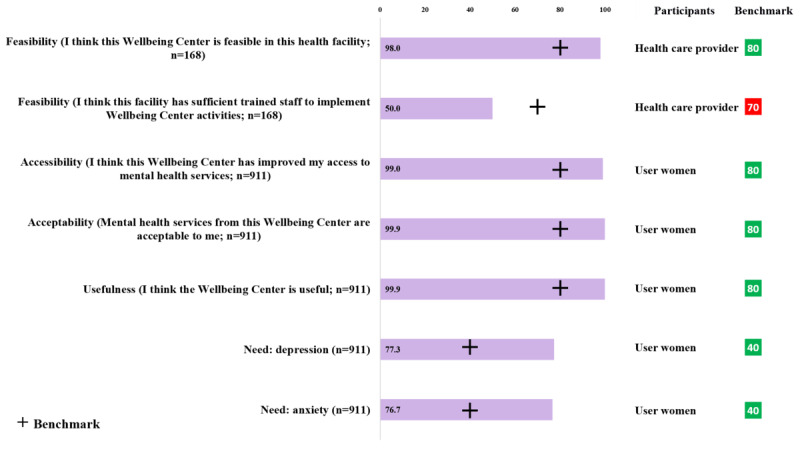
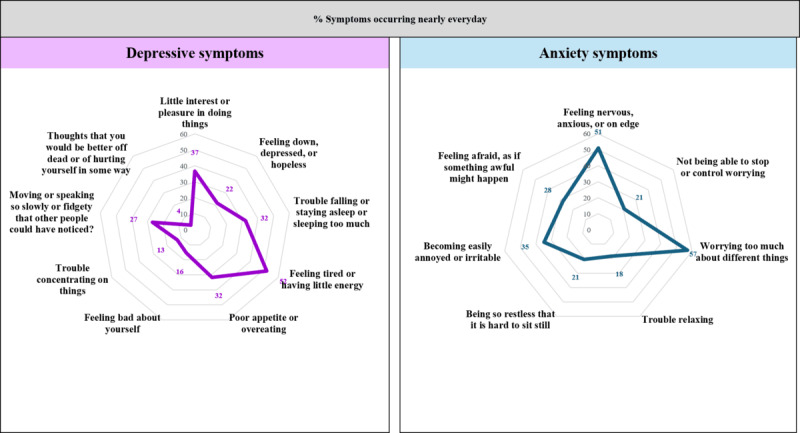
Almost all health care providers (165/168, 98.2%) reported that the Wellbeing Centers were feasible to implement in their health facilities; however, about half (84/168, 50%) felt that trained staff to operate them were insufficient. Almost all women agreed that the Wellbeing Centers were acceptable (906/911, 99.8%), useful (909/911, 99.8%), and enhanced access to mental health care (906/911, 99.5%). Patients visiting district-level hospitals had higher odds of access (aOR 1.5, 95% CI 1.1-2.0) to Wellbeing Centers. Moreover, 77.4% (705/911) of women experienced depression symptoms, and 76.7% (699/911) experienced anxiety symptoms. About 51.8% (472/911) experienced tiredness or lack of energy, 50.9% (464/911) felt nervous, anxious, or on edge, 57.2% (521/911) felt worried, and 3.8% (35/911) had suicidal ideation almost every day. Patients visiting district hospitals had higher odds (aOR 2.6, 95% CI 1.8-3.78) of depression and anxiety symptoms compared to the patients visiting subdistrict-level hospitals. Decreasing trends in Patient Health Questionnaire-9 scores (from mean 14.4, SD 0.47 to mean 12.9, SD 0.47) and Generalized Anxiety Disorder-7 scores (from mean 13.3, SD 0.49 to mean 12.5, SD 0.48) between 2 counseling sessions indicated improved mental health in the antepartum and postpartum women. The Wellbeing Centers' services were appreciated for their privacy and being free and accessible. However, stigma, postpartum illness, and long waiting times prevented some women from using these services.
To our knowledge, this is the first implementation research assessing telemental health in public health facilities involving trained psychologists and psychiatrists. Our study highlighted the increased accessibility, feasibility, acceptability, and utility of Wellbeing Centers for antepartum and postpartum women in Bangladesh, supporting their scale-up in similar settings.
在全球范围内,10%的孕妇和13%的产后女性患有精神障碍。在孟加拉国,近50%的母亲面临常见精神障碍,但满足她们需求的心理健康服务和专业培训人员稀缺。为解决这一问题,孟加拉国政府的非传染性疾病控制项目在选定的公立医院启动了“幸福中心”远程心理健康服务。
本研究考察了“幸福中心”的实施成果,包括采用情况、可及性、可接受性、可行性、有用性、需求、体验、认知和期望,重点关注产前和产后女性。
在2023年1月至2024年8月期间,我们采访了孟加拉国4个地区6个“幸福中心”的911名接受心理健康服务的产前和产后女性以及168名医疗保健提供者。数据收集采用定量和定性方法。实施成果按照世界卫生组织的实施研究框架进行衡量。使用患者健康问卷-9和广泛性焦虑障碍-7问卷评估抑郁和焦虑症状。采用描述性统计和调整后的比值比(aOR)及95%置信区间来评估实施成果。通过深入访谈和关键信息提供者访谈获取定性信息。
几乎所有医疗保健提供者(165/168,98.2%)报告称,“幸福中心”在其医疗机构实施是可行的;然而,约一半(84/168,50%)的人认为操作这些中心的训练有素的工作人员不足。几乎所有女性都认为“幸福中心”是可接受的(906/911,99.8%)、有用的(909/911,99.8%),并增加了获得心理健康护理的机会(906/911,99.5%)。前往区级医院的患者获得“幸福中心”服务的几率更高(aOR 1.5,95%置信区间1.1 - 2.0)。此外,77.4%(705/911)的女性有抑郁症状,76.7%(699/911)的女性有焦虑症状。约51.8%(472/911)的女性感到疲倦或缺乏精力,50.9%(464/911)的女性感到紧张、焦虑或烦躁不安,57.2%(521/911)的女性感到担忧,3.8%(35/911)的女性几乎每天都有自杀念头。与前往社区级医院的患者相比,前往区级医院的患者出现抑郁和焦虑症状的几率更高(aOR 2.6,95%置信区间1.8 - 3.78)。在两次咨询之间,患者健康问卷-9得分(从平均14.4,标准差0.47降至平均12.9,标准差0.47)和广泛性焦虑障碍-7得分(从平均13.3,标准差0.49降至平均12.5,标准差0.48)呈下降趋势,表明产前和产后女性的心理健康状况有所改善。“幸福中心”的服务因其隐私性、免费且可及而受到赞赏。然而,耻辱感、产后疾病和长时间等待阻碍了一些女性使用这些服务。
据我们所知,这是第一项在公共卫生机构评估远程心理健康的实施研究,涉及训练有素的心理学家和精神科医生。我们的研究强调了“幸福中心”对孟加拉国产前和产后女性的可及性、可行性、可接受性和实用性增加,支持在类似环境中扩大其规模。