Hwang Hyun Jung, Kang Donghee, Shin Jisoo, Jung Jonghun, Ko Soyeon, Jung Kyung Hee, Hong Soon-Sun, Park Ji Eun, Oh Myung Jin, An Hyun Joo, Yang Wen-Hao, Ko Young-Gyu, Cha Jong-Ho, Lee Jae-Seon
Department of Molecular Medicine, Inha University, Incheon, Republic of Korea.
Research Center for Controlling Intercellular Communication, Inha University, Incheon, Republic of Korea.
Nat Commun. 2025 Jan 3;16(1):353. doi: 10.1038/s41467-024-54132-1.
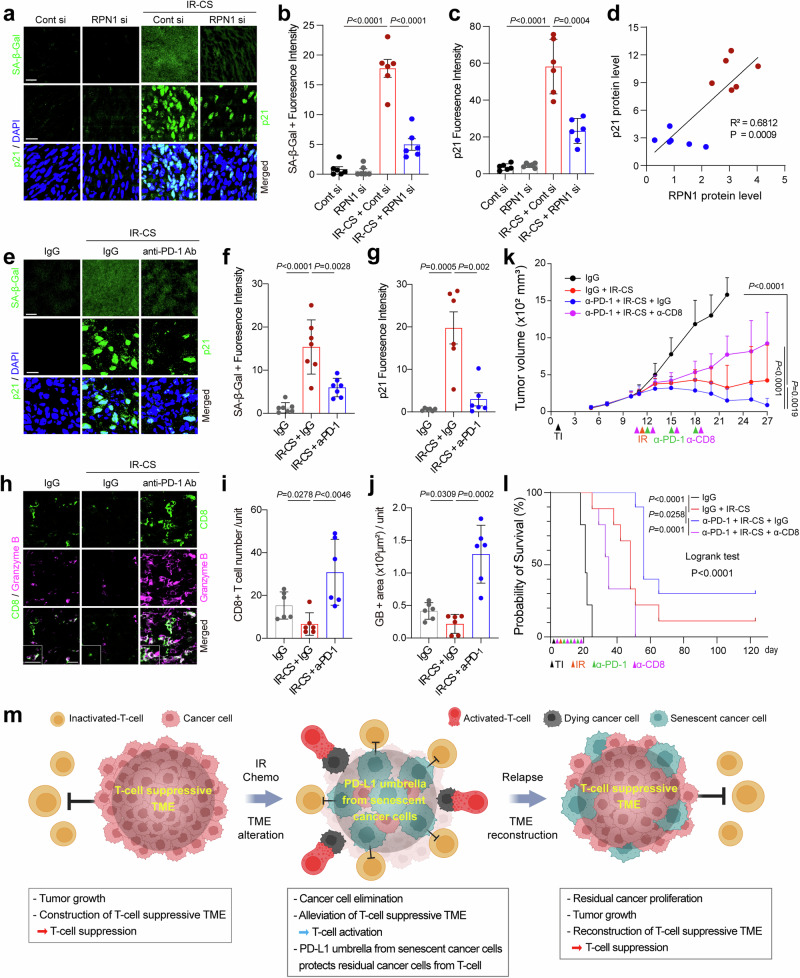
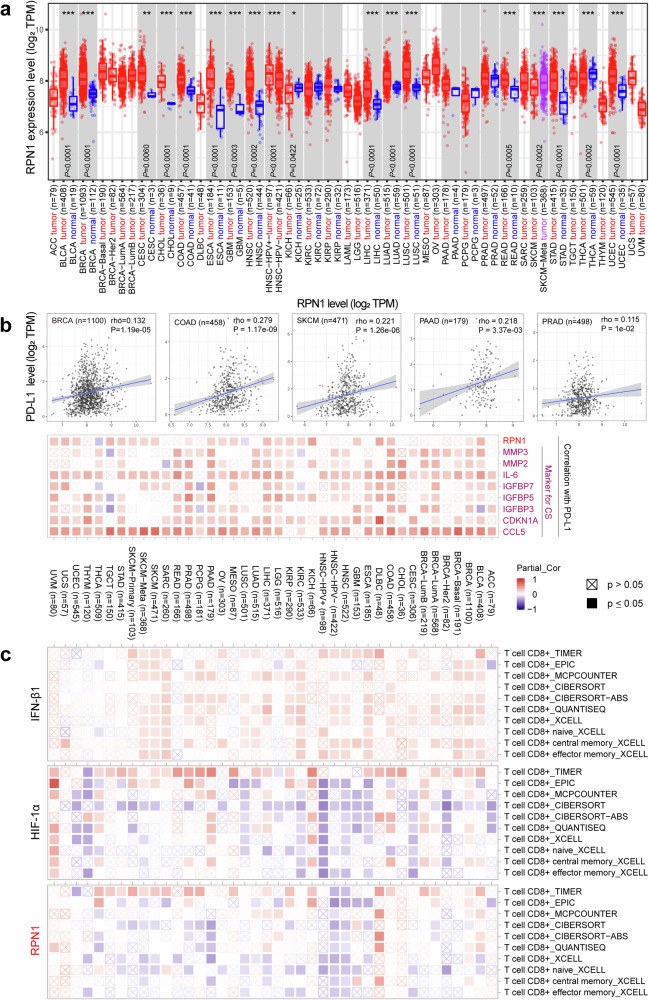
Conventional chemotherapy- and radiotherapy-induced cancer senescence, which is characterized by poor proliferation, drug resistance, and senescence-associated secretory phenotype, has gained attention as contributing to cancer relapse and the development of an immunosuppressive tumor microenvironment. However, the association between cancer senescence and anti-tumor immunity is not fully understood. Here, we demonstrate that senescent cancer cells increase the level of PD-L1 by promoting its transcription and glycosylation. We identify ribophorin 1 as a key regulator of PD-L1 glycosylation during cancer senescence. Ribophorin 1 depletion reduces this elevated level of PD-L1 through the ER-lysosome-associated degradation pathway, thereby increasing the susceptibility of senescent cancer cells to T-cell-mediated killing. Consistently, ribophorin 1 depletion suppresses tumor growth by decreasing PD-L1 levels and boosting cytotoxic T lymphocyte activity in male mice. Moreover, ribophorin 1-targeted or anti-PD-1 therapy reduces the number of senescent cancer cells in irradiated tumors and suppresses cancer recurrence through the activation of cytotoxic T lymphocytes. These results provide crucial insights into how senescent cancer cells can escape T-cell immunity following cancer treatment and thereby contribute to cancer recurrence. Our findings also highlight the therapeutic promise of targeting senescent cancer cells for cancer treatment.
传统的化疗和放疗诱导的癌症衰老,其特征为增殖能力差、耐药性以及衰老相关分泌表型,已引起关注,因为它会导致癌症复发以及免疫抑制性肿瘤微环境的形成。然而,癌症衰老与抗肿瘤免疫之间的关联尚未完全明确。在此,我们证明衰老的癌细胞通过促进PD-L1的转录和糖基化来提高其水平。我们确定核糖体结合蛋白1是癌症衰老过程中PD-L1糖基化的关键调节因子。核糖体结合蛋白1的缺失通过内质网-溶酶体相关降解途径降低了PD-L1的这种升高水平,从而增加了衰老癌细胞对T细胞介导杀伤的敏感性。一致地,核糖体结合蛋白1的缺失通过降低PD-L1水平和增强雄性小鼠细胞毒性T淋巴细胞活性来抑制肿瘤生长。此外,靶向核糖体结合蛋白1或抗PD-1治疗可减少受辐射肿瘤中衰老癌细胞的数量,并通过激活细胞毒性T淋巴细胞来抑制癌症复发。这些结果为衰老癌细胞在癌症治疗后如何逃避T细胞免疫从而导致癌症复发提供了关键见解。我们的发现还突出了靶向衰老癌细胞进行癌症治疗的治疗前景。