Chourasia Sabita, Petucci Christopher, Shoffler Clarissa, Abbasian Dina, Wang Hu, Han Xianlin, Sivan Ehud, Brandis Alexander, Mehlman Tevie, Malitsky Sergey, Itkin Maxim, Sharp Ayala, Rotkopf Ron, Dassa Bareket, Regev Limor, Zaltsman Yehudit, Gross Atan
Department of Immunology and Regenerative Biology, Weizmann Institute of Science, 76100, Rehovot, Israel.
Metabolomics Core, Penn Cardiovascular Institute, Perelman School of Medicine, University of Pennsylvania, Philadelphia, PA, 19104, USA.
EMBO J. 2025 Feb;44(4):1007-1038. doi: 10.1038/s44318-024-00335-7. Epub 2025 Jan 3.
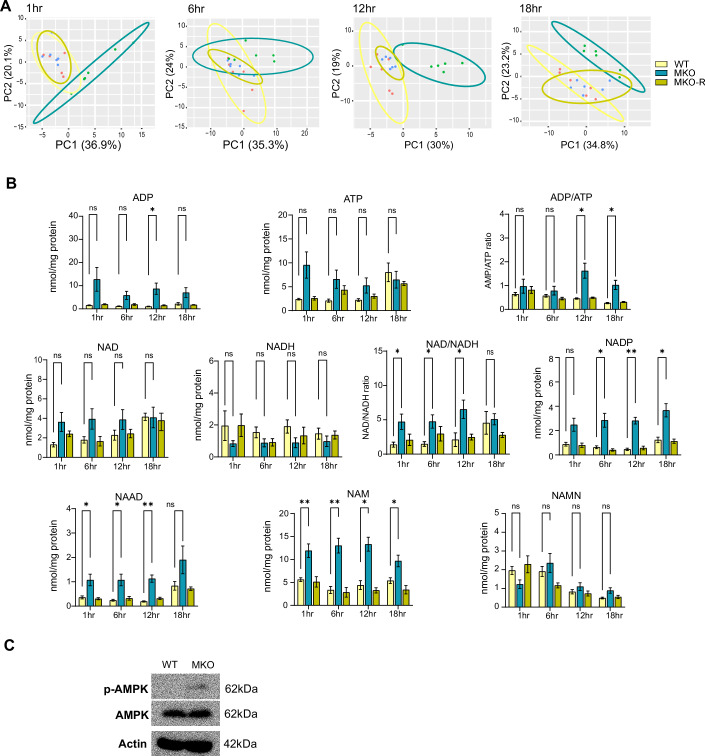
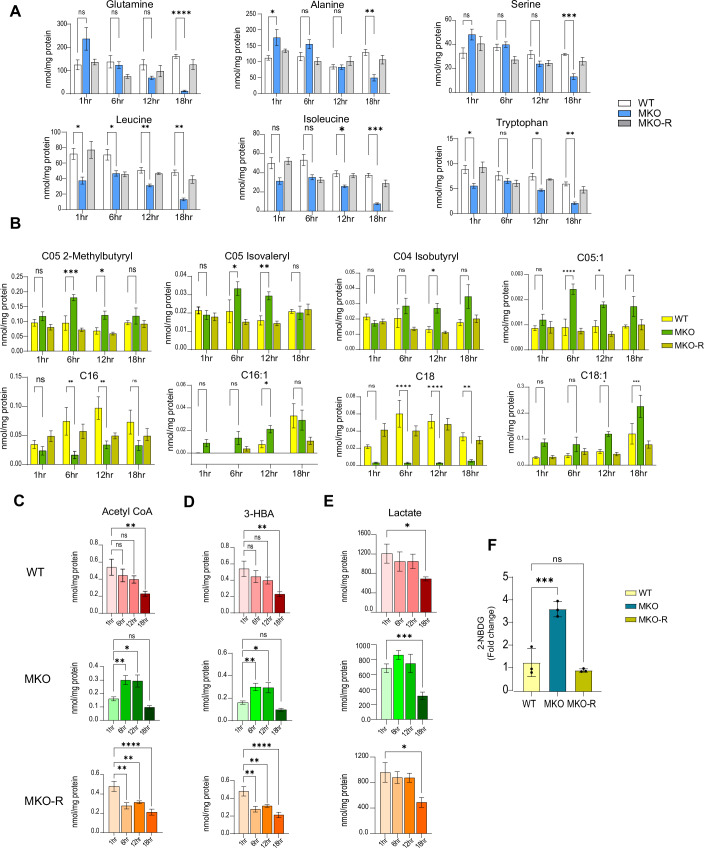
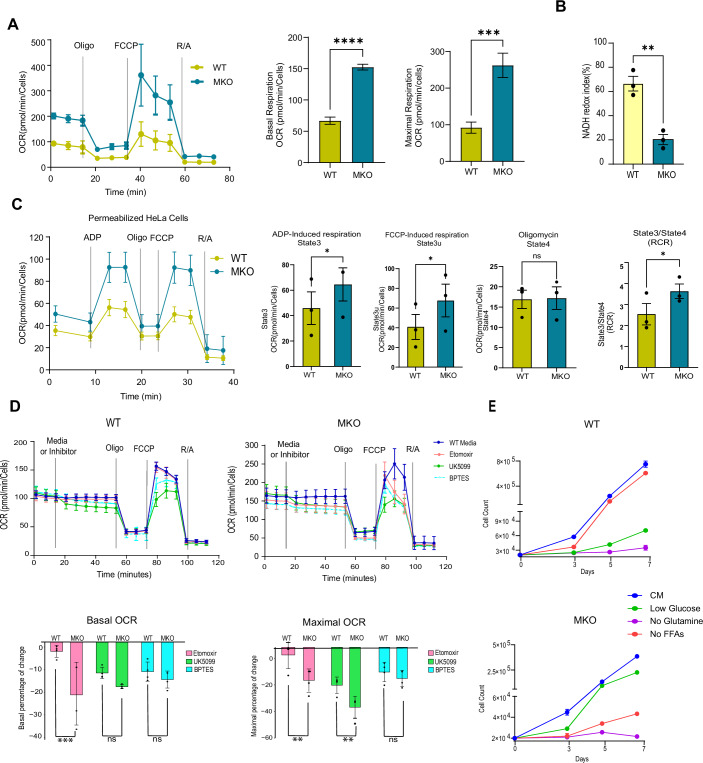
Mitochondrial carrier homolog 2 (MTCH2) is a regulator of apoptosis, mitochondrial dynamics, and metabolism. Loss of MTCH2 results in mitochondrial fragmentation, an increase in whole-body energy utilization, and protection against diet-induced obesity. In this study, we used temporal metabolomics on HeLa cells to show that MTCH2 deletion results in a high ATP demand, an oxidized cellular environment, and elevated utilization of lipids, amino acids, and carbohydrates, accompanied by a decrease in several metabolites. Lipidomics analysis revealed a strategic adaptive reduction in membrane lipids and an increase in storage lipids in MTCH2 knockout cells. Importantly, MTCH2 knockout cells showed an increase in mitochondrial oxidative function, which may explain the higher energy demand. Interestingly, this imbalance in energy metabolism and reductive potential triggered by MTCH2-deletion prevents NIH3T3L1 preadipocytes from differentiating into mature adipocytes, an energy consuming reductive biosynthetic process. In summary, the loss of MTCH2 leads to increased mitochondrial oxidative activity and energy demand, creating a catabolic and oxidative environment that fails to fuel the anabolic processes required for lipid accumulation and adipocyte differentiation.
线粒体载体同源物2(MTCH2)是细胞凋亡、线粒体动力学和新陈代谢的调节因子。MTCH2缺失会导致线粒体碎片化、全身能量利用增加,并对饮食诱导的肥胖具有保护作用。在本研究中,我们对HeLa细胞进行了时间代谢组学分析,结果表明MTCH2缺失导致ATP需求增加、细胞环境氧化以及脂质、氨基酸和碳水化合物的利用率提高,同时几种代谢物减少。脂质组学分析显示,MTCH2基因敲除细胞的膜脂出现适应性减少,储存脂质增加。重要的是,MTCH2基因敲除细胞的线粒体氧化功能增强,这可能解释了更高的能量需求。有趣的是,MTCH2缺失引发的能量代谢和还原电位失衡,阻止了NIH3T3L1前脂肪细胞分化为成熟脂肪细胞,这是一个耗能的还原生物合成过程。总之,MTCH2缺失导致线粒体氧化活性和能量需求增加,形成了一种分解代谢和氧化环境,无法为脂质积累和脂肪细胞分化所需的合成代谢过程提供能量。