Kuo Chia-Hung, Nargotra Parushi, Lin Tsung-Han, Shieh Chwen-Jen, Liu Yung-Chuan
Biotechnology Center, National Chung Hsing University, Taichung 402, Taiwan; Department of Seafood Science, National Kaohsiung University of Science and Technology, Kaohsiung 811, Taiwan.
Department of Seafood Science, National Kaohsiung University of Science and Technology, Kaohsiung 811, Taiwan.
Ultrason Sonochem. 2025 Feb;113:107218. doi: 10.1016/j.ultsonch.2024.107218. Epub 2025 Jan 2.
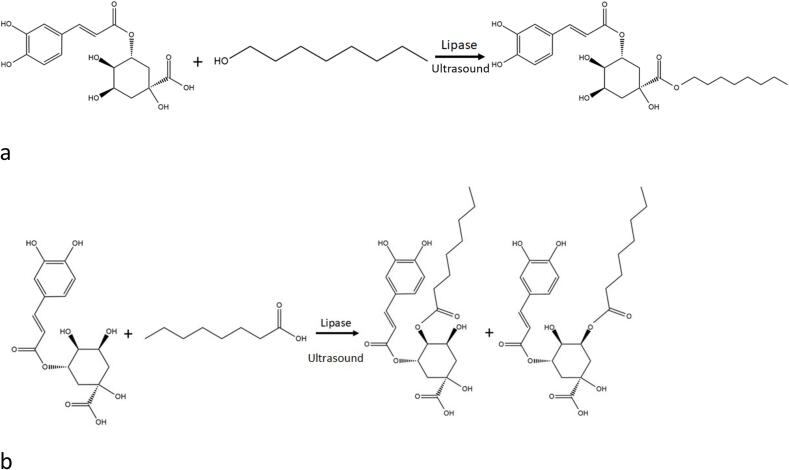
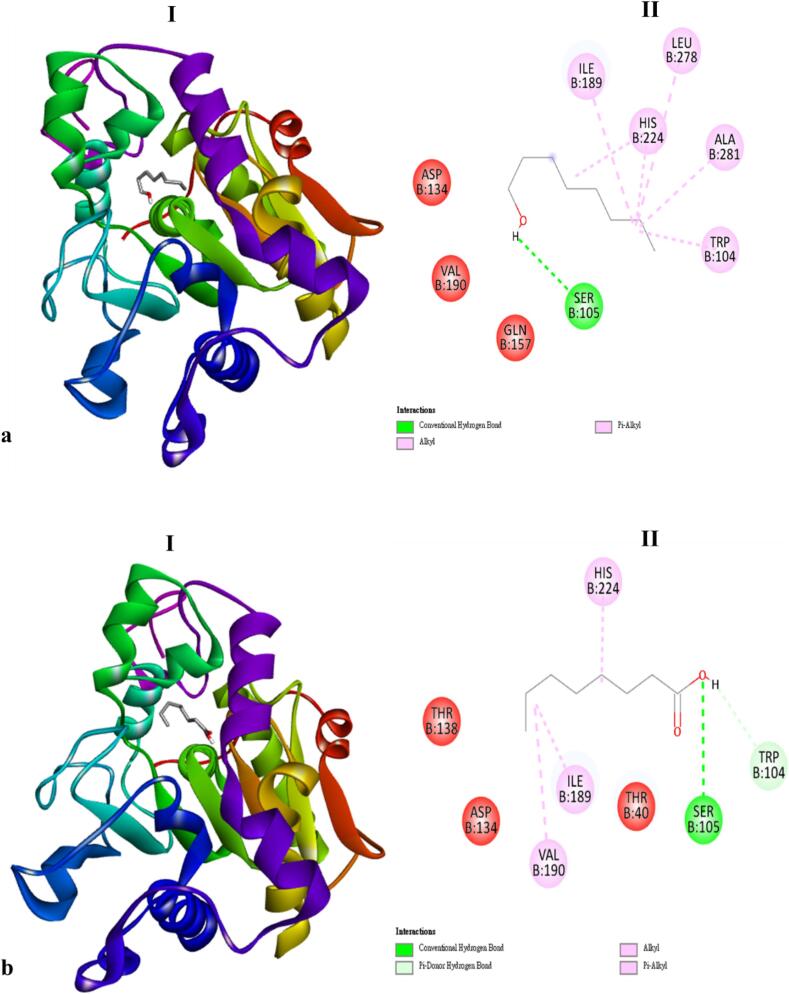
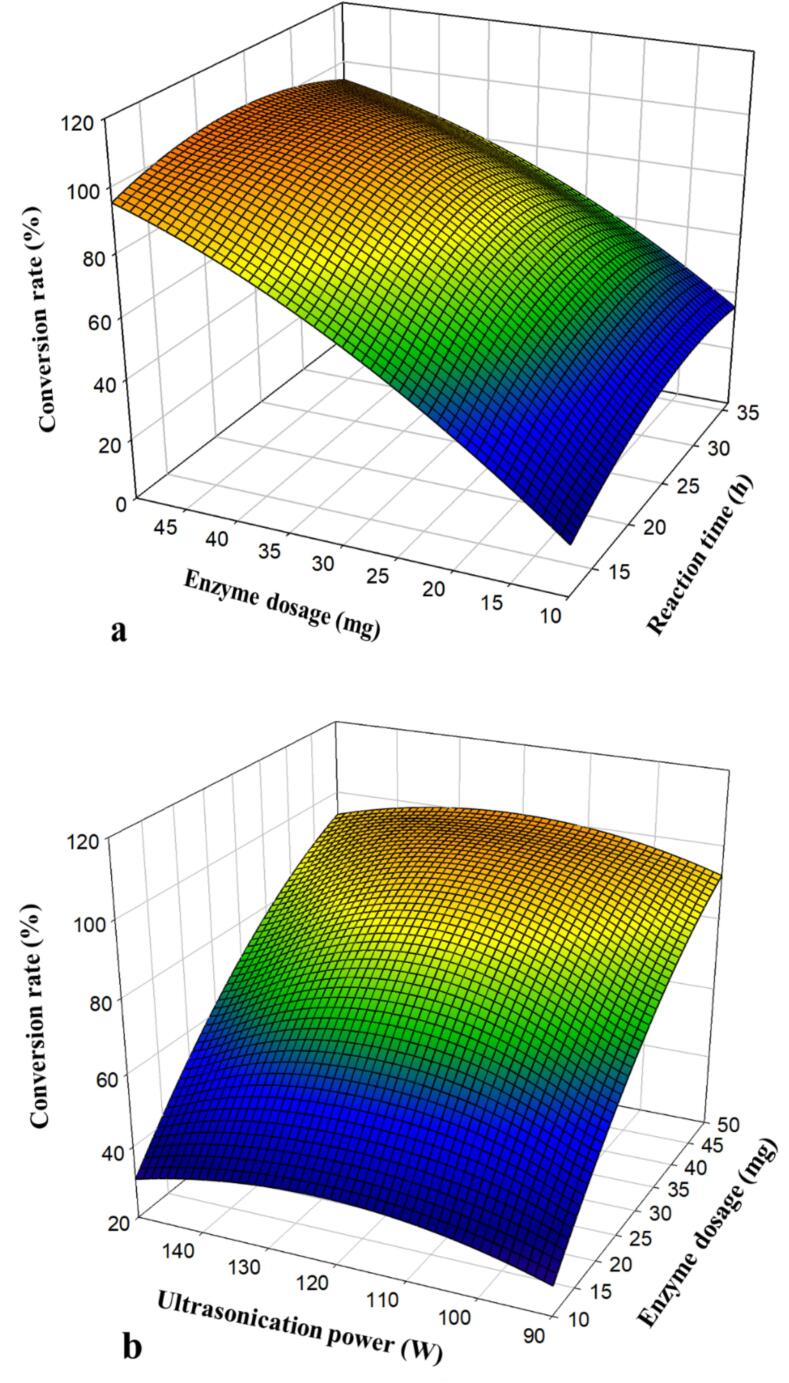
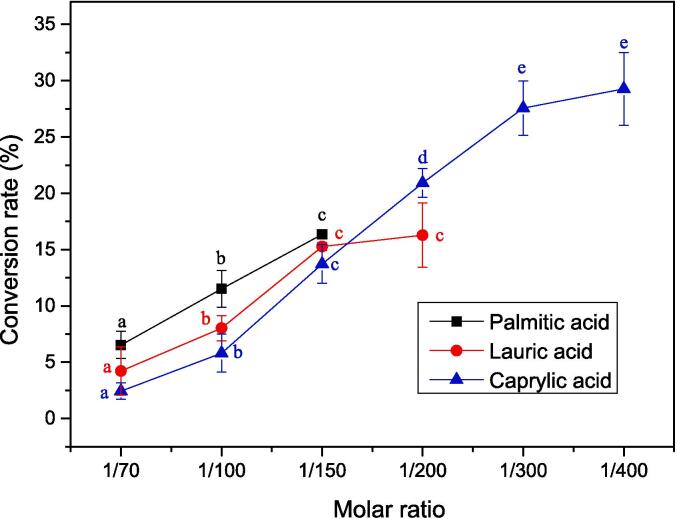
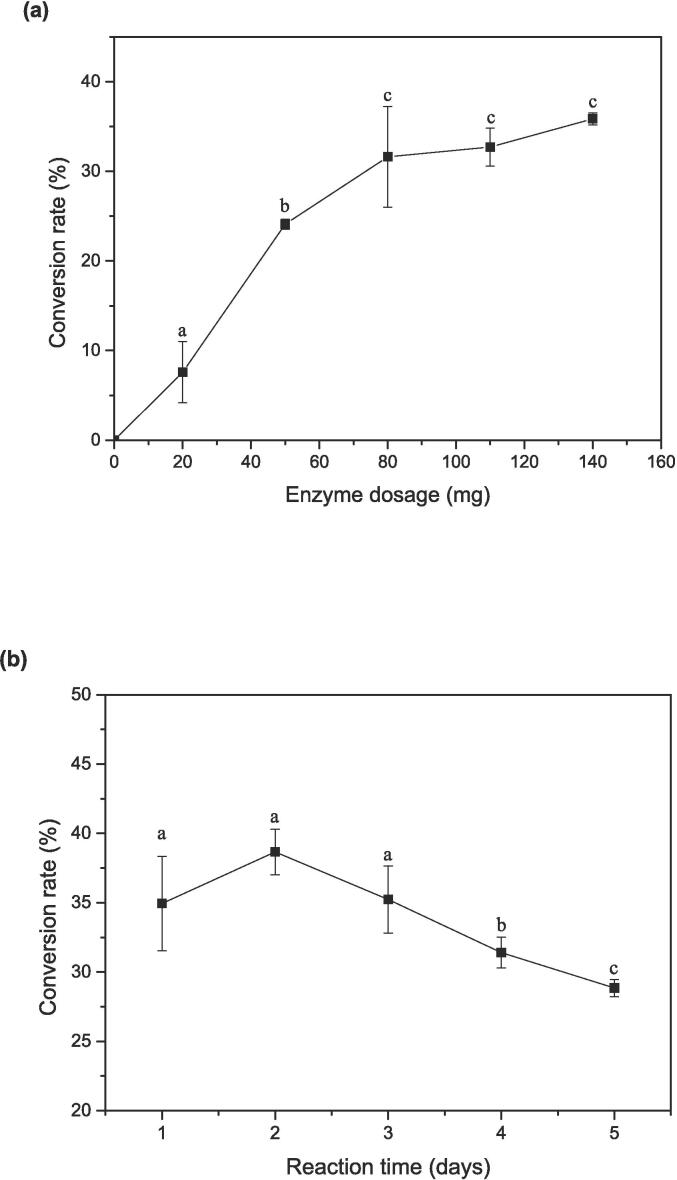
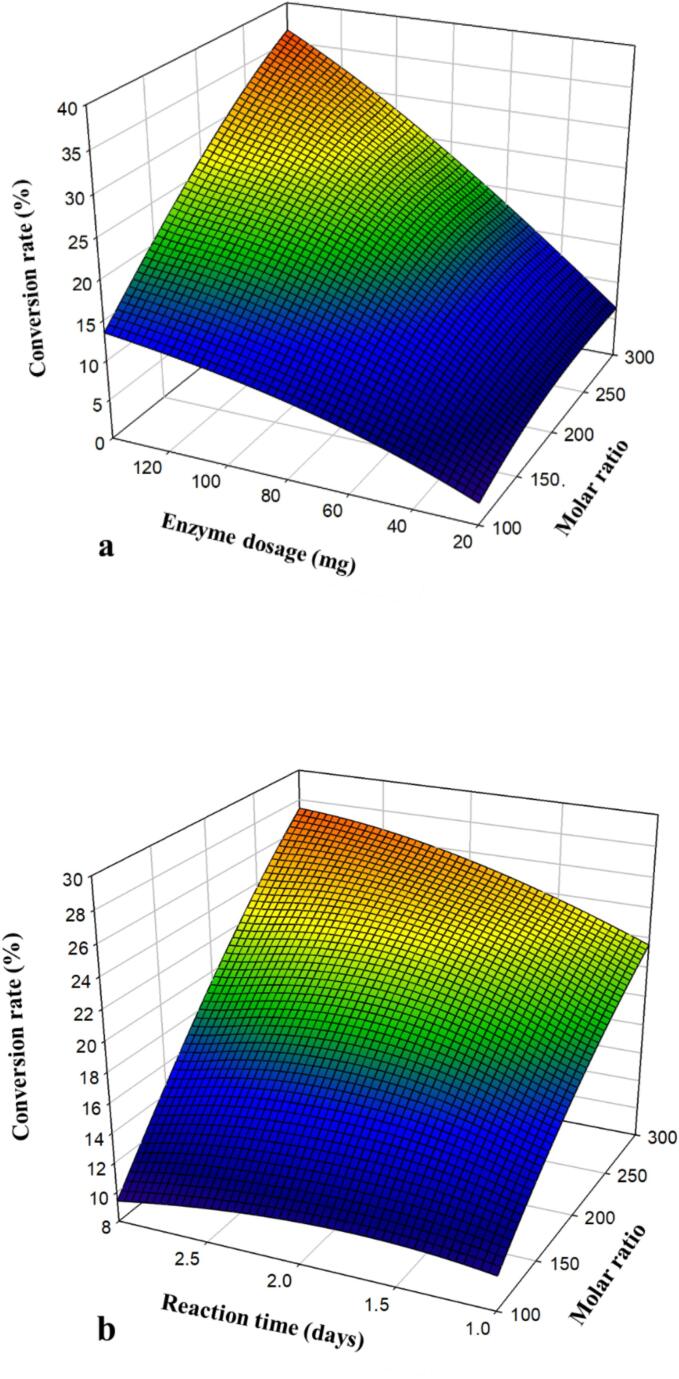
Chlorogenic acid, a well-known antioxidant, has potential applications in health care, food, and cosmetic sectors. However, its low solubility hinders its application at the industrial scale. The primary goal of the present study was to increase the lipophilic property of chlorogenic acid through esterification using an ultrasonication approach and Novozym® 435 as the catalyst. The esterification was executed in two ways. In the first method, chlorogenic acid was converted to chlorogenic acid ester using octanol in a solvent-free reaction. Catalytic factors such as reaction time (12 h ∼ 36 h), enzyme dosage (10 ∼ 50 mg), and ultrasonication power (90 ∼ 150 W) were optimized using Box-Behnken design (BBD) while temperature (60 ℃) and molar ration (chlorogenic acid/octanol, 1:500) were kept constant. A maximum conversion rate of 95.3 % was achieved when the esterification was performed for 12 h at 120 W ultrasonication power and 50 mg enzyme dosage. Contrary to the first method, when esterification was done using caprylic acid in the presence of 2-methyl-2-butanol as a solvent, the conversion rate was relatively low. Despite optimization of factors including molar ratio, enzyme dosage, and reaction time, the highest conversion rate achieved was of only 36.8 %. Moreover, molecular docking results revealed that the lowest binding energy was between lipase and octanol. The finding of the study clearly stated that the esterification of chlorogenic acid was more effective in a solvent-free condition as compared to in the presence of solvent.
绿原酸是一种著名的抗氧化剂,在医疗保健、食品和化妆品领域具有潜在应用。然而,其低溶解度阻碍了它在工业规模上的应用。本研究的主要目标是通过使用超声处理方法并以诺维信®435作为催化剂进行酯化反应来提高绿原酸的亲脂性。酯化反应以两种方式进行。在第一种方法中,绿原酸在无溶剂反应中使用辛醇转化为绿原酸酯。使用Box-Behnken设计(BBD)优化反应时间(12小时至36小时)、酶用量(10至50毫克)和超声功率(90至150瓦)等催化因素,同时保持温度(60℃)和摩尔比(绿原酸/辛醇,1:500)不变。当在120瓦超声功率和50毫克酶用量下进行12小时酯化反应时,实现了95.3%的最大转化率。与第一种方法相反,当在2-甲基-2-丁醇作为溶剂存在的情况下使用辛酸进行酯化反应时,转化率相对较低。尽管对包括摩尔比、酶用量和反应时间等因素进行了优化,但实现的最高转化率仅为36.8%。此外,分子对接结果表明脂肪酶与辛醇之间的结合能最低。该研究结果清楚地表明,与有溶剂存在的情况相比,绿原酸在无溶剂条件下的酯化反应更有效。