Chong Caleb Wee Chung, Chaudhuri Debajyoti, Varikara Krishnan
Department of Medicine, Northern Adelaide Local Health Network, Adelaide, South Australia, Australia
Department of Cardiology, Northern Adelaide Local Health Network, Adelaide, South Australia, Australia.
BMJ Case Rep. 2025 Jan 4;18(1):e260109. doi: 10.1136/bcr-2024-260109.
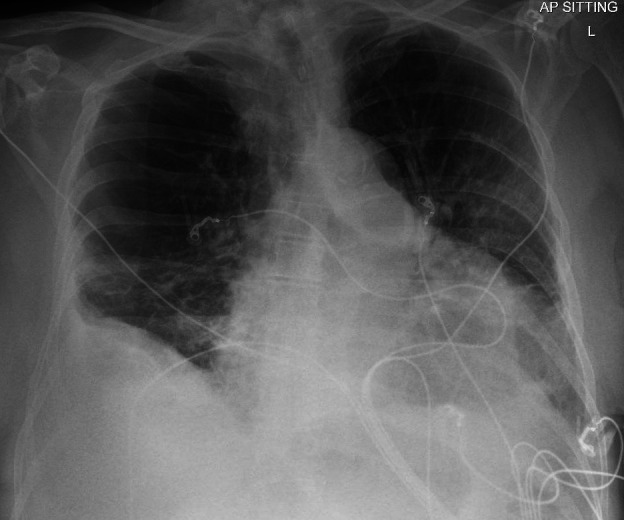
Ehlers-Danlos syndromes (EDS) are a group of connective tissue disorders associated with skin, ligament, blood vessel and organ abnormalities. Skin hyperextensibility, joint hypermobility and widened atrophic scars are characteristic of classical EDS. Vascular complications, though rare in classical EDS, can be life-threatening, and this necessitates one to look for vascular associations in non-vascular, such as classical, forms of EDS due to the heterogeneity of the syndrome. Reports of vascular complications in classical EDS are often limited to haematomas being the most frequent manifestation. This case report discusses an elderly patient with genetically confirmed classical EDS who suffered from a series of pulmonary and vascular complications, including recurrent spontaneous haemopneumothorax, aortic dissection and eventual mesenteric haemorrhage, which resulted in his death. Identifying clinical red flags is crucial to predict such future catastrophic vascular events and guide appropriate counselling and management strategies for individuals with classical EDS.
埃勒斯-当洛综合征(EDS)是一组与皮肤、韧带、血管和器官异常相关的结缔组织疾病。皮肤过度伸展、关节活动过度和萎缩性瘢痕增宽是典型EDS的特征。血管并发症在典型EDS中虽罕见,但可能危及生命,由于该综合征的异质性,这就需要在非血管型(如典型型)EDS中寻找血管关联。典型EDS血管并发症的报告通常局限于血肿是最常见的表现。本病例报告讨论了一名经基因确诊为典型EDS的老年患者,他出现了一系列肺部和血管并发症,包括复发性自发性血气胸、主动脉夹层以及最终的肠系膜出血,这些并发症导致了他的死亡。识别临床警示信号对于预测此类未来灾难性血管事件以及指导对典型EDS患者的适当咨询和管理策略至关重要。