Zhao Qihang, Wang Qiang, Yao Qinghua, Yang Zhengdong, Li Wenfang, Cheng Xiaojie, Wen Yingling, Chen Rong, Xu Junfang, Wang Xuanying, Qin Dexiang, Zhu Shuyang, He Liujie, Li Nan, Wu Yanfeng, Yu Yizhi, Cao Xuetao, Wang Pin
National Key Laboratory of Immunity & Inflammation, Second Military Medical University, Shanghai, China.
Department of Urology, People's Hospital, Peking University, Beijing, China.
Cell Res. 2025 Feb;35(2):97-116. doi: 10.1038/s41422-024-01060-w. Epub 2025 Jan 6.
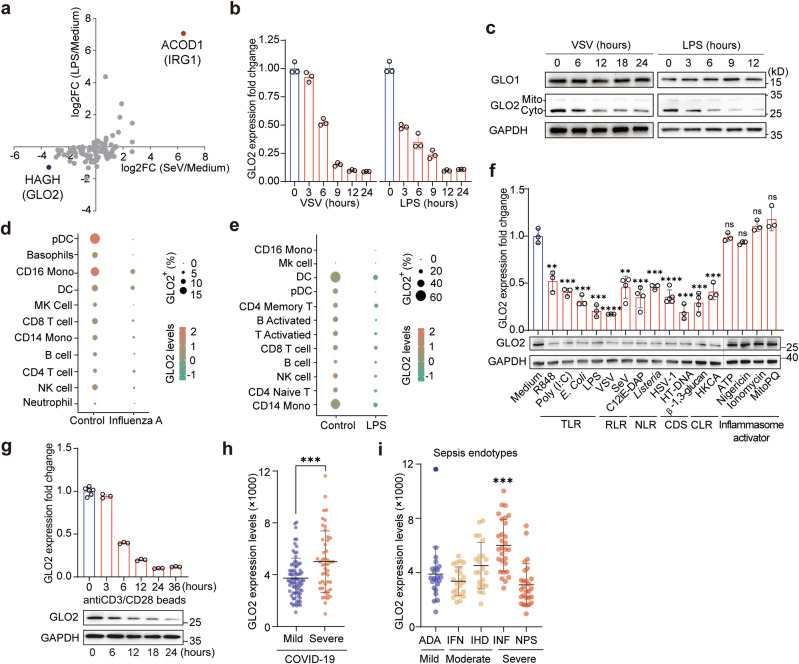
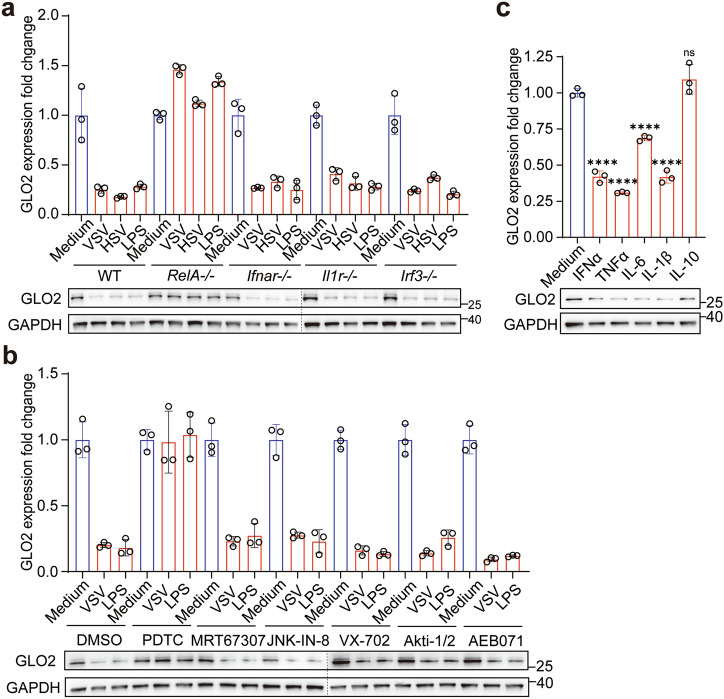
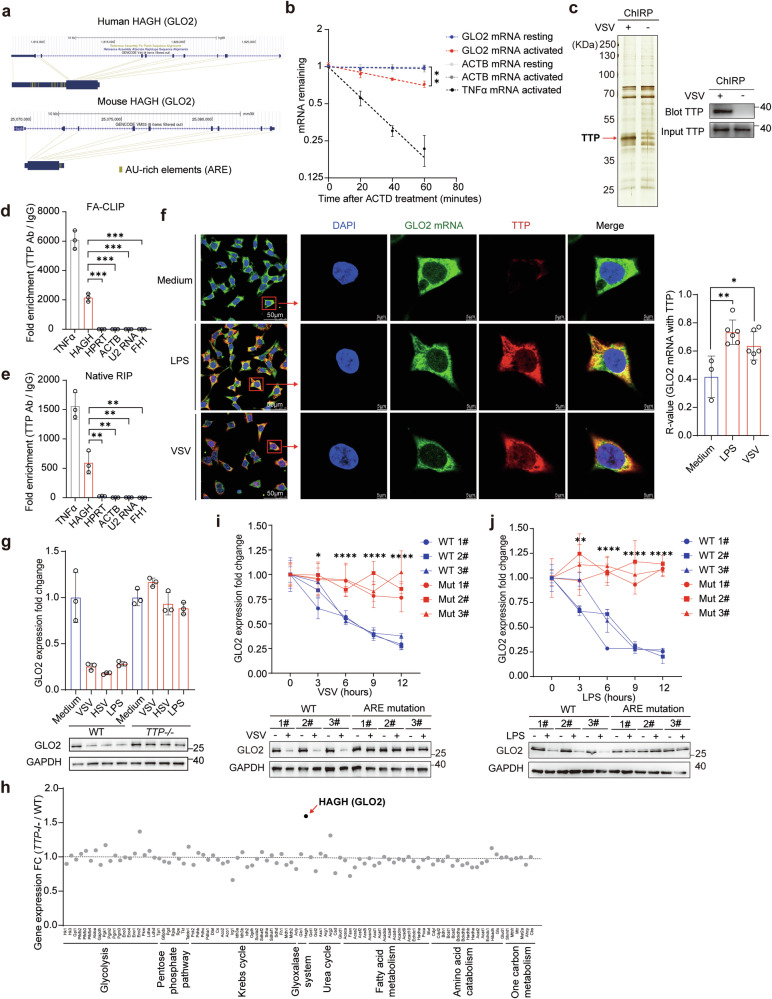
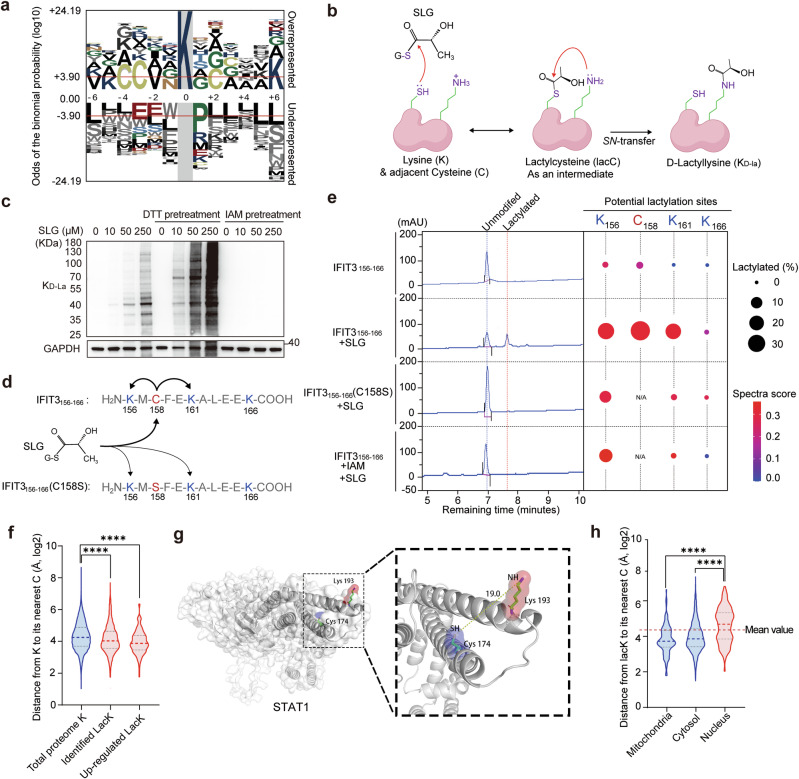
Immunometabolism is critical in the regulation of immunity and inflammation; however, the mechanism of preventing aberrant activation-induced immunopathology remains largely unclear. Here, we report that glyoxalase II (GLO2) in the glycolysis branching pathway is specifically downregulated by NF-κB signaling during innate immune activation via tristetraprolin (TTP)-mediated mRNA decay. As a result, its substrate S-D-lactoylglutathione (SLG) accumulates in the cytosol and directly induces D-lactyllysine modification of proteins. This nonenzymatic lactylation by SLG is greatly facilitated by a nearby cysteine residue, as it initially reacts with SLG to form a reversible S-lactylated thiol intermediate, followed by SN-transfer of the lactyl moiety to a proximal lysine. Lactylome profiling identifies 2255 lactylation sites mostly in cytosolic proteins of activated macrophages, and global protein structure analysis suggests that proximity to a cysteine residue determines the susceptibility of lysine to SLG-mediated D-lactylation. Furthermore, lactylation is preferentially enriched in proteins involved in immune activation and inflammatory pathways, and D-lactylation at lysine 310 (K310) of RelA attenuates inflammatory signaling and NF-κB transcriptional activity to restore immune homeostasis. Accordingly, TTP-binding site mutation or overexpression of GLO2 in vivo blocks this feedback lactylation in innate immune cells and promotes inflammation, whereas genetic deficiency or pharmacological inhibition of GLO2 restricts immune activation and attenuates inflammatory immunopathology both in vitro and in vivo. Importantly, dysregulation of the GLO2/SLG/D-lactylation regulatory axis is closely associated with human inflammatory phenotypes. Overall, our findings uncover an immunometabolic feedback loop of SLG-induced nonenzymatic D-lactylation and implicate GLO2 as a promising target for combating clinical inflammatory disorders.
免疫代谢在免疫和炎症调节中至关重要;然而,防止异常激活诱导的免疫病理的机制在很大程度上仍不清楚。在此,我们报告糖酵解分支途径中的乙二醛酶II(GLO2)在先天免疫激活过程中通过锌指蛋白36(TTP)介导的mRNA降解被NF-κB信号特异性下调。结果,其底物S-D-乳酰谷胱甘肽(SLG)在细胞质中积累,并直接诱导蛋白质的D-乳酰赖氨酸修饰。SLG的这种非酶促乳酰化在附近的半胱氨酸残基的极大促进下发生,因为它最初与SLG反应形成可逆的S-乳酰化硫醇中间体,随后乳酰部分通过SN-转移至近端赖氨酸。乳酰化组分析确定了2255个乳酰化位点,主要位于活化巨噬细胞的胞质蛋白中,整体蛋白质结构分析表明,靠近半胱氨酸残基决定了赖氨酸对SLG介导的D-乳酰化的敏感性。此外,乳酰化优先富集于参与免疫激活和炎症途径的蛋白质中,RelA赖氨酸310(K310)处的D-乳酰化减弱炎症信号和NF-κB转录活性以恢复免疫稳态。因此,TTP结合位点突变或体内GLO2的过表达阻断了先天免疫细胞中的这种反馈性乳酰化并促进炎症,而GLO2的基因缺陷或药理学抑制在体外和体内均限制免疫激活并减轻炎症性免疫病理。重要的是,GLO2/SLG/D-乳酰化调节轴的失调与人类炎症表型密切相关。总体而言,我们的发现揭示了SLG诱导的非酶促D-乳酰化的免疫代谢反馈回路,并表明GLO2是对抗临床炎症性疾病的有希望的靶点。