Suh Dong Hye, Kim Tae-Eun, Lee Sang Jun, Jeong Su Jin, Baek Eunsun, Shin Min Kyung
Dermatology, Arumdaun Nara Dermatologic Clinic, Seoul, Korea.
Department of Dermatology, School of Medicine, Kyung Hee University Hospital, Seoul, Korea.
J Cosmet Dermatol. 2025 Jan;24(1):e16772. doi: 10.1111/jocd.16772.
Topical retinoids, while renowned for their efficacy in treating acne vulgaris, are often hampered by inter-individual variability in tolerability. This challenge, primarily driven by side effects like erythema, scaling, and dryness, significantly impacts patient adherence and, ultimately, treatment outcomes.
This prospective, multi-center, observational study investigated the novel role of a specific dermocosmetic regimen as adjunctive therapy, focusing on its ability to mitigate retinoid-induced side effects and enhance the overall tolerability of acne treatment regimens in a Korean population.
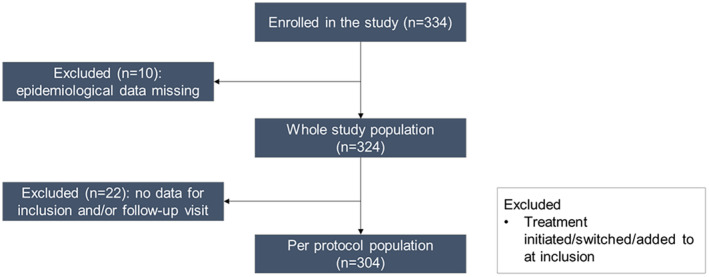
We enrolled 304 patients receiving conventional acne therapies and integrated a standardized dermocosmetic regimen (foaming facial wash and moisturizer) for 12 weeks. Our primary endpoint assessed changes in skin sensitivity scores in both retinoid and non-retinoid users. We incorporated a patient-reported outcome measure evaluating acne's impact on quality of life across different facial areas as a secondary endpoint.
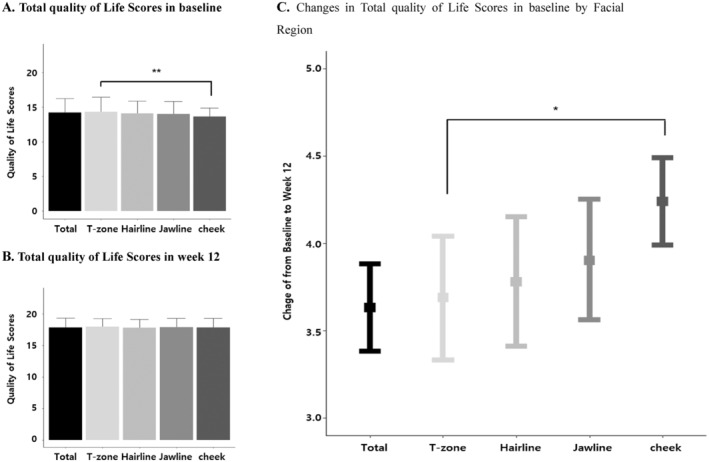
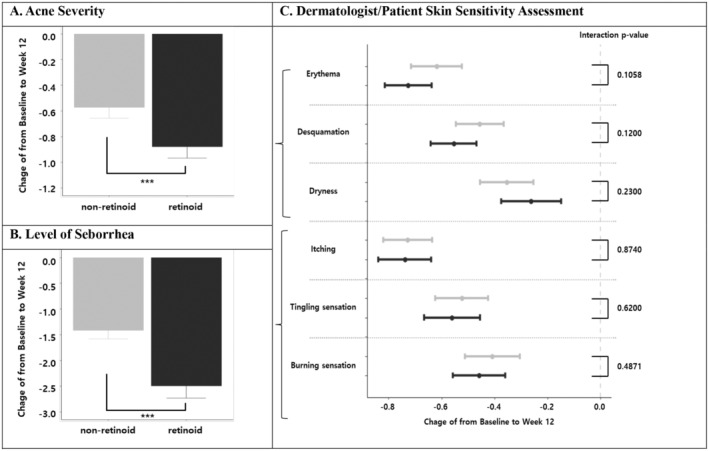
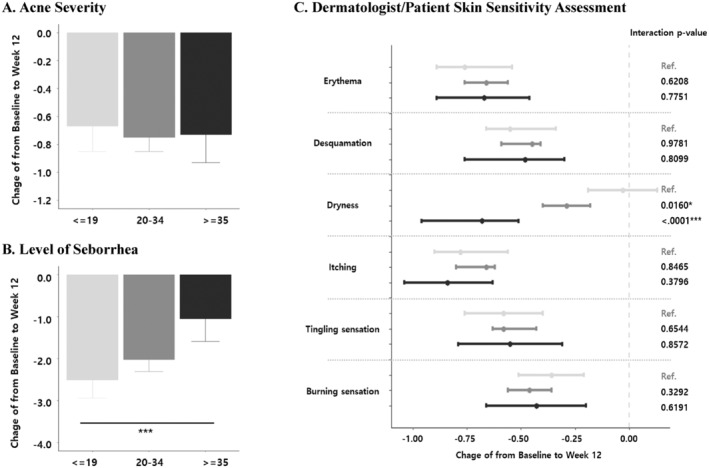
Our results revealed a significant improvement in skin sensitivity across both patient groups, effectively mitigating the anticipated heightened sensitivity in retinoid users. This finding suggests that dermocosmetics may hold the key to unlocking consistent, age-independent tolerance to retinoid therapy. Furthermore, we observed a compelling correlation between improvements in cheek acne and enhanced quality of life, highlighting the profound psychological impact of this specific facial area.
This study pioneers a new understanding of holistic acne management, emphasizing the synergistic potential of dermocosmetics in enhancing treatment adherence, improving long-term outcomes, and ultimately transforming patients' lives.
外用维甲酸类药物虽然以治疗寻常痤疮的疗效而闻名,但耐受性的个体差异常常限制了其应用。这一挑战主要由红斑、脱屑和干燥等副作用驱动,严重影响患者的依从性,最终影响治疗效果。
这项前瞻性、多中心、观察性研究调查了一种特定皮肤美容方案作为辅助治疗的新作用,重点关注其减轻维甲酸类药物引起的副作用以及提高韩国人群痤疮治疗方案总体耐受性的能力。
我们招募了304名接受传统痤疮治疗的患者,并纳入了一种标准化的皮肤美容方案(泡沫洁面乳和保湿霜),为期12周。我们的主要终点是评估维甲酸类药物使用者和非维甲酸类药物使用者的皮肤敏感性评分变化。我们将一项患者报告结局指标作为次要终点,该指标评估痤疮对不同面部区域生活质量的影响。
我们的结果显示,两组患者的皮肤敏感性均有显著改善,有效减轻了维甲酸类药物使用者预期的敏感性增加。这一发现表明,皮肤美容产品可能是实现对维甲酸类药物治疗一致、与年龄无关的耐受性的关键。此外,我们观察到脸颊痤疮的改善与生活质量提高之间存在显著相关性,突出了这一特定面部区域的深远心理影响。
本研究开创了对整体痤疮管理的新认识,强调了皮肤美容产品在提高治疗依从性、改善长期疗效以及最终改变患者生活方面的协同潜力。