
一种通过紫杉醇诱导聚乙二醇化人血清白蛋白自组装制备的具有延长循环时间的协同抗肿瘤化疗/光疗纳米诊疗剂。
A Nanotheranostic Agent for Synergistic Antitumor Chemo/Phototherapy Prepared by Paclitaxel-Induced Self-Assembly of PEGylated Human Serum Albumin with Prolonged Circulation.
作者信息
Liu Changsong, Xu Wenjia, Song Xinlei, Tian Weilu, Liu Fuyan, Wang Fengshan
机构信息
Key Laboratory of Chemical Biology of Natural Products (Ministry of Education), Institute of Biochemical and Biotechnological Drugs, School of Pharmaceutical Sciences, Shandong University, Jinan, Shandong 250012, China.
Department of Pharmacy, Qilu Hospital, Shandong University, Jinan, Shandong 250012, China.
出版信息
ACS Omega. 2024 Dec 16;9(52):51062-51072. doi: 10.1021/acsomega.4c05986. eCollection 2024 Dec 31.
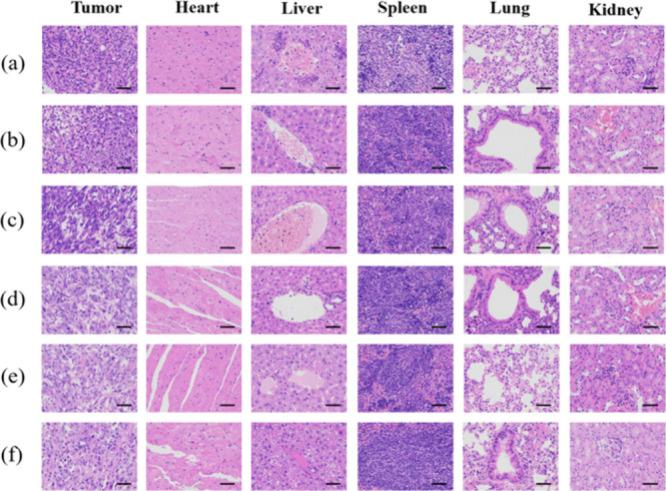
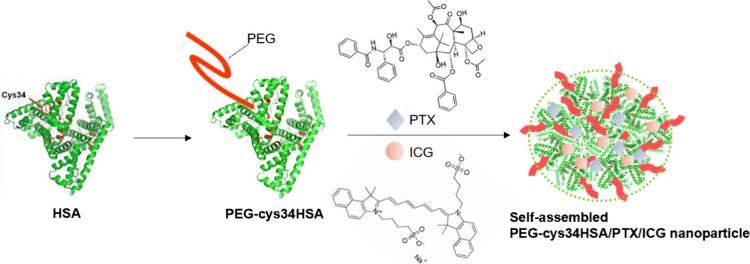
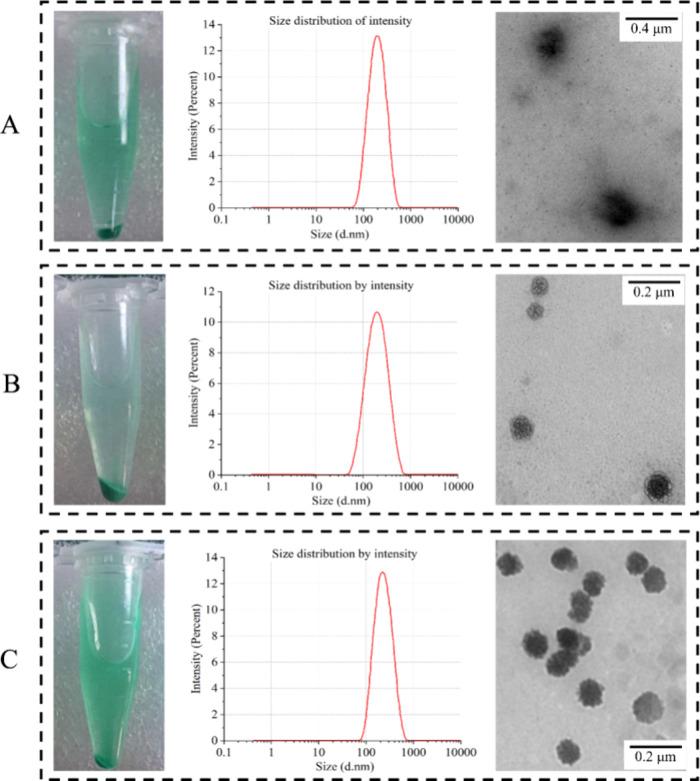
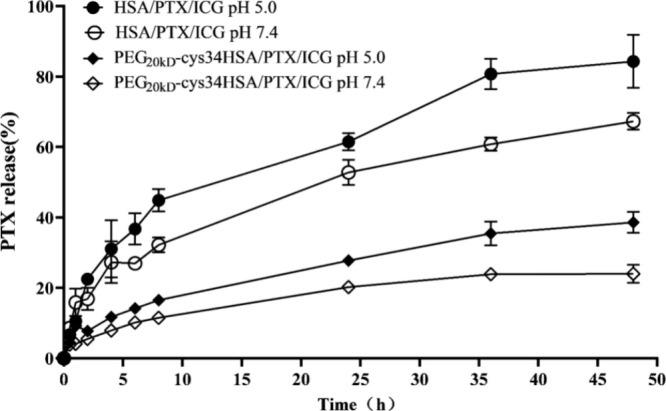
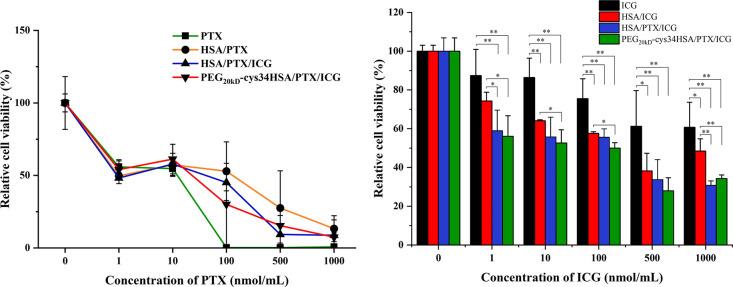
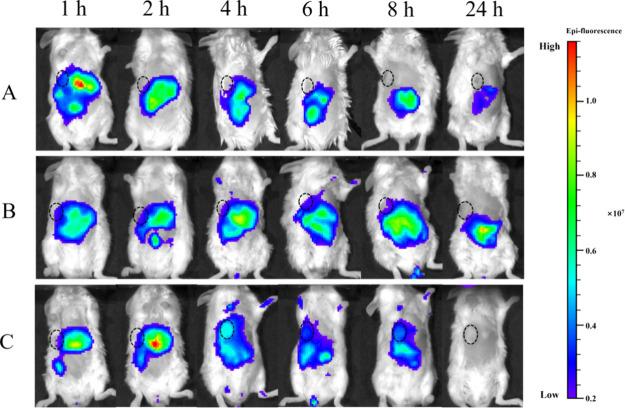
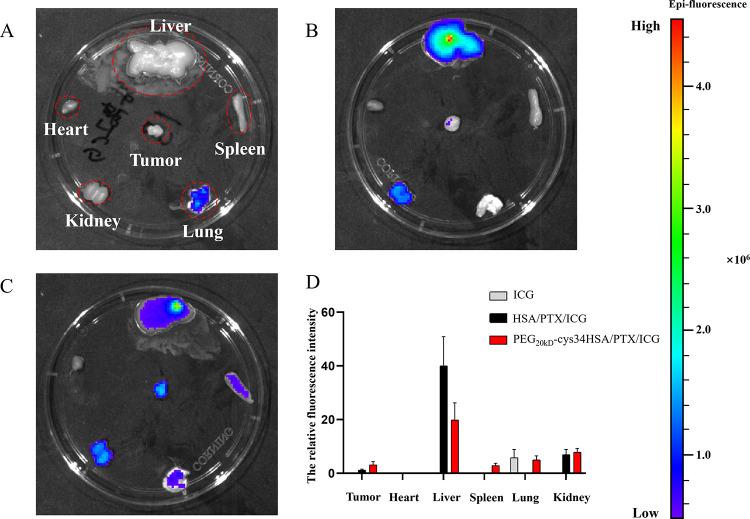
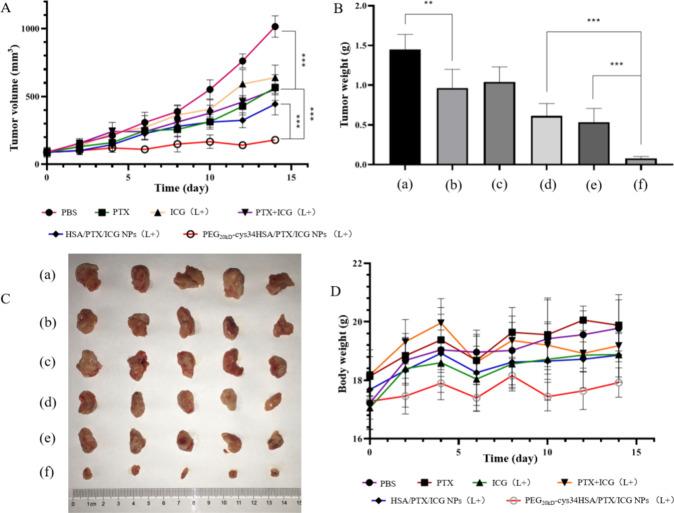
The integration of different therapies to enhance the efficacy and minimize adverse reactions has become popular recently. This approach leverages the complementary mechanisms of action of different treatments, which can lead to better therapeutic outcomes and reduced side effects. Human serum albumin (HSA) exhibits excellent drug loading ability and is often used for biomimetic tumor delivery in multidrug nanocarriers. However, albumin nanocarriers are often unstable with a short plasma half-life. Therefore, a nanotheranostic agent for synergistic antitumor chemo/phototherapy was designed to improve HSA's pharmacokinetic properties, including prolonged circulation. Cys34-specifically PEGylated HSA (PEG-cys34HSA) was used as the nanocarrier, hydrophobic paclitaxel (PTX) served as the chemotherapeutic drug and self-assembly inducer of nanoparticles (NPs), and near-infrared dye indocyanine green (ICG) was utilized for phototherapy and fluorescence imaging. PEGylation with 20 kDa polyethylene glycol (PEG) promoted the formation of uniform and regular NPs more effectively than PEG. PEG also enhanced the particle size, drug loading, and encapsulation efficiency. Moreover, PEG significantly enhanced tumor targeting without hindering endocytosis, transport, and release of NPs. PEG-cys34HSA/PTX/ICG-mediated combination therapy exhibited synergistic inhibitory effects on tumor growth both and . Thus, PEG-cys34HSA shows potential as an alternative nanocarrier. This study provides the foundation for future investigations into PEG-modified nanocarriers and comprehensive tumor treatment.
整合不同疗法以提高疗效并将不良反应降至最低,这一方法近来颇受欢迎。该方法利用了不同治疗手段的互补作用机制,从而可带来更好的治疗效果并减少副作用。人血清白蛋白(HSA)具有出色的载药能力,常用于多药纳米载体的仿生肿瘤递送。然而,白蛋白纳米载体往往不稳定,血浆半衰期较短。因此,设计了一种用于协同抗肿瘤化疗/光疗的纳米诊疗剂,以改善HSA的药代动力学性质,包括延长循环时间。半胱氨酸34特异性聚乙二醇化的HSA(PEG-cys34HSA)用作纳米载体,疏水性紫杉醇(PTX)用作化疗药物和纳米颗粒(NPs)的自组装诱导剂,近红外染料吲哚菁绿(ICG)用于光疗和荧光成像。与聚乙二醇相比,用20 kDa聚乙二醇(PEG)进行聚乙二醇化更有效地促进了均匀且规则的NPs的形成。PEG还增加了粒径、载药量和包封率。此外,PEG显著增强了肿瘤靶向性,同时不妨碍NPs的内吞、转运和释放。PEG-cys34HSA/PTX/ICG介导的联合疗法在体内和体外均对肿瘤生长表现出协同抑制作用。因此,PEG-cys34HSA显示出作为替代纳米载体的潜力。本研究为未来对PEG修饰的纳米载体和综合肿瘤治疗的研究奠定了基础。
 Zotero 插件