Ricupito Roberto, Grassi Alberto, Zanuso Matteo, Torneri Paolo
II Clinic Rizzoli Orthopaedic Institute.
University of Verona.
Int J Sports Phys Ther. 2025 Jan 2;20(1):40-47. doi: 10.26603/001c.127511. eCollection 2025.
Anterior cruciate ligament (ACL) reconstruction involves prolonged rehabilitation, with Return to Sport (RTS) as a key goal for athletes. Integrating Dual Task (DT) strategies, which combine cognitive and physical tasks, is critical, as multitasking mirrors real-world and sports-specific demands. Assessing how distractions affect performance is essential to optimize RTS outcomes for both the reconstructed and healthy limbs.
To analyze the influence of DT on the performance of the Triple Hop Test for distance (THD) in individuals' status post ACL reconstruction.
Cross Sectional.
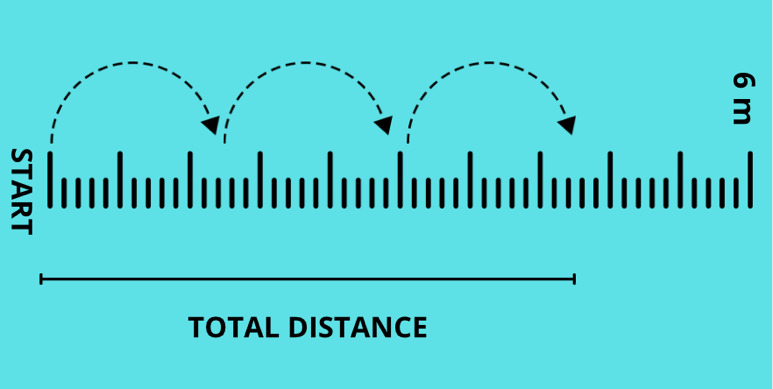
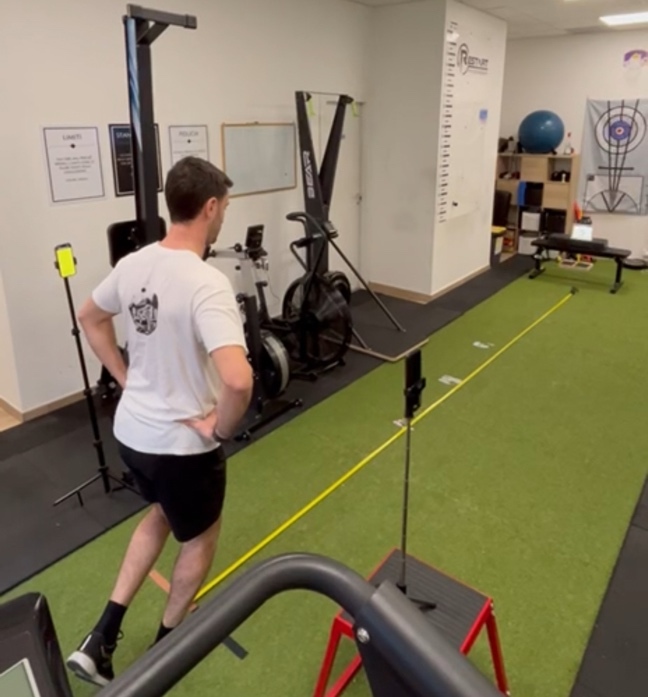
Seventeen patients post-ACL were recruited and performed THD under two conditions: single task (standard condition) and dual task (with an added neurocognitive task). Assessments were conducted on both the healthy and the previously injured limb over six meters, measured via a standard measuring tape. Paired t-tests and Mann-Whitney-Wilcoxon or Kruskal-Wallis tests were applied to investigate differences. Categorical variables were compared using chi-squared tests.
There was a significant difference in average distance between single task performances in the healthy and previously operated limbs, with a difference of 20.71 cm (p=0.016). A significant difference was also observed in DT performance, with a distance variation of 10.41 cm (p=0.038). Comparing performances, both the healthy and the ACL-reconstructed limbs showed performance deterioration under DT conditions, with a greater percentage decline in the healthy limb.
Dual Task conditions appear to hinder performance in the THD in both the healthy and post-ACL reconstructed limbs.
3b.
前交叉韧带(ACL)重建需要长期康复,恢复运动(RTS)是运动员的关键目标。整合双重任务(DT)策略,即将认知任务和身体任务相结合,至关重要,因为多任务处理反映了现实世界和特定运动的需求。评估分心如何影响表现对于优化重建肢体和健康肢体的RTS结果至关重要。
分析双重任务对ACL重建术后个体进行跳远测试(THD)表现的影响。
横断面研究。
招募了17名ACL重建术后患者,在两种条件下进行THD测试:单任务(标准条件)和双重任务(增加一项神经认知任务)。通过标准卷尺在6米距离上对健康肢体和先前受伤的肢体进行评估。应用配对t检验以及曼-惠特尼-威尔科克森或克鲁斯卡尔-沃利斯检验来研究差异。使用卡方检验比较分类变量。
健康肢体和先前手术肢体的单任务表现的平均距离存在显著差异,相差20.71厘米(p = 0.016)。在双重任务表现中也观察到显著差异,距离变化为10.41厘米(p = 0.038)。比较表现时,健康肢体和ACL重建肢体在双重任务条件下均表现出性能下降,健康肢体的下降百分比更大。
双重任务条件似乎会阻碍健康肢体和ACL重建术后肢体在THD中的表现。
3b。