He Xin, Chen Mulan, Fan Yepeng, Wu Bin, Dong Zhifang
Growth, Development, and Mental Health of Children and Adolescence Center, Pediatric Research Institute, Ministry of Education Key Laboratory of Child Development and Disorders, National Clinical Research Center for Child Health and Disorders, Chongqing Key Laboratory of Child Neurodevelopment and Cognitive Disorders, Children's Hospital of Chongqing Medical University, Chongqing 400014, China.
Genes Dis. 2024 Sep 7;12(2):101429. doi: 10.1016/j.gendis.2024.101429. eCollection 2025 Mar.
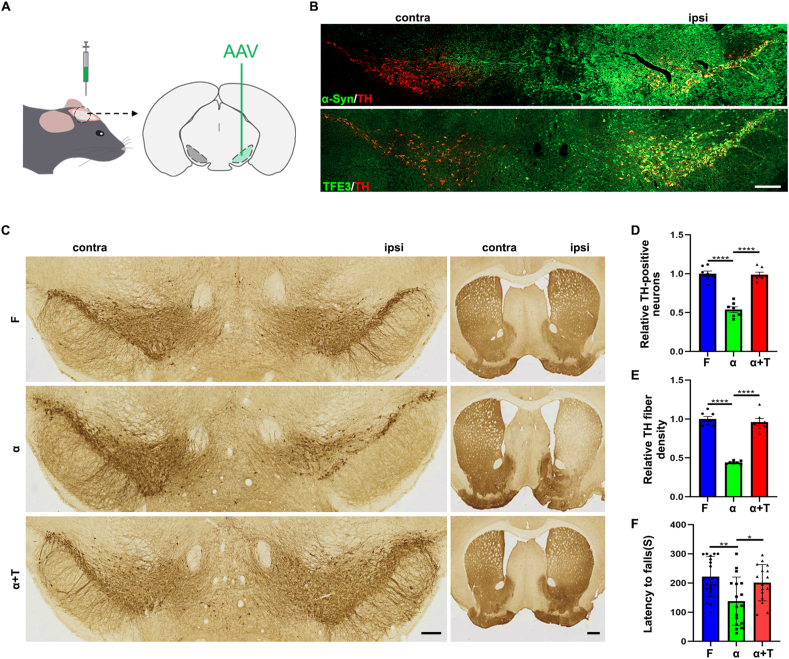
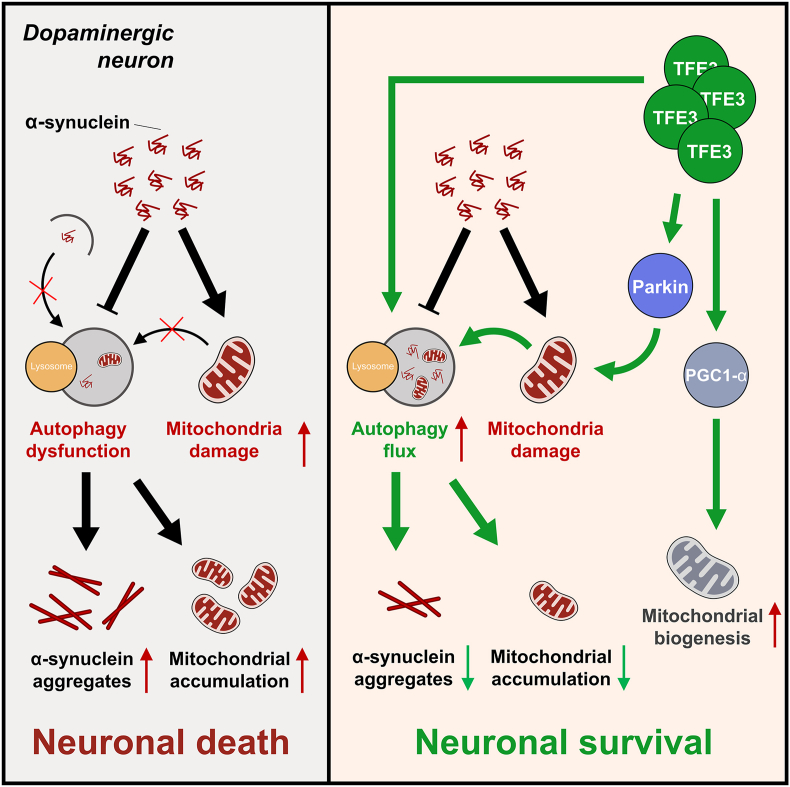
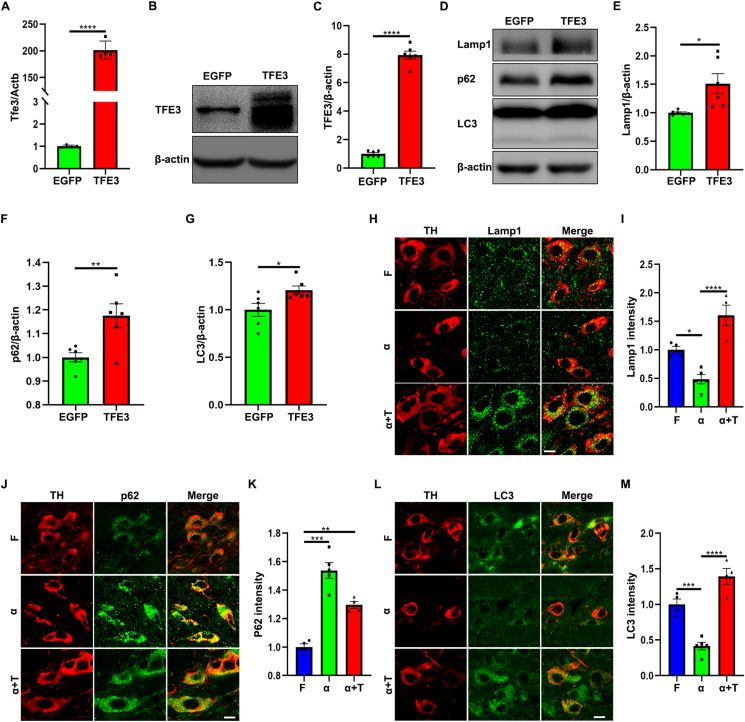
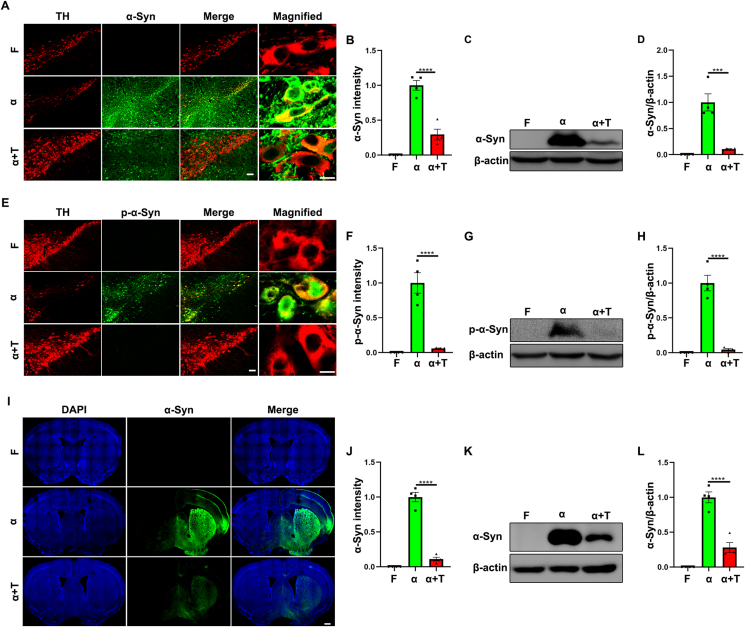
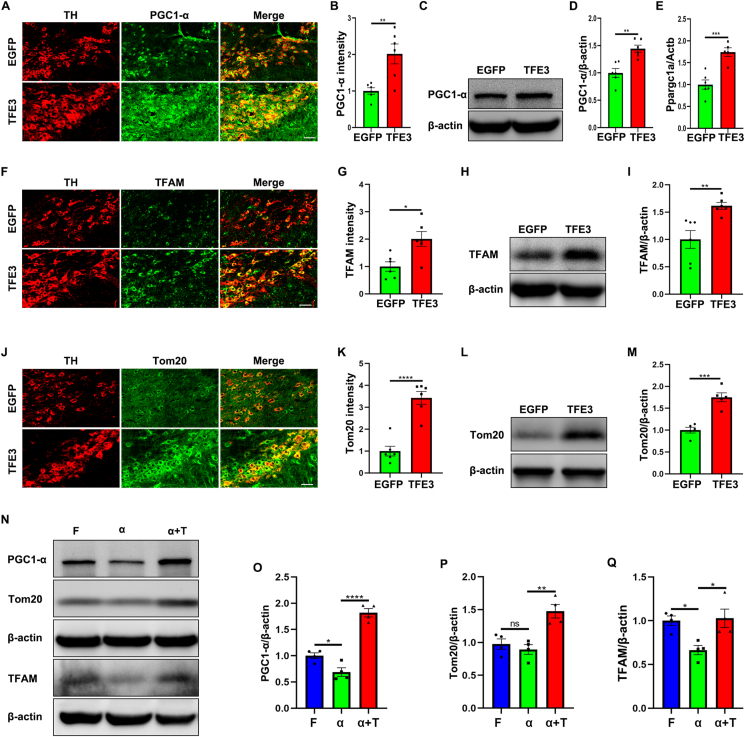
Parkinson's disease (PD) is a neurodegenerative disorder characterized by fibrillar neuronal inclusions containing aggregated α-synuclein (α-Syn). While the pathology of PD is multifaceted, the aggregation of α-Syn and mitochondrial dysfunction are well-established hallmarks in its pathogenesis. Recently, TFE3, a transcription factor, has emerged as a regulator of autophagy and metabolic processes. However, it remains unclear whether TFE3 can facilitate the degradation of α-Syn and regulate mitochondrial metabolism specifically in dopaminergic neurons. In this study, we demonstrate that TFE3 overexpression significantly mitigates the loss of dopaminergic neurons and reduces the decline in tyrosine hydroxylase-positive fiber density, thereby restoring motor function in an α-Syn overexpression model of PD. Mechanistically, TFE3 overexpression reversed α-Syn-mediated impairment of autophagy, leading to enhanced α-Syn degradation and reduced aggregation. Additionally, TFE3 overexpression inhibited α-Syn propagation. TFE3 overexpression also reversed the down-regulation of Parkin, promoting the clearance of accumulated mitochondria, and restored the expression of PGC1-α and TFAM, thereby enhancing mitochondrial biogenesis in the adeno-associated virus-α-Syn model. These findings further underscore the neuroprotective role of TFE3 in PD and provide insights into its underlying mechanisms, suggesting TFE3 as a potential therapeutic target for PD.
帕金森病(PD)是一种神经退行性疾病,其特征是含有聚集的α-突触核蛋白(α-Syn)的纤维状神经元内含物。虽然PD的病理是多方面的,但α-Syn的聚集和线粒体功能障碍是其发病机制中公认的标志。最近,转录因子TFE3已成为自噬和代谢过程的调节剂。然而,尚不清楚TFE3是否能促进α-Syn的降解并特异性调节多巴胺能神经元中的线粒体代谢。在本研究中,我们证明TFE3过表达显著减轻多巴胺能神经元的损失,并降低酪氨酸羟化酶阳性纤维密度的下降,从而在PD的α-Syn过表达模型中恢复运动功能。机制上,TFE3过表达逆转了α-Syn介导的自噬损伤,导致α-Syn降解增强和聚集减少。此外,TFE3过表达抑制α-Syn的传播。TFE3过表达还逆转了Parkin的下调,促进了积累线粒体的清除,并恢复了PGC1-α和TFAM的表达,从而增强了腺相关病毒-α-Syn模型中的线粒体生物合成。这些发现进一步强调了TFE3在PD中的神经保护作用,并提供了其潜在机制的见解,表明TFE3作为PD的潜在治疗靶点。