Panigrahi Pritam, Ganesh Venkata, Angrup Archana, Sahni Neeru, Biswal Manisha, Yaddanapudi Lakshminarayana
Department of Anaesthesia and Intensive Care, Postgraduate Institute of Medical Education and Research, Chandigarh, India.
Department of Medical Microbiology, Postgraduate Institute of Medical Education and Research, Chandigarh, India.
Indian J Crit Care Med. 2024 Dec;28(12):1139-1146. doi: 10.5005/jp-journals-10071-24856. Epub 2024 Nov 30.
Development of ventilator-associated pneumonia (VAP) is attributed to the microaspiration of pooled secretions around the cuff of airway devices. Despite the emphasis on the use of endotracheal tubes (ET) with subglottic secretion (SS) drainage ports to prevent VAP, the quality of the evidence for this recommendation remains moderate. This prospective observational study analyzed microbiological concordance between SS and endotracheal aspirate (ETA) cultures to generate further evidence in this regard.
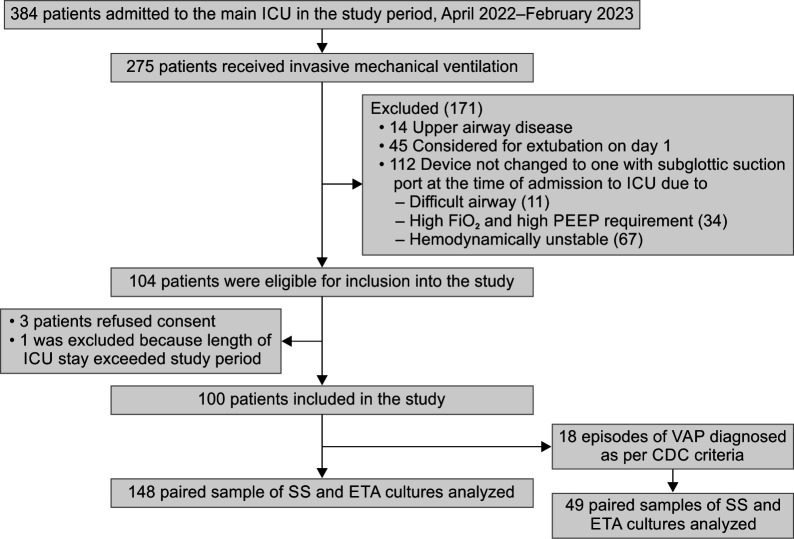
Paired samples (SS and ETA) of 100 consenting patients admitted to intensive care unit (ICU) were sent on day 1, 4, and 7 to the microbiology laboratory where they were transcultured and species identification was performed. The SS and ETA were considered concordant or discordant based on isolated organisms and antibiotic sensitivity profile. Clinical surveillance for VAP was done according to CDC criteria during the first week of ventilation.
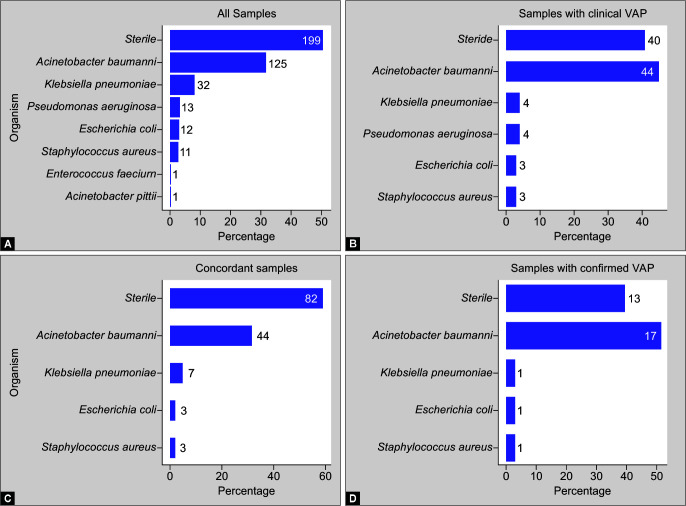
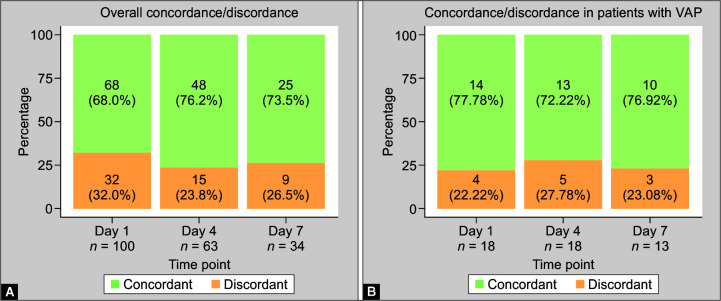
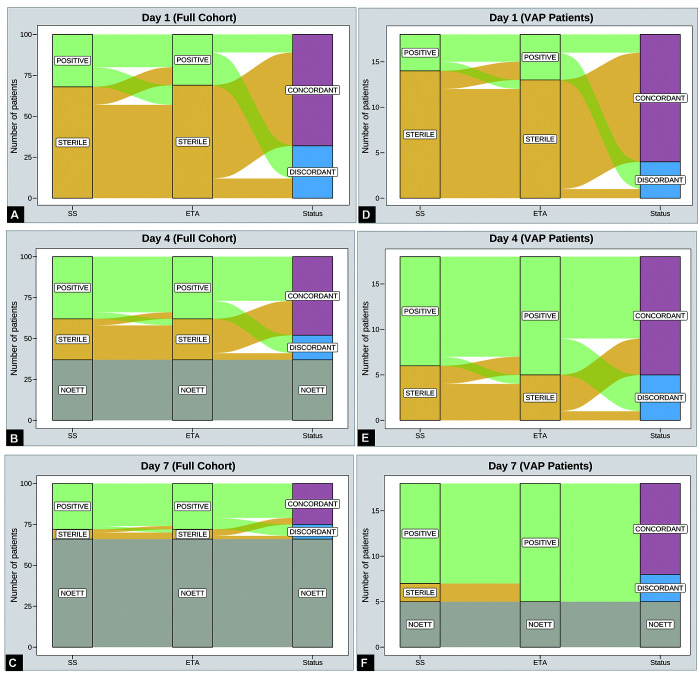
For a total of 197 paired samples, the overall concordance of SS and ETA cultures was 71.5%, with day-wise concordances of 68, 76.2, and 73.5% for D1, D4, and D7, respectively. Gram-negatives bacteria were the most frequently isolated, with 125 (31.7%) samples reporting Amongst 18 patients clinically diagnosed with VAP during the first week of MV, the concordance between SS and ETA was 73.5%, and day-wise concordance was 77.2, 72.2, and 76.9% on D1, D4, and D7, respectively.
A fairly high microbiological concordance was observed in SS and ETA samples obtained from patients with invasive airway devices, and similar concordance was found in patients developing VAP during the first week of ventilation.
Panigrahi P, Ganesh V, Angrup A, Sahni N, Biswal M, Yaddanapudi L. Microbiological Concordance of Subglottic Secretion and Tracheal Aspirate Cultures of Critically Ill Patients with Invasive Airway Devices: A Prospective Observational Study. Indian J Crit Care Med 2024;28(12):1139-1146.
呼吸机相关性肺炎(VAP)的发生归因于气道装置 cuff 周围积聚分泌物的微量误吸。尽管强调使用带有声门下分泌物(SS)引流口的气管内导管(ET)来预防 VAP,但该建议的证据质量仍为中等。这项前瞻性观察性研究分析了 SS 和气管内吸出物(ETA)培养物之间的微生物学一致性,以在这方面产生进一步的证据。
对 100 名入住重症监护病房(ICU)并同意参与的患者,在第 1、4 和 7 天采集配对样本(SS 和 ETA)并送至微生物实验室,在那里进行传代培养并进行菌种鉴定。根据分离出的微生物和抗生素敏感性谱,将 SS 和 ETA 视为一致或不一致。在通气的第一周,根据 CDC 标准对 VAP 进行临床监测。
总共 197 对样本中,SS 和 ETA 培养物的总体一致性为 71.5%,第 1 天、第 4 天和第 7 天的逐日一致性分别为 68%、76.2%和 73.5%。革兰氏阴性菌是最常分离出的菌种,125 份(31.7%)样本报告有……在机械通气第一周临床诊断为 VAP 的 18 名患者中,SS 和 ETA 之间的一致性为 73.5%,第 1 天、第 4 天和第 7 天的逐日一致性分别为 77.2%、72.2%和 76.9%。
在从有创气道装置患者获取的 SS 和 ETA 样本中观察到相当高的微生物学一致性,并且在通气第一周发生 VAP 的患者中也发现了类似的一致性。
Panigrahi P, Ganesh V, Angrup A, Sahni N, Biswal M, Yaddanapudi L. 有创气道装置重症患者声门下分泌物与气管吸出物培养物的微生物学一致性:一项前瞻性观察性研究。《印度重症监护医学杂志》2024;28(12):1139 - 1146。