Aleisa Mohammed A
Department of Computer Science, College of Computer and Information Sciences, Majmaah University, 11952, Al-Majmaah, Saudi Arabia.
Sci Rep. 2025 Jan 6;15(1):881. doi: 10.1038/s41598-024-84775-5.
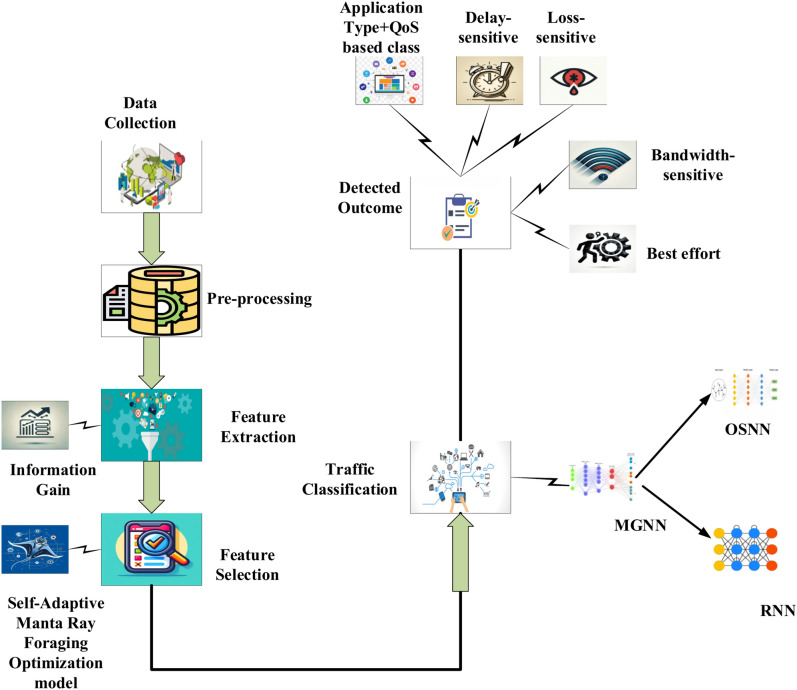
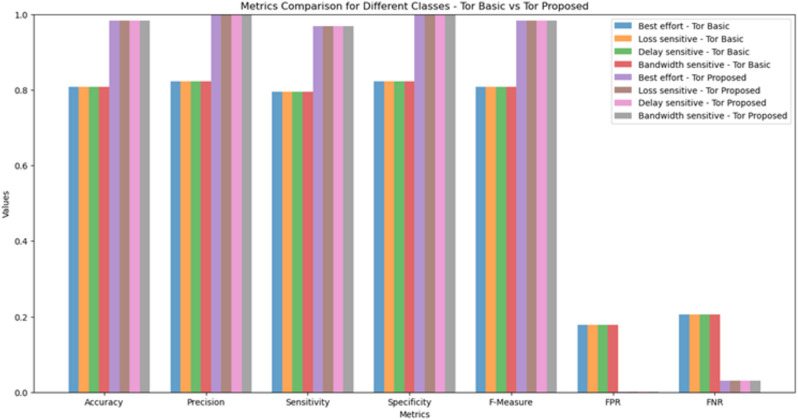
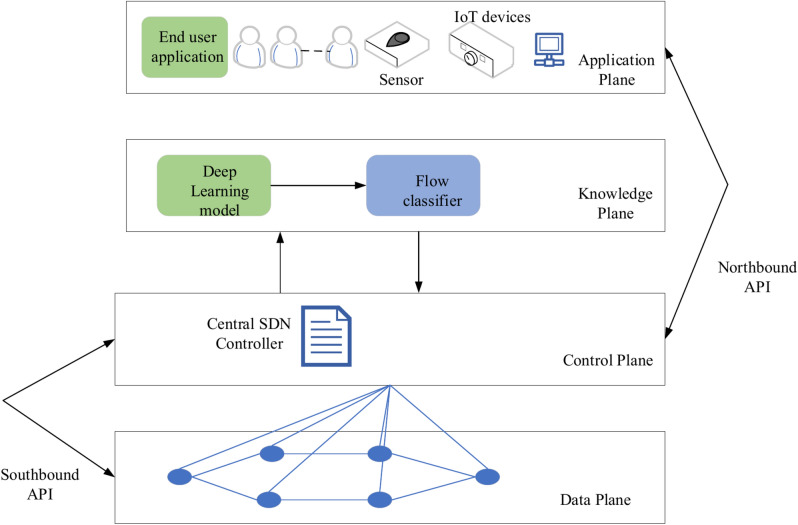
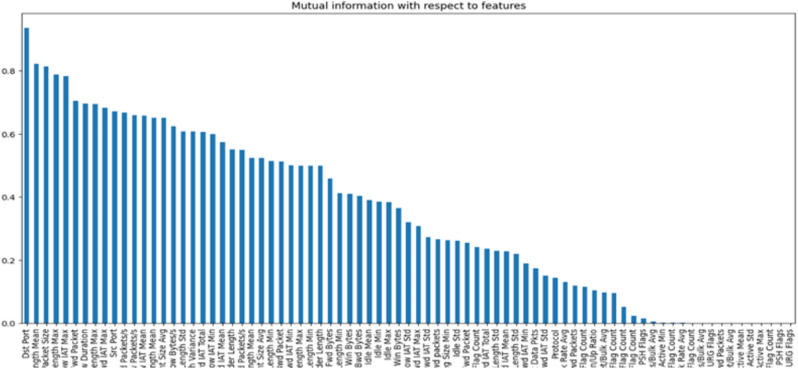
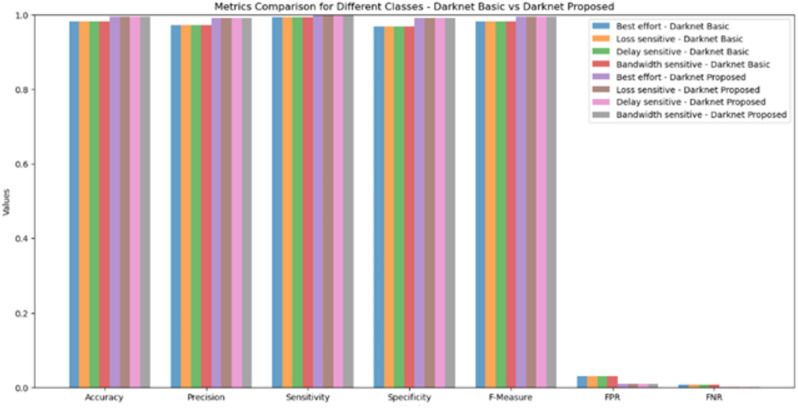
The rapid expansion of IoT networks, combined with the flexibility of Software-Defined Networking (SDN), has significantly increased the complexity of traffic management, requiring accurate classification to ensure optimal quality of service (QoS). Existing traffic classification techniques often rely on manual feature selection, limiting adaptability and efficiency in dynamic environments. This paper presents a novel traffic classification framework for SDN-based IoT networks, introducing a Two-Level Fused Network integrated with a self-adaptive Manta Ray Foraging Optimization (SMRFO) algorithm. The framework automatically selects optimal features and fuses multi-level network insights to enhance classification accuracy. Network traffic is classified into four key categories-delay-sensitive, loss-sensitive, bandwidth-sensitive, and best-effort-tailoring QoS to meet the specific requirements of each class. The proposed model is evaluated using publicly available datasets (CIC-Darknet and ISCX-ToR), achieving superior performance with over 99% accuracy. The results demonstrate the effectiveness of the Two-Level Fused Network and SMRFO in outperforming state-of-the-art classification methods, providing a scalable solution for SDN-based IoT traffic management.
物联网网络的快速扩展,结合软件定义网络(SDN)的灵活性,显著增加了流量管理的复杂性,需要进行准确分类以确保最佳服务质量(QoS)。现有的流量分类技术通常依赖于手动特征选择,限制了在动态环境中的适应性和效率。本文提出了一种用于基于SDN的物联网网络的新型流量分类框架,引入了一种与自适应蝠鲼觅食优化(SMRFO)算法集成的两级融合网络。该框架自动选择最优特征并融合多级网络见解以提高分类准确性。网络流量被分为四个关键类别——延迟敏感型、丢包敏感型、带宽敏感型和尽力而为型——定制QoS以满足每个类别的特定要求。使用公开可用数据集(CIC-Darknet和ISCX-ToR)对所提出的模型进行评估,实现了超过99%的准确率的卓越性能。结果证明了两级融合网络和SMRFO在优于现有分类方法方面的有效性,为基于SDN的物联网流量管理提供了一种可扩展的解决方案。