Ye Ying, Xie Wenyan, Wang Xuepeng, Tan Shuping, Yang Lingyue, Ma Zhaoru, Zhu Zhexin, Chen Xi, Liu Xiaoyu, O'Neill Eric, Chang Lei, Zhang Wensheng
Department of Clinical Pathobiology and Immunological Testing, School of Medical Laboratory, Qilu Medical University, Zibo, 255300, China.
Cam-Su Genomic Resource Center, Medical College of Soochow University, Suzhou, China.
Cell Mol Life Sci. 2025 Jan 6;82(1):38. doi: 10.1007/s00018-024-05561-0.
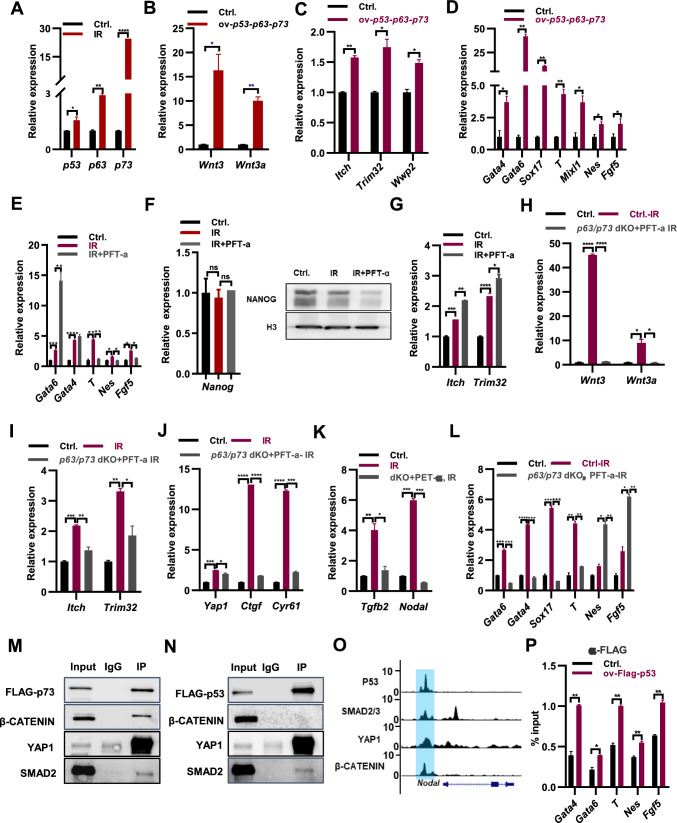
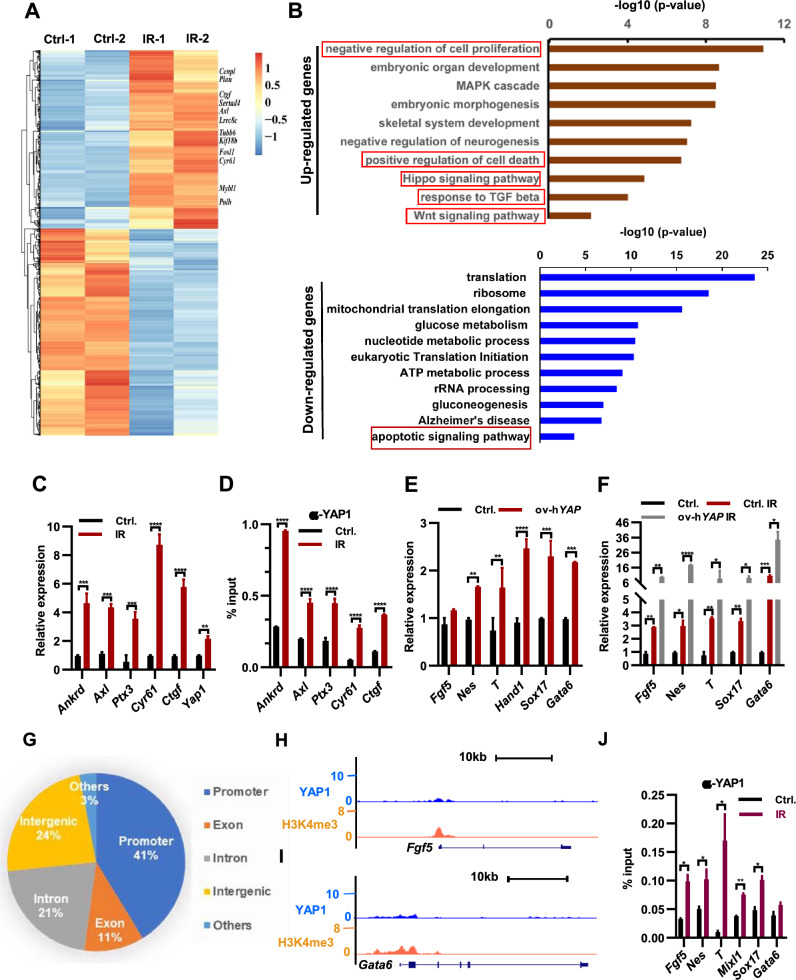
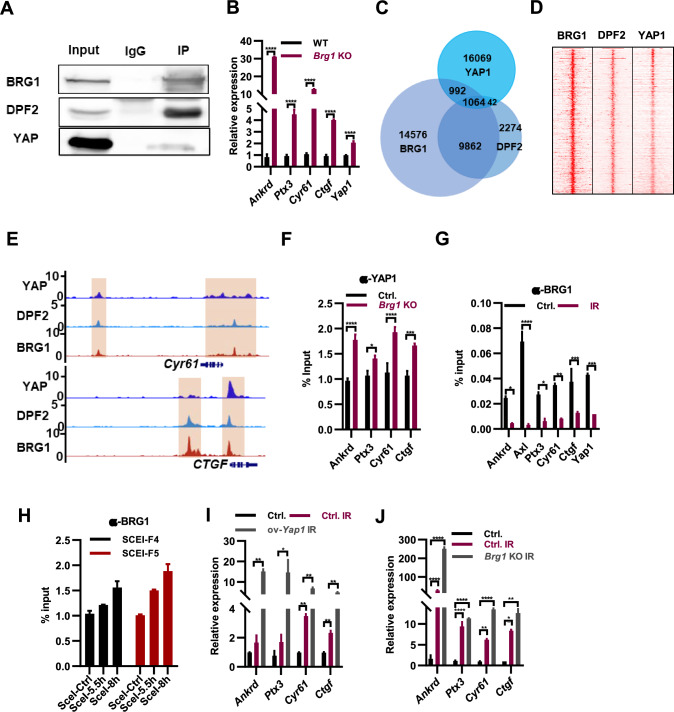
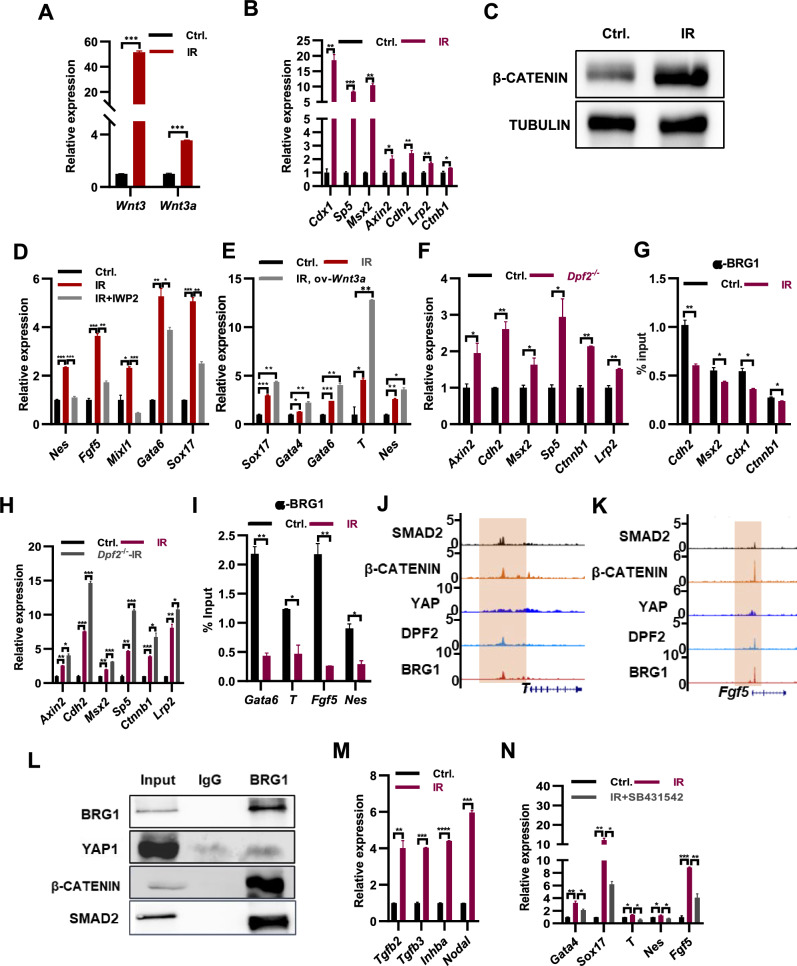
The mechanism by which DNA-damage affects self-renewal and pluripotency remains unclear. DNA damage and repair mechanisms have been largely elucidated in mutated cancer cells or simple eukaryotes, making valid interpretations on early development difficult. Here we show the impact of ionizing irradiation on the maintenance and early differentiation of mouse embryonic stem cells (ESCs). Our findings demonstrate that irradiation induces the upregulation of the p53 family genes, including p53, p63, and p73, resulting in elevated expression of the E3 ubiquitin ligases Itch and Trim32. Consequently, this impairs ESC maintenance by reducing the protein levels of key pluripotency transcription factors in both mouse ESCs and early embryos. Notably, our study reveals that irradiation-induced DNA damage leads to the recruitment of the BAF complex, causing it to dissociate from its binding sites on the target genes associated with the Yap, Wnt, and TGF-β pathways, thereby increasing signaling and promoting differentiation of ESCs into all three lineages. Importantly, pathway inhibition demonstrates that DNA damage accelerated ESC differentiation relies on Wnt and TGF-β, and is selectively dependent on p53 or p63/ p73 for mesoderm and endoderm respectively. Finally, our study reveals that p53 family proteins form complexes with effector proteins of key signaling pathways which actively contribute to ESC differentiation. In summary, this study uncovered a mechanism by which multiple differentiation signaling pathways converge on the p53 family genes to promote ESC differentiation and are impacted by exposure to ionizing radiation.
DNA损伤影响自我更新和多能性的机制尚不清楚。DNA损伤和修复机制在突变的癌细胞或简单真核生物中已得到很大程度的阐明,这使得对早期发育进行有效解释变得困难。在此,我们展示了电离辐射对小鼠胚胎干细胞(ESC)维持和早期分化的影响。我们的研究结果表明,辐射诱导p53家族基因(包括p53、p63和p73)上调,导致E3泛素连接酶Itch和Trim32的表达升高。因此,这通过降低小鼠ESC和早期胚胎中关键多能性转录因子的蛋白质水平来损害ESC的维持。值得注意的是,我们的研究表明,辐射诱导的DNA损伤导致BAF复合物的募集,使其从与Yap、Wnt和TGF-β途径相关的靶基因上的结合位点解离,从而增加信号传导并促进ESC分化为所有三个谱系。重要的是,途径抑制表明,DNA损伤加速的ESC分化依赖于Wnt和TGF-β,并且分别对中胚层和内胚层选择性地依赖于p53或p63/p73。最后,我们的研究表明,p53家族蛋白与关键信号通路的效应蛋白形成复合物,这些复合物积极促进ESC分化。总之,这项研究揭示了一种机制,通过该机制,多种分化信号通路汇聚在p53家族基因上以促进ESC分化,并受到电离辐射暴露的影响。