Ma Yan, Wu Haiyan, Wei Xinqi, Yang Ying, Xu Zhiyun, Chen Yunyun
Department of Thoracic Surgery, The Affiliated Huaian No. 1, People's Hospital of Nanjing Medical University , Huaian, 223300, China.
Perioper Med (Lond). 2025 Jan 6;14(1):2. doi: 10.1186/s13741-024-00488-3.
This retrospective cohort study aims to evaluate and compare different postoperative pain management strategies for esophageal squamous cell carcinoma (ESCC), in order to provide scientific evidence for clinical practice and decision-making.
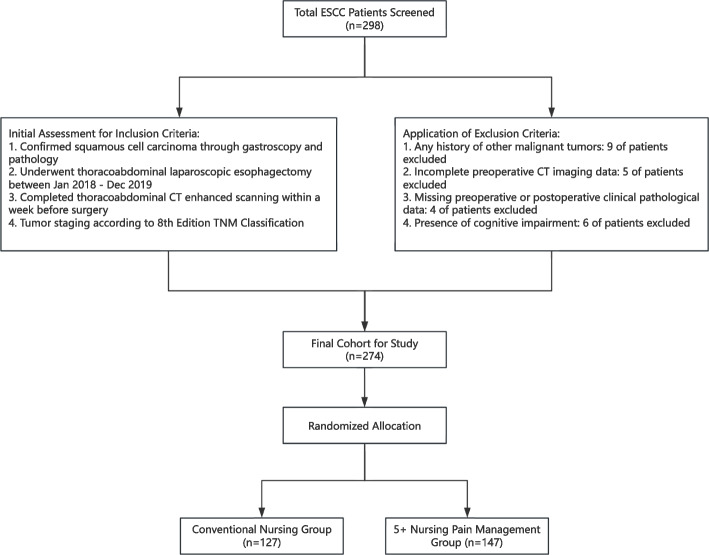
A total of 274 ESCC patients who underwent surgery at the Affiliated Huai'an No. 1 People's Hospital of Nanjing Medical University were included in the study. Of these, 127 received conventional nursing decisions for postoperative pain management, and 147 received the "5 + nursing" postoperative pain management strategy. The main observation indicators of both groups included postoperative pain score, analgesic dosage, postoperative analgesic side effects, and length of hospital stays.
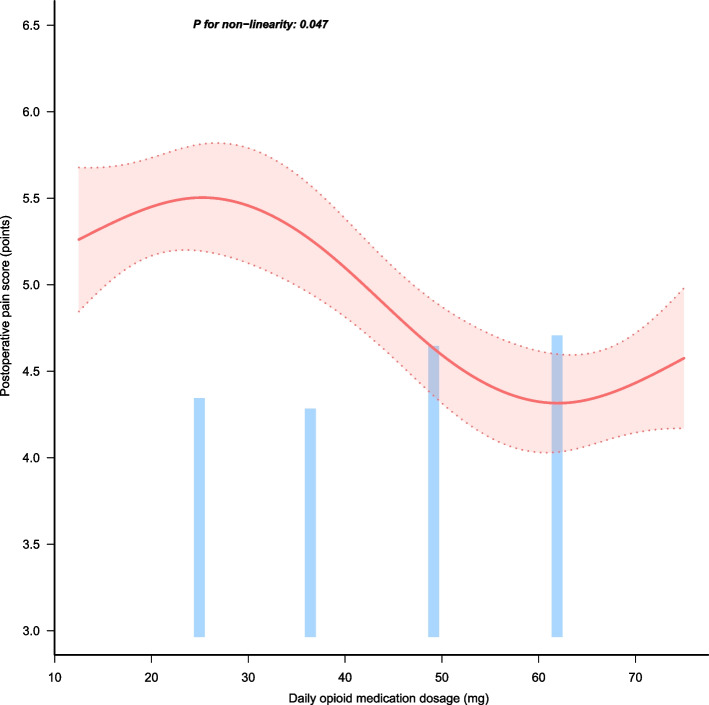
The "5 + nursing" postoperative pain management group showed significantly lower postoperative pain score and significantly shorter length of hospital stays than the conventional nursing group. There was no significant difference in postoperative analgesic side effects between the two groups. Multiple logistic regression analysis showed that the postoperative pain score is an independent risk factor for predicting postoperative arrhythmias in ESCC patients. When the daily average dose of opioids used postoperatively was between 37.5 and 50 mg, the patient's postoperative pain score dropped the fastest.
The "5 + nursing" pain management strategy can effectively reduce the degree of postoperative pain and shorten the length of hospital stays, improving patient's quality of life. Our research emphasizes the importance of opioids in postoperative pain management, as well as the need for individualized perioperative pain management strategies.
本回顾性队列研究旨在评估和比较食管鳞状细胞癌(ESCC)不同的术后疼痛管理策略,为临床实践和决策提供科学依据。
本研究纳入了南京医科大学附属淮安第一人民医院274例行手术治疗的ESCC患者。其中,127例接受术后疼痛管理的常规护理决策,147例接受“5+护理”术后疼痛管理策略。两组的主要观察指标包括术后疼痛评分、镇痛药物用量、术后镇痛副作用及住院时间。
“5+护理”术后疼痛管理组的术后疼痛评分显著低于常规护理组,住院时间显著缩短。两组术后镇痛副作用无显著差异。多因素logistic回归分析显示,术后疼痛评分是预测ESCC患者术后心律失常的独立危险因素。术后每日平均阿片类药物用量在37.5至50mg之间时,患者术后疼痛评分下降最快。
“5+护理”疼痛管理策略可有效减轻术后疼痛程度,缩短住院时间,提高患者生活质量。我们研究强调了阿片类药物在术后疼痛管理中的重要性,以及围手术期个体化疼痛管理策略的必要性。