Rosen H Grace, Berger Nicolas J, Hodge Shantel N, Fujishiro Atsutaro, Lourie Jared, Kapadia Vrusti, Linden Melissa A, Jee Eunbin, Kim Jonghan, Kim Yuho, Zou Kai
Department of Biology, University of Massachusetts Boston, Boston, MA.
Department of Exercise and Health Sciences, University of Massachusetts Boston, Boston, MA.
bioRxiv. 2024 Dec 26:2024.12.26.628172. doi: 10.1101/2024.12.26.628172.
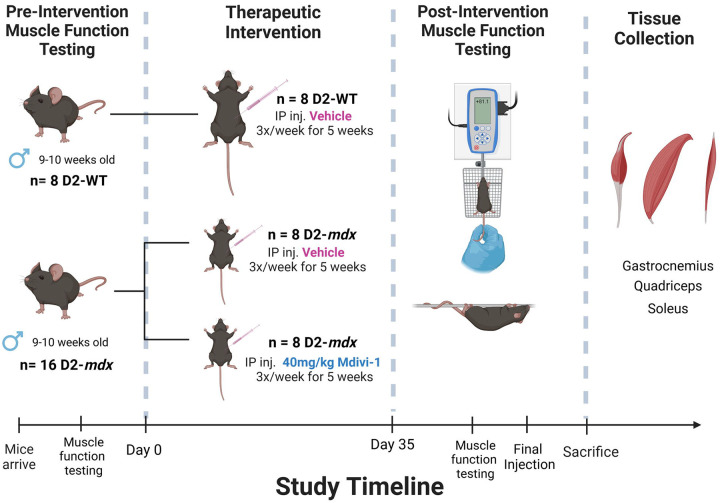
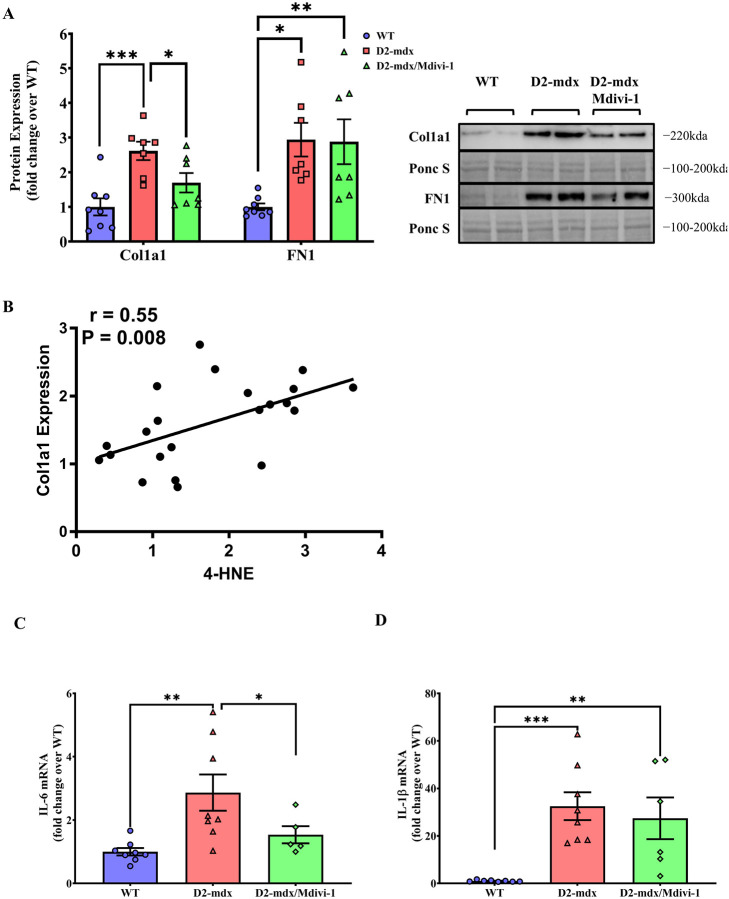
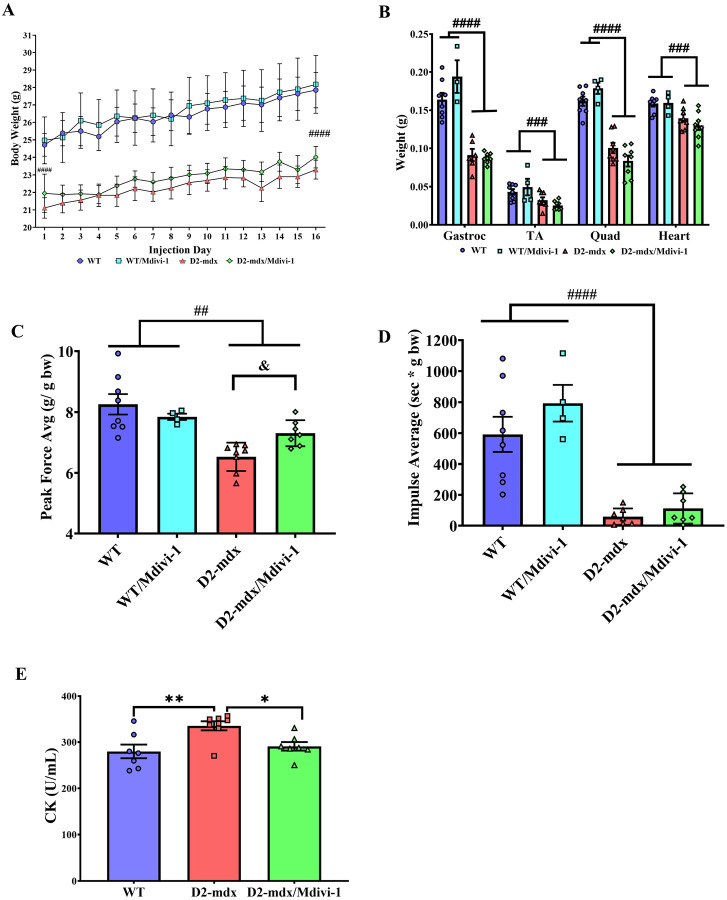
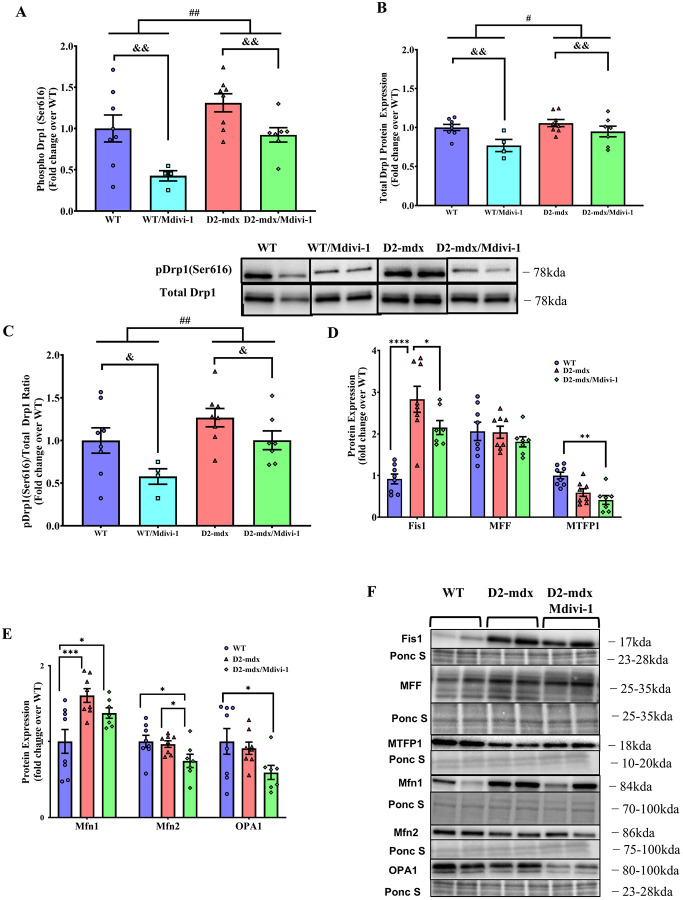
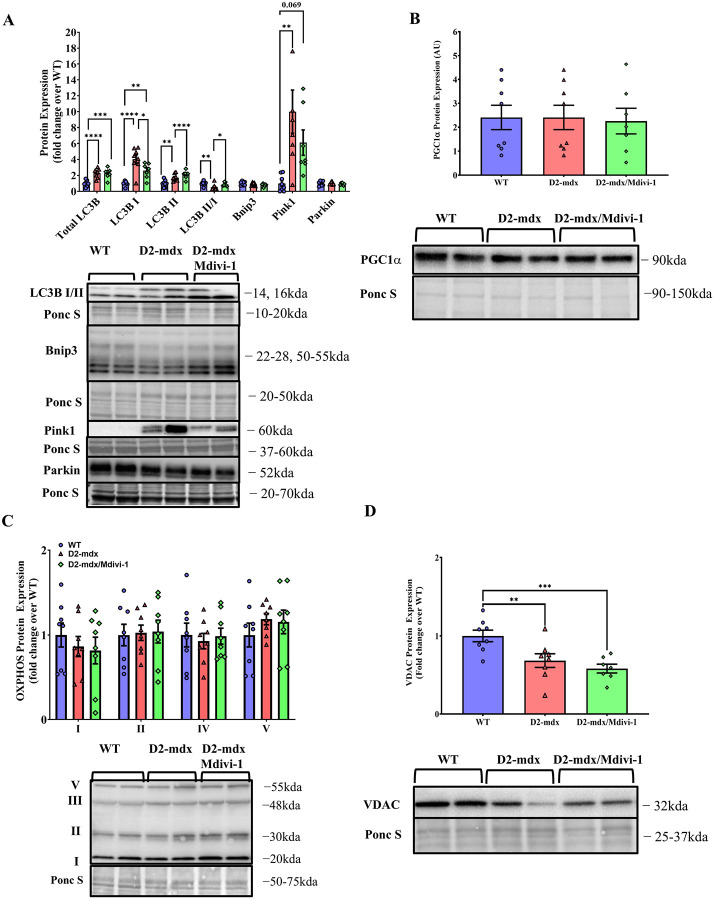
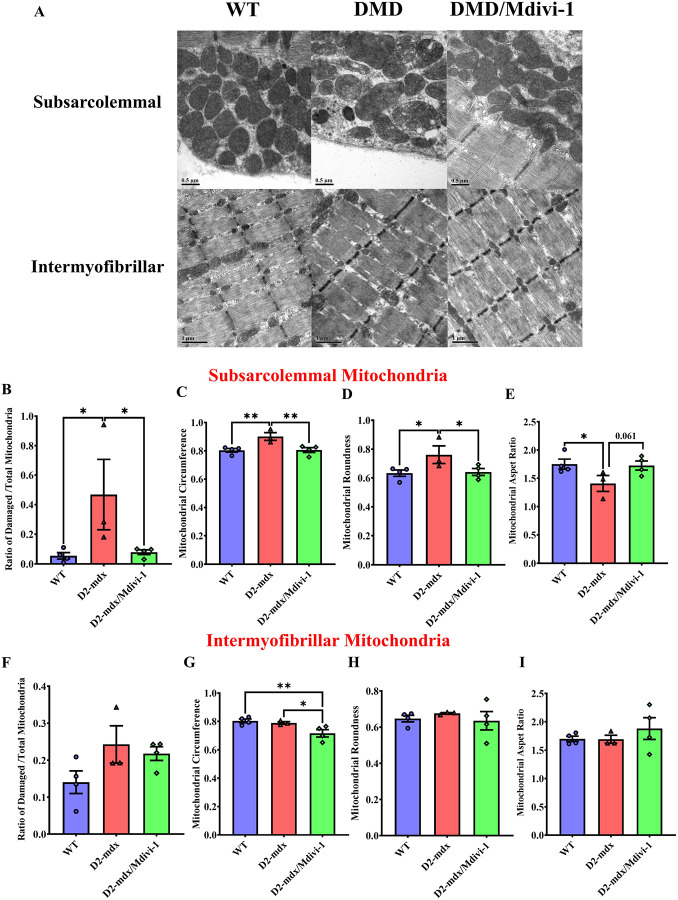
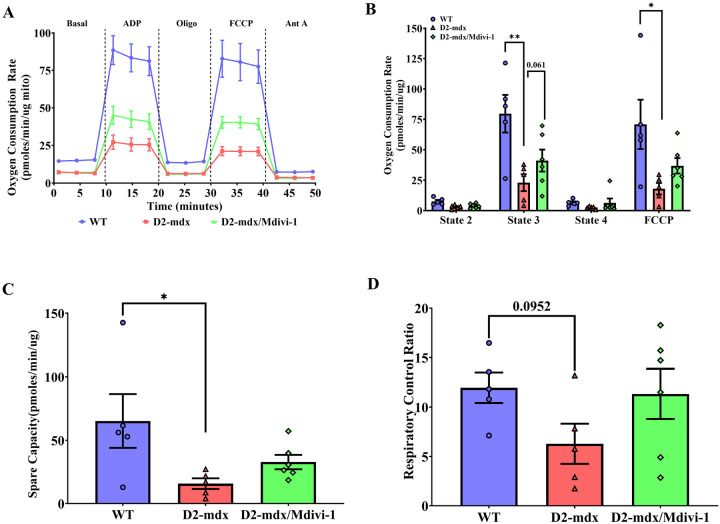
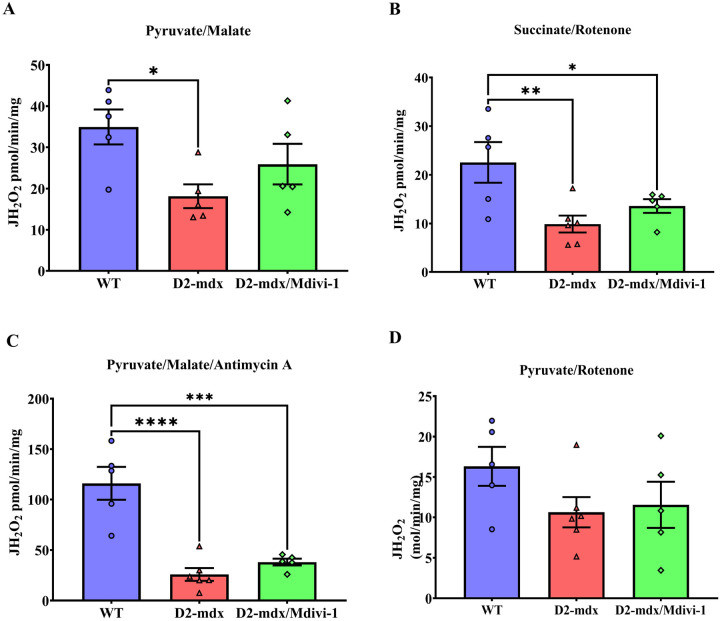
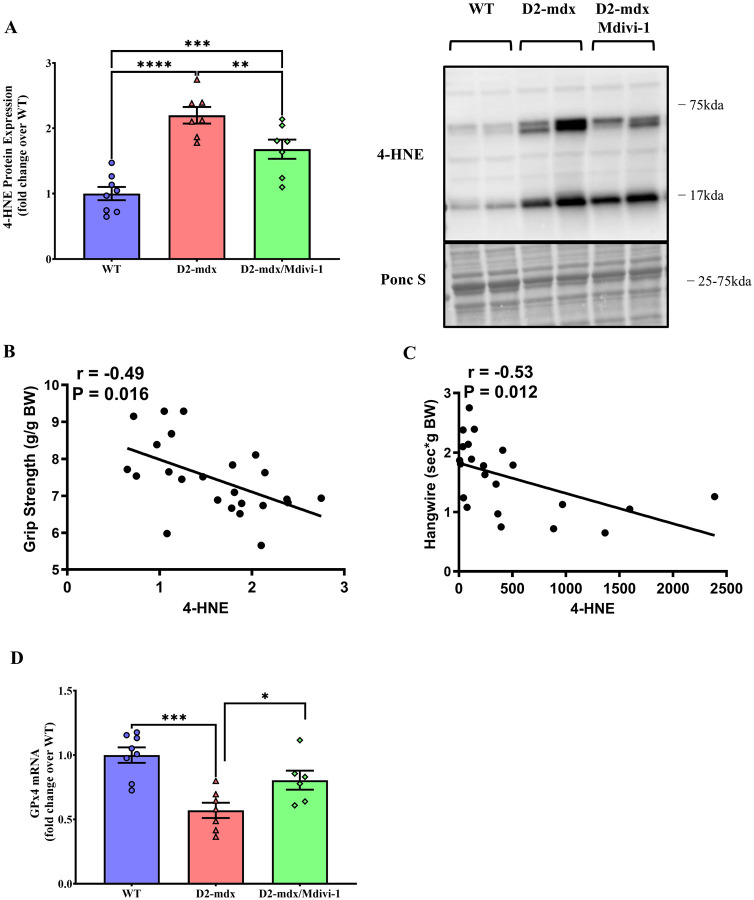
Although current treatments for Duchenne Muscular Dystrophy (DMD) have proven to be effective in delaying myopathy, there remains a strong need to identify novel targets to develop additional therapies. Mitochondrial dysfunction is an early pathological feature of DMD. A fine balance of mitochondrial dynamics (fission and fusion) is crucial to maintain mitochondrial function and skeletal muscle health. Excessive activation of Dynamin-Related Protein 1 (Drp1)-mediated mitochondrial fission was reported in animal models of DMD. However, whether Drp1-mediated mitochondrial fission is a viable target for treating myopathy in DMD remains unknown. Here, we treated a D2-mdx model of DMD (9-10 weeks old) with Mdivi-1, a selective Drp1 inhibitor, every other day (i.p. injection) for 5 weeks. We demonstrated that Mdivi-1 effectively improved skeletal muscle strength and reduced serum creatine kinase concentration. Mdivi-1 treatment also effectively inhibited mitochondrial fission regulatory protein markers, Drp1(Ser616) phosphorylation and Fis1 in skeletal muscles from D2-mdx mice, which resulted in reduced content of damaged and fragmented mitochondria. Furthermore, Mdivi-1 treatment attenuated lipid peroxidation product, 4-HNE, in skeletal muscle from D2-mdx mice, which was inversely correlated with muscle grip strength. Finally, we revealed that Mdivi-1 treatment downregulated Alpha 1 Type I Collagen (Col1a1) protein expression, a marker of fibrosis, and Interleukin-6 (IL-6) mRNA expression, a marker of inflammation. In summary, these results demonstrate that inhibition of Drp1-mediated mitochondrial fission by Mdivi-1 is effective in improving muscle strength and alleviating muscle damage in D2-mdx mice. These improvements are associated with improved skeletal muscle mitochondrial integrity, leading to attenuated lipid peroxidation.
尽管目前治疗杜氏肌营养不良症(DMD)的方法已被证明在延缓肌病方面有效,但仍迫切需要确定新的靶点以开发更多疗法。线粒体功能障碍是DMD的早期病理特征。线粒体动力学(分裂和融合)的精细平衡对于维持线粒体功能和骨骼肌健康至关重要。在DMD动物模型中,有报道称动力相关蛋白1(Drp1)介导的线粒体分裂过度激活。然而,Drp1介导的线粒体分裂是否是治疗DMD肌病的可行靶点仍不清楚。在此,我们每隔一天(腹腔注射)用选择性Drp1抑制剂Mdivi-1治疗9至10周龄的DMD D2-mdx模型小鼠,持续5周。我们证明Mdivi-1有效改善了骨骼肌力量并降低了血清肌酸激酶浓度。Mdivi-1治疗还有效抑制了D2-mdx小鼠骨骼肌中线粒体分裂调节蛋白标志物、Drp1(Ser616)磷酸化和Fis1,这导致受损和碎片化线粒体的含量减少。此外,Mdivi-1治疗减轻了D2-mdx小鼠骨骼肌中脂质过氧化产物4-HNE的含量,其与肌肉握力呈负相关。最后,我们发现Mdivi-1治疗下调了纤维化标志物α1Ⅰ型胶原蛋白(Col1a1)的蛋白表达以及炎症标志物白细胞介素-6(IL-6)的mRNA表达。总之,这些结果表明,Mdivi-1抑制Drp1介导的线粒体分裂可有效改善D2-mdx小鼠的肌肉力量并减轻肌肉损伤。这些改善与骨骼肌线粒体完整性的改善相关,从而导致脂质过氧化减轻。