Sutton Margie N, Glazer Sarah E, Al Zaki Ajlan, Napoli Arianna, Yang Ping, Bhosale Priya, Liu Jinsong, Gammon Seth T, Piwnica-Worms David
Department of Cancer Systems Imaging, The University of Texas M. D. Anderson Cancer Center, Houston, Texas 77030, USA.
Department of Abdominal Imaging, The University of Texas M. D. Anderson Cancer Center, Houston, Texas 77030, USA.
bioRxiv. 2024 Dec 20:2024.12.18.628944. doi: 10.1101/2024.12.18.628944.
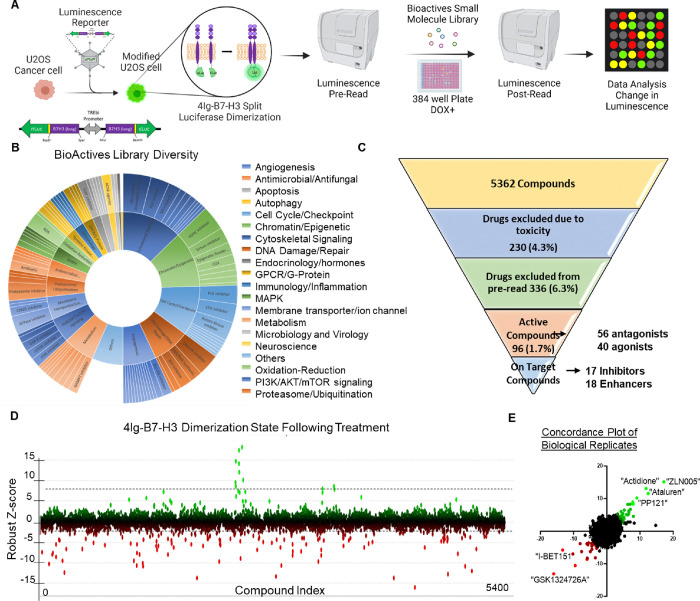
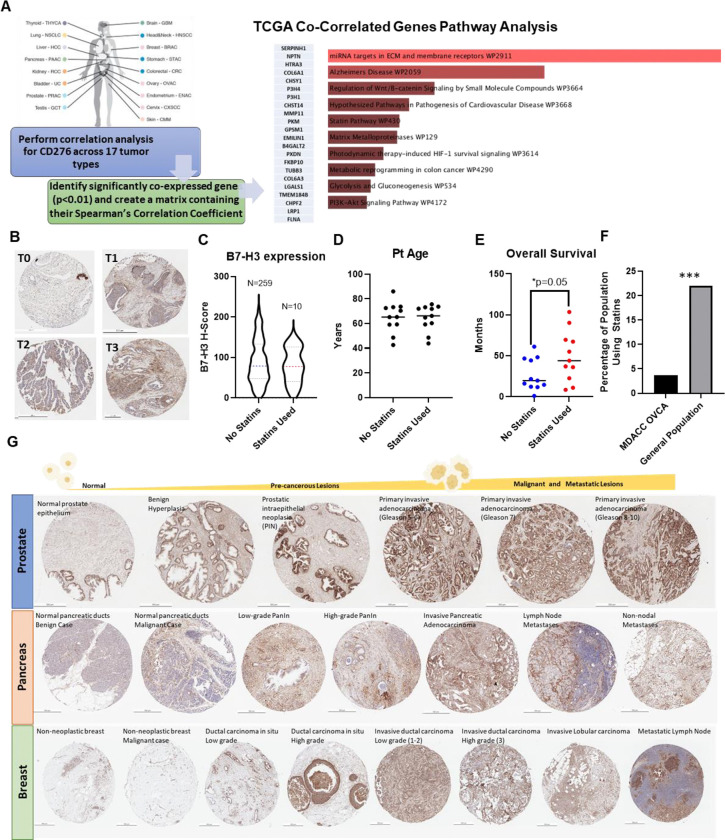
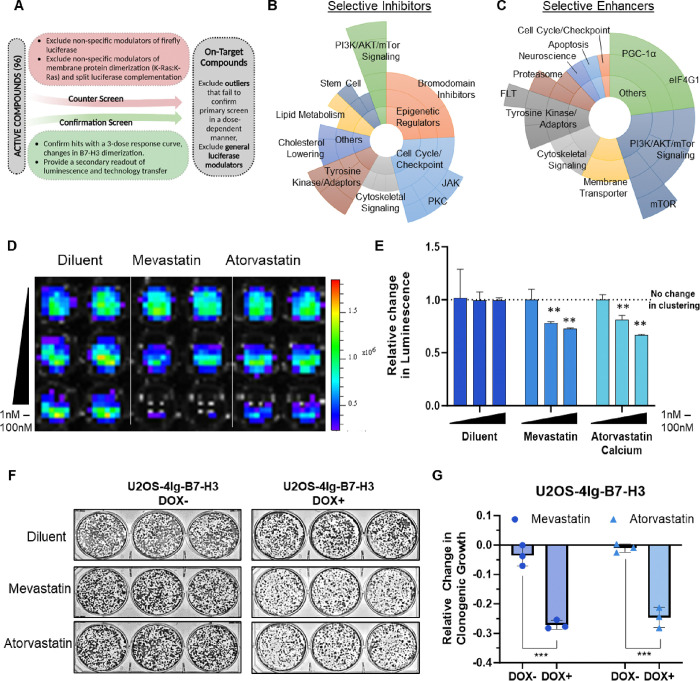
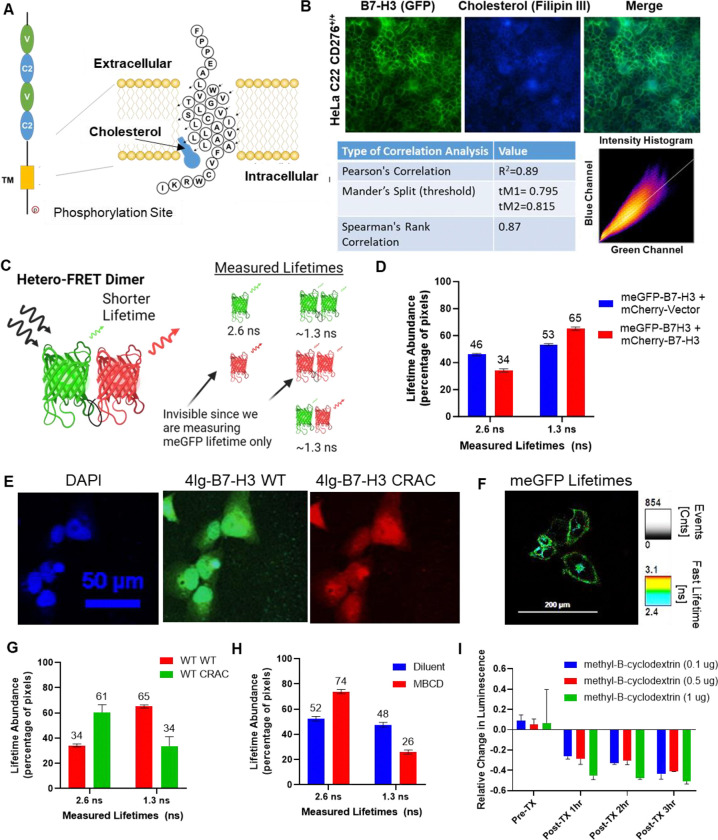
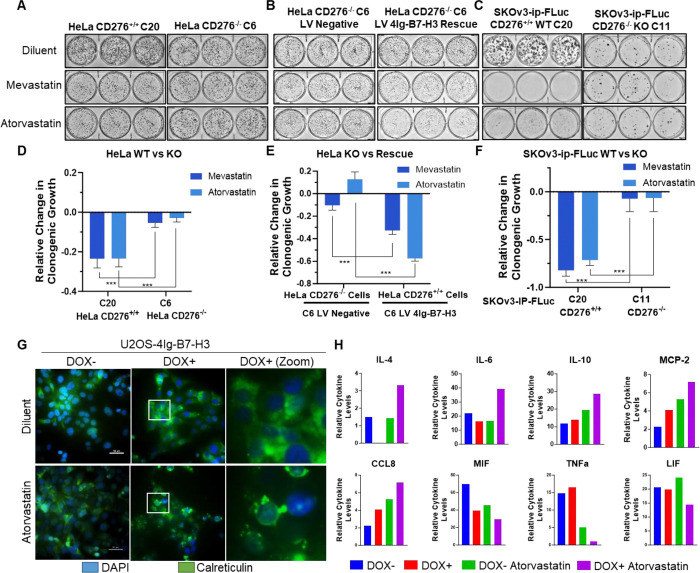
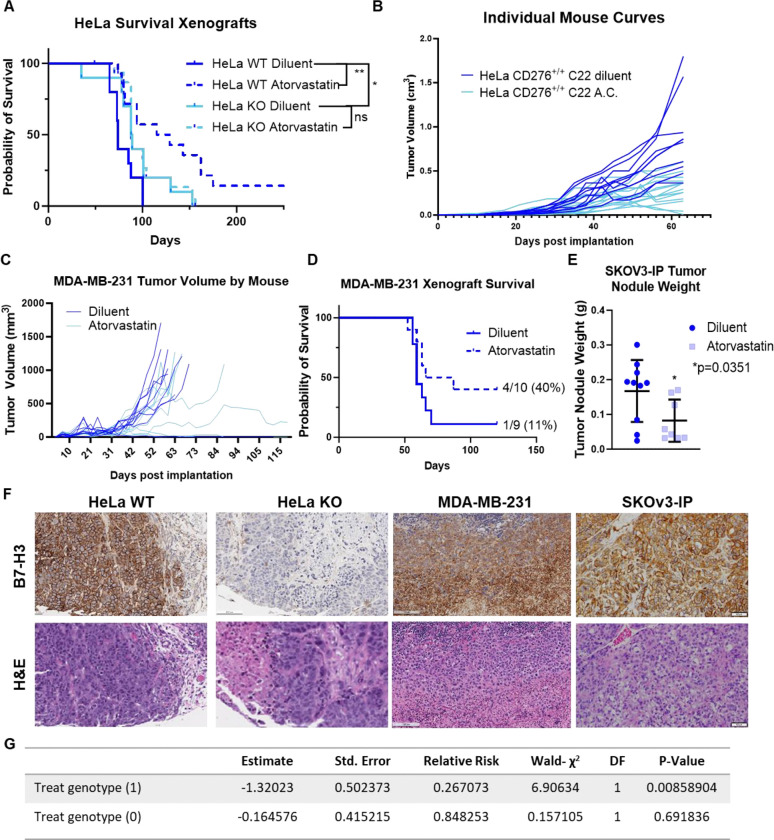
B7-H3 (CD276), a member of the B7-family of immune checkpoint proteins, has been shown to have immunological and non-immunological effects promoting tumorigenesis [1, 2] and expression correlates with poor prognosis for many solid tumors, including cervical, ovarian and breast cancers [3-6]. We recently identified a tumor-cell autochthonous tumorigenic role for dimerization of the 4Ig isoform of B7-H3 (4Ig-B7-H3) [7], where 4Ig-B7-H3 dimerization activated tumor-intrinsic cellular proliferation and tumorigenesis pathways, providing a novel opportunity for therapeutic intervention. Herein, a live cell split-luciferase complementation strategy was used to visualize 4Ig-B7-H3 homodimerization in a high-throughput small molecule screen (HTS) to identify modulators of this protein-protein interaction (PPI). Notably, the HTS identified several compounds that converged on lipid metabolism (including HMG-CoA reductase inhibitors, also known as statins) as significant inhibitors of 4Ig-B7-H3 dimerization (p < 0.01). and murine studies provided evidence that statin-mediated disruption of 4Ig-B7-H3 dimerization was associated with anti-tumor effects. Statin-mediated anti-cancer efficacy was selective for B7-H3-expressing tumors and retrospective analysis of clinical tumor specimens supported the hypothesis that concurrent statin use enhanced clinical outcomes for patients in a B7-H3 restricted manner. Thus, disruption of 4Ig-B7-H3 dimerization provides an unanticipated molecular mechanism linking statin use in cancer therapy and prevention with immune checkpoint.
B7-H3(CD276)是免疫检查点蛋白B7家族的成员,已被证明具有促进肿瘤发生的免疫和非免疫作用[1,2],其表达与许多实体瘤(包括宫颈癌、卵巢癌和乳腺癌)的不良预后相关[3-6]。我们最近发现B7-H3的4Ig同种型(4Ig-B7-H3)二聚化在肿瘤细胞中有自身致瘤作用[7],其中4Ig-B7-H3二聚化激活肿瘤内在的细胞增殖和肿瘤发生途径,为治疗干预提供了新机会。在此,我们使用活细胞分裂荧光素酶互补策略,在高通量小分子筛选(HTS)中可视化4Ig-B7-H3同源二聚化,以鉴定这种蛋白质-蛋白质相互作用(PPI)的调节剂。值得注意的是,高通量筛选鉴定出几种作用于脂质代谢的化合物(包括HMG-CoA还原酶抑制剂,也称为他汀类药物)是4Ig-B7-H3二聚化的显著抑制剂(p<0.01)。小鼠研究提供了证据,表明他汀类药物介导的4Ig-B7-H3二聚化破坏与抗肿瘤作用相关。他汀类药物介导的抗癌疗效对表达B7-H3的肿瘤具有选择性,对临床肿瘤标本的回顾性分析支持了这样的假设,即同时使用他汀类药物以B7-H3受限的方式改善患者的临床结局。因此,4Ig-B7-H3二聚化的破坏提供了一种意想不到的分子机制,将癌症治疗和预防中他汀类药物的使用与免疫检查点联系起来。