Sun Lihao, Ohashi Nobuhiko, Mori Takuma, Mizuno Yuka, Zang Weichen, Guo Qi, Kouyama-Suzuki Emi, Shirai Yoshinori, Tabuchi Katsuhiko
Department of Molecular and Cellular Physiology, Shinshu University School of Medicine, Matsumoto, Japan.
Department of Neuroinnovation, Institute for Biomedical Sciences, Interdisciplinary Cluster for Cutting Edge Research, Shinshu University, Matsumoto, Japan.
Front Neural Circuits. 2024 Dec 23;18:1504191. doi: 10.3389/fncir.2024.1504191. eCollection 2024.
Autism spectrum disorder (ASD) is a neurodevelopmental condition characterized by deficits in social interaction and communication, along with restricted and repetitive behaviors. Both genetic and environmental factors contribute to ASD, with prenatal exposure to valproic acid (VPA) and nicotine being linked to increased risk. Impaired adult hippocampal neurogenesis, particularly in the ventral region, is thought to play a role in the social deficits observed in ASD.
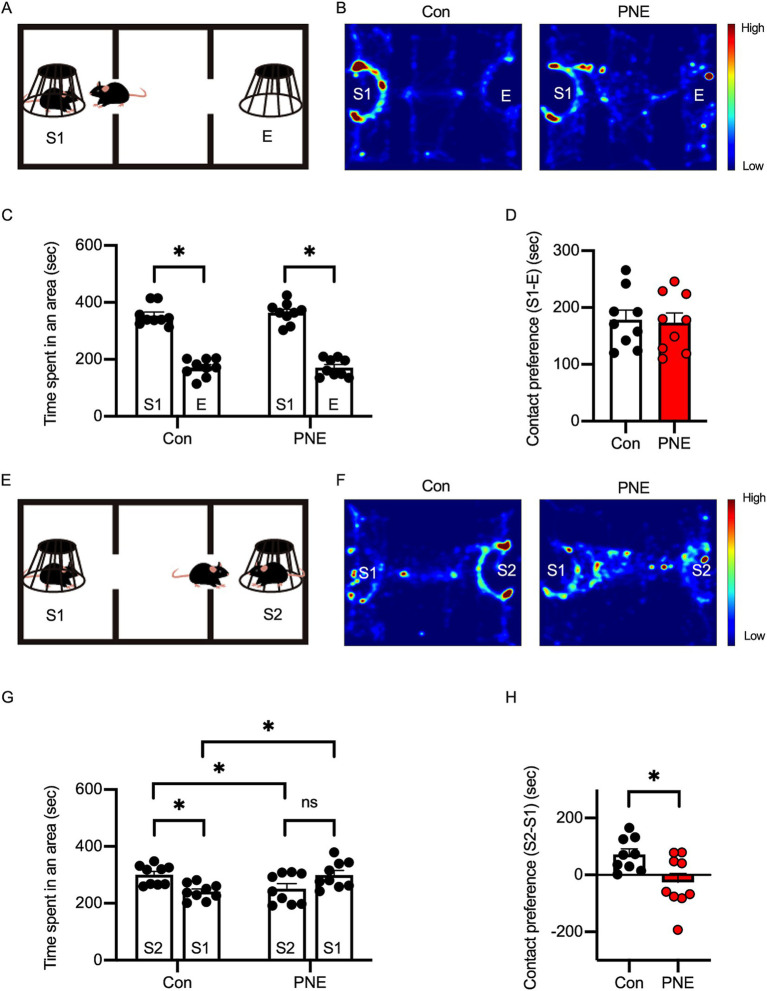
In this study, we investigated social behavior and adult hippocampal neurogenesis in C57BL/6J mice prenatally exposed to VPA or nicotine, as well as in genetically modified ASD models, including IQSEC2 knockout (KO) and NLGN3-R451C knock-in (KI) mice. Sociability and social novelty preference were evaluated using a three-chamber social interaction test. Adult hippocampal neurogenesis was assessed by BrdU and DCX immunofluorescence to identify newborn and immature neurons.
VPA-exposed mice displayed significant deficits in social interaction, while nicotine-exposed mice exhibited mild impairment in social novelty preference. Both IQSEC2 KO and NLGN3-R451C KI mice demonstrated reduced adult neurogenesis, particularly in the ventral hippocampus, a region associated with social behavior and emotion. Across all ASD mouse models, a significant reduction in BrdU+/NeuN+ cells in the ventral hippocampus was observed, while dorsal hippocampal neurogenesis remained relatively unaffected. Similar reductions in DCX-positive cells were identified in VPA, nicotine, and NLGN3-R451C KI mice, indicating impaired proliferation or differentiation of neuronal progenitors.
These findings suggest that impaired adult neurogenesis in the ventral hippocampus is a common hallmark across ASD mouse models and may underlie social behavior deficits. This study provides insight into region-specific neurogenic alterations linked to ASD pathophysiology and highlights potential targets for therapeutic interventions.
自闭症谱系障碍(ASD)是一种神经发育疾病,其特征是社交互动和沟通存在缺陷,以及行为受限和重复。遗传和环境因素均与ASD有关,产前接触丙戊酸(VPA)和尼古丁会增加患病风险。成年海马神经发生受损,尤其是在腹侧区域,被认为在ASD观察到的社交缺陷中起作用。
在本研究中,我们调查了产前暴露于VPA或尼古丁的C57BL/6J小鼠以及基因改造的ASD模型(包括IQSEC2基因敲除(KO)和NLGN3-R451C基因敲入(KI)小鼠)的社交行为和成年海马神经发生。使用三室社交互动测试评估社交能力和社交新奇偏好。通过BrdU和DCX免疫荧光评估成年海马神经发生,以识别新生和未成熟神经元。
暴露于VPA的小鼠在社交互动方面表现出明显缺陷,而暴露于尼古丁的小鼠在社交新奇偏好方面表现出轻度受损。IQSEC2 KO和NLGN3-R451C KI小鼠均表现出成年神经发生减少,尤其是在腹侧海马,该区域与社交行为和情绪有关。在所有ASD小鼠模型中,腹侧海马中BrdU+/NeuN+细胞显著减少,而背侧海马神经发生相对未受影响。在VPA、尼古丁和NLGN3-R451C KI小鼠中发现DCX阳性细胞有类似减少,表明神经元祖细胞的增殖或分化受损。
这些发现表明,腹侧海马成年神经发生受损是ASD小鼠模型的一个共同特征,可能是社交行为缺陷的基础。本研究深入了解了与ASD病理生理学相关的区域特异性神经源性改变,并突出了治疗干预的潜在靶点。