Silva Marlus Dias, Vasconcelos Jaqueline Martins, da Silva Fábia Barbosa, Bailão Adriano Soares de Oliveira, Guedes Ítalo Moraes Rocha, Vilela Márcio da Silva, Costa Adriano Carvalho, Rosa Márcio, Silva Fabiano Guimarães
Laboratory of Advanced Studies in Vertical Agriculture, Goiano Federal Institute of Education, Science and Technology, Rio Verde, Brazil.
Laboratory of Computational Intelligence, Goiano Federal Institute of Education, Science and Technology, Rio Verde, Brazil.
Front Plant Sci. 2024 Dec 23;15:1515457. doi: 10.3389/fpls.2024.1515457. eCollection 2024.
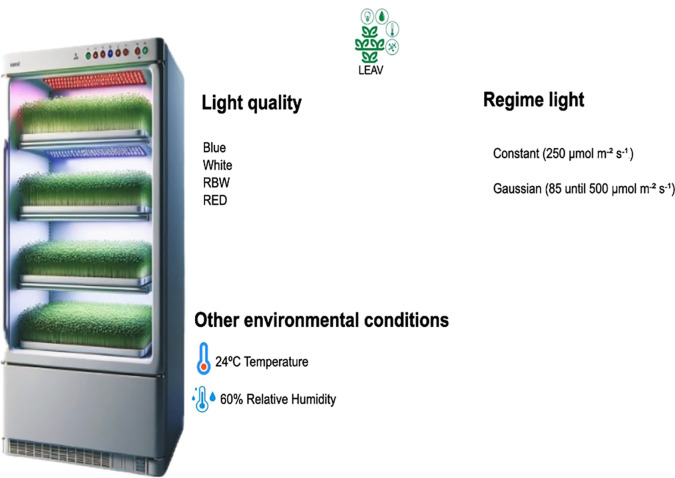
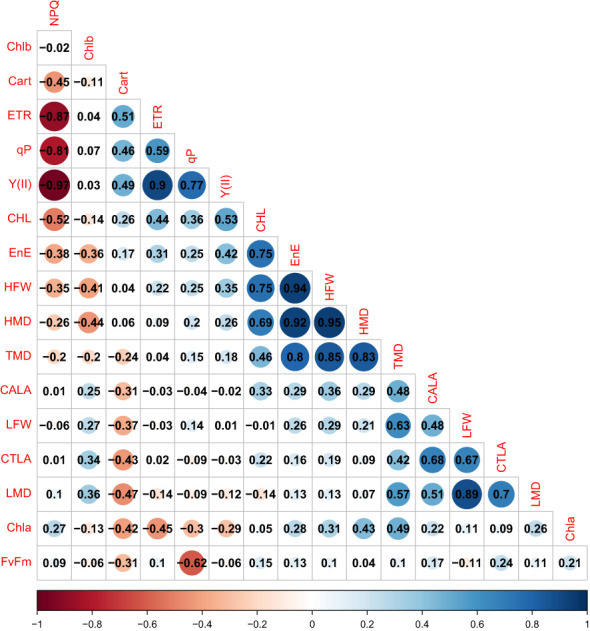
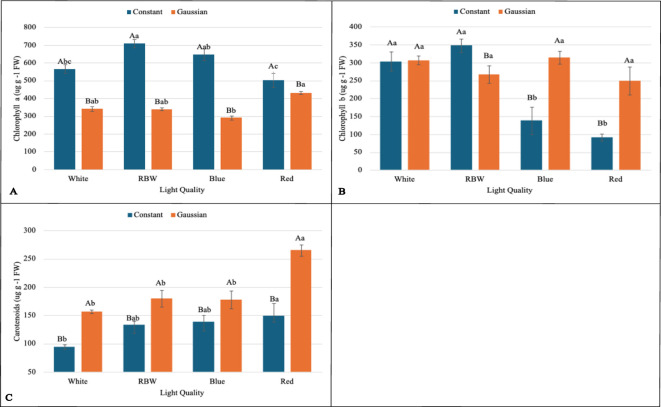
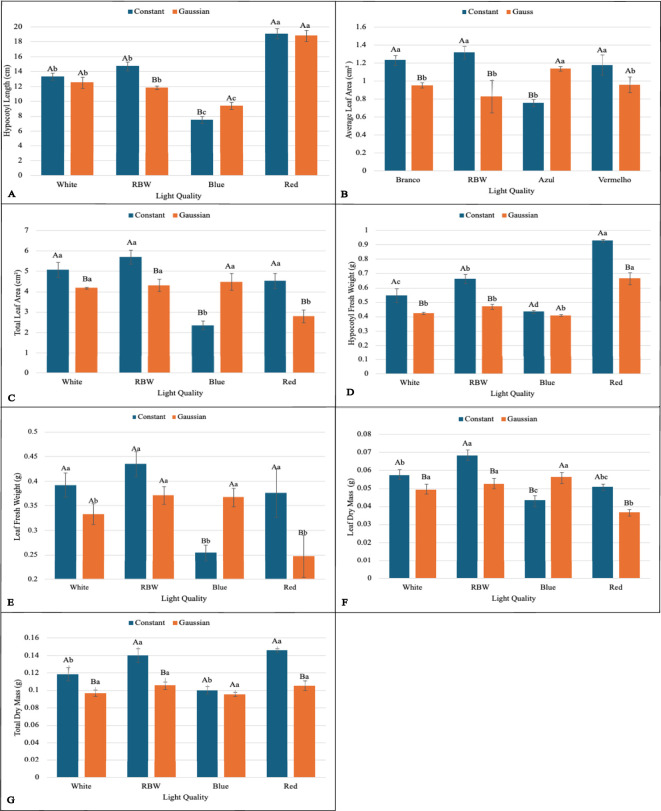
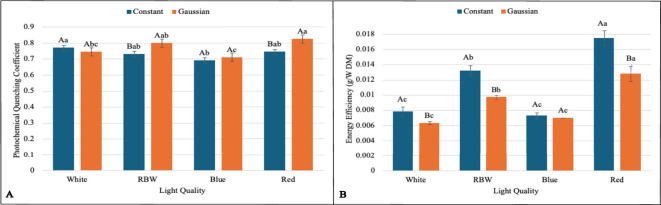
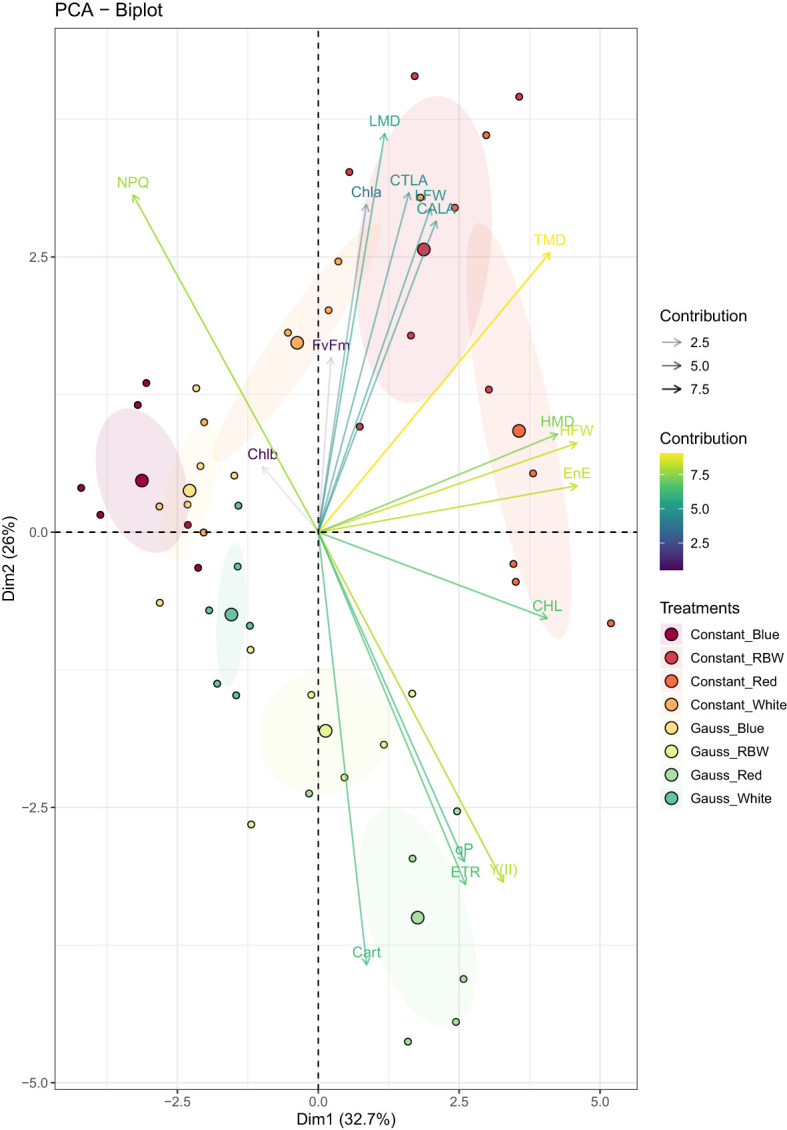
Vertical Farming Systems (VFS) emerge as an approach to optimize plant growth in urban and controlled environments, by enabling sustainable and intensive production in reduced spaces. VFS allow for greater control over growing conditions, such as light, temperature and humidity, resulting in higher quality crops and with less use of resources, such as water and fertilizers. This research investigates the effects of different lighting regimes (Constant and Gaussian) and spectral qualities (white, RBW, blue and red) on the growth, photosynthesis, and biomass accumulation of lentil microgreens () in VFS. The results demonstrate that constant lighting regimes, particularly under red, white, and RBW lights, significantly increase biomass production and energy efficiency. On the other hand, the Gaussian regime promotes the accumulation of bioactive compounds such as carotenoids, especially under red light. Chlorophyll content and the photochemical coefficient (qP) also varied across treatments, with significant variations between lighting regimes and spectral combinations. Tailored lighting strategies, adjusted to specific production goals, have the potential to enhance both productivity and nutritional quality in VFS. The analysis contained in the research provides relevant information for optimizing lighting management in controlled agricultural environments, providing practical applications to improve harvest performance.
垂直种植系统(VFS)作为一种在城市和可控环境中优化植物生长的方法而出现,它能够在有限空间内实现可持续的集约生产。VFS能够更好地控制生长条件,如光照、温度和湿度,从而产出质量更高的作物,同时减少水和肥料等资源的使用。本研究调查了不同光照模式(恒定光照和高斯光照)以及光谱质量(白色、红蓝光、蓝色和红色)对VFS中扁豆嫩苗生长、光合作用和生物量积累的影响。结果表明,恒定光照模式,特别是在红色、白色和红蓝光下,显著提高了生物量产量和能源效率。另一方面,高斯光照模式促进了类胡萝卜素等生物活性化合物的积累,尤其是在红光下。叶绿素含量和光化学系数(qP)在不同处理之间也有所不同,光照模式和光谱组合之间存在显著差异。根据特定生产目标调整的定制照明策略,有可能提高VFS中的生产力和营养质量。该研究中的分析为优化可控农业环境中的照明管理提供了相关信息,为提高收获性能提供了实际应用。