
巨细胞动脉炎诊断与管理的未来:人工智能与预测分析的系统评价
The Future of Giant Cell Arteritis Diagnosis and Management: A Systematic Review of Artificial Intelligence and Predictive Analytics.
作者信息
Almadhoun Mohammed Khaleel, Yadav Mansi, Shah Sayed Dawood, Mushtaq Laiba, Farooq Mahnoor, Éric Nsangou Paul, Farooq Uzair, Zahid Maryum, Iftikhar Abdullah
机构信息
Medicine, Al-Bashir Hospital, Amman, JOR.
Internal Medicine, Pandit Bhagwat Dayal Sharma Post Graduate Institute of Medical Sciences, Rohtak, IND.
出版信息
Cureus. 2024 Dec 5;16(12):e75181. doi: 10.7759/cureus.75181. eCollection 2024 Dec.
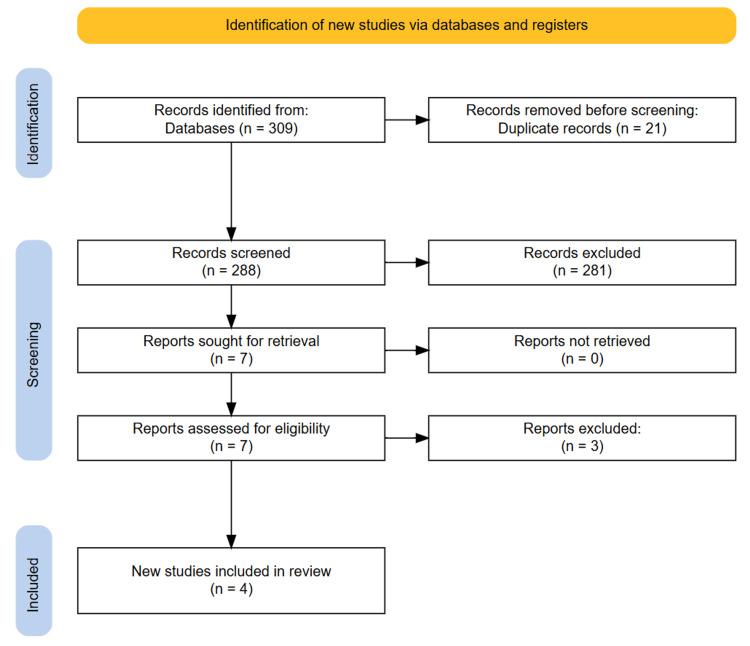
Giant cell arteritis (GCA), a systemic vasculitis affecting large and medium-sized arteries, poses significant diagnostic and management challenges, particularly in preventing irreversible complications like vision loss. Recent advancements in artificial intelligence (AI) technologies, including machine learning (ML) and deep learning (DL), offer promising solutions to enhance diagnostic accuracy and optimize treatment strategies for GCA. This systematic review, conducted according to the PRISMA 2020 guidelines, synthesizes existing literature on AI applications in GCA care, with a focus on diagnostic accuracy, treatment outcomes, and predictive modeling. A comprehensive search of databases (MEDLINE (via PubMed), Scopus, Cochrane Central Register of Controlled Trials (CENTRAL), and Web of Science) from their inception to September 2024 identified 309 studies, with four meeting inclusion criteria. The review highlights the potential of AI to improve diagnostic accuracy through image analysis of color Doppler ultrasound and clinical data, with AI models like random forests, convolutional neural networks, and logistic regression demonstrating effectiveness in predicting GCA diagnosis and relapse after glucocorticoid tapering. Despite these promising findings, challenges such as the need for larger datasets, prospective validation, and addressing ethical concerns remain. The review underscores the transformative potential of AI in GCA care while emphasizing the need for further research to refine and validate AI-driven tools for broader clinical implementation.
巨细胞动脉炎(GCA)是一种影响大中动脉的系统性血管炎,在诊断和管理方面面临重大挑战,尤其是在预防视力丧失等不可逆并发症方面。人工智能(AI)技术的最新进展,包括机器学习(ML)和深度学习(DL),为提高GCA的诊断准确性和优化治疗策略提供了有前景的解决方案。本系统评价根据PRISMA 2020指南进行,综合了关于AI在GCA护理中应用的现有文献,重点关注诊断准确性、治疗结果和预测模型。对数据库(MEDLINE(通过PubMed)、Scopus、Cochrane对照试验中央注册库(CENTRAL)和科学网)从建立到2024年9月进行全面检索,共识别出309项研究,其中四项符合纳入标准。该评价强调了AI通过彩色多普勒超声图像分析和临床数据提高诊断准确性的潜力,随机森林、卷积神经网络和逻辑回归等AI模型在预测GCA诊断和糖皮质激素减量后的复发方面显示出有效性。尽管有这些有前景的发现,但仍存在一些挑战,如需要更大的数据集、前瞻性验证以及解决伦理问题。该评价强调了AI在GCA护理中的变革潜力,同时强调需要进一步研究以完善和验证AI驱动的工具,以便更广泛地应用于临床。
 Zotero 插件