Contursi Annalisa, Tacconelli Stefania, Di Berardino Sara, De Michele Alessandra, Patrignani Paola
Systems Pharmacology and Translational Therapeutics Laboratory, The Center for Advanced Studies and Technology (CAST), "G. d'Annunzio" University, Chieti, Italy.
Department of Neuroscience, Imaging and Clinical Science, "G. d'Annunzio" University Medical School, Chieti, Italy.
Front Pharmacol. 2024 Dec 23;15:1520488. doi: 10.3389/fphar.2024.1520488. eCollection 2024.
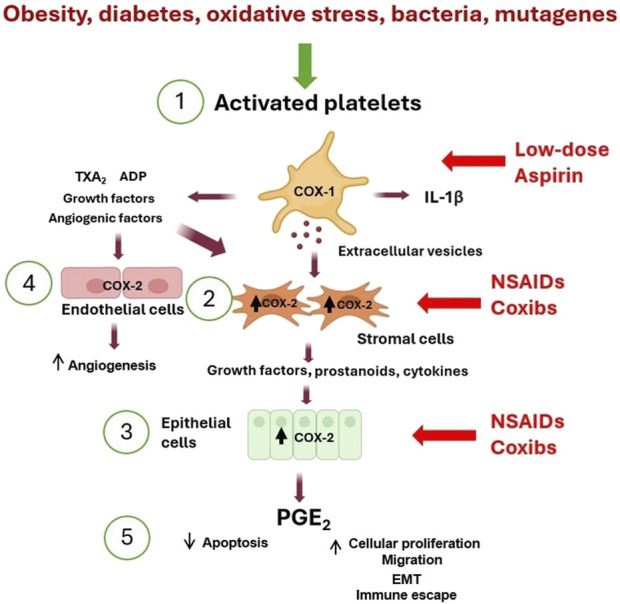
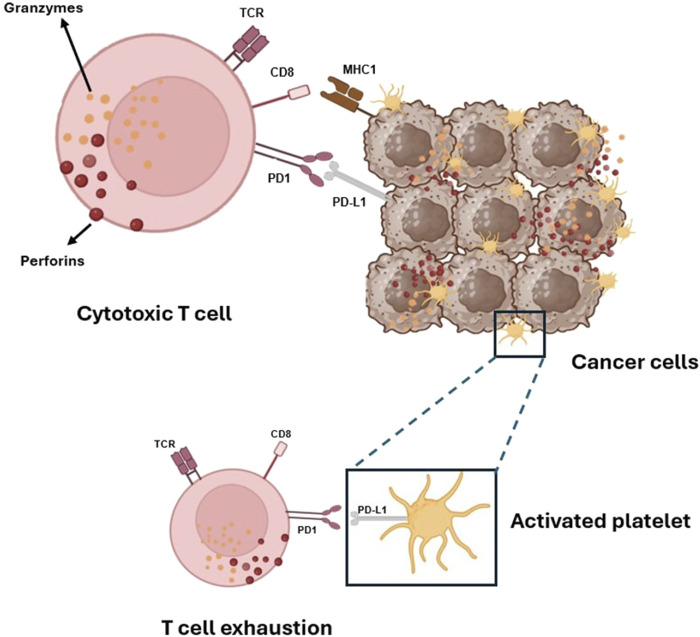
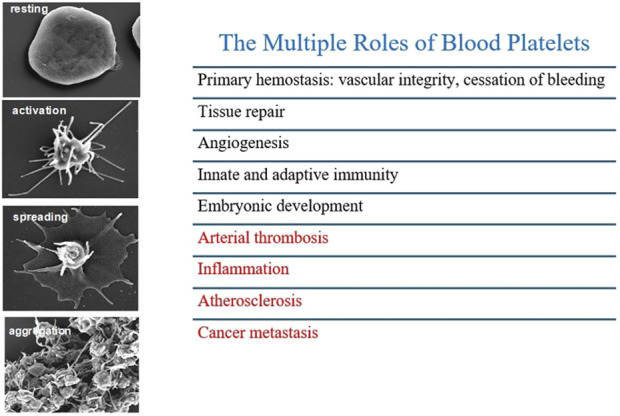
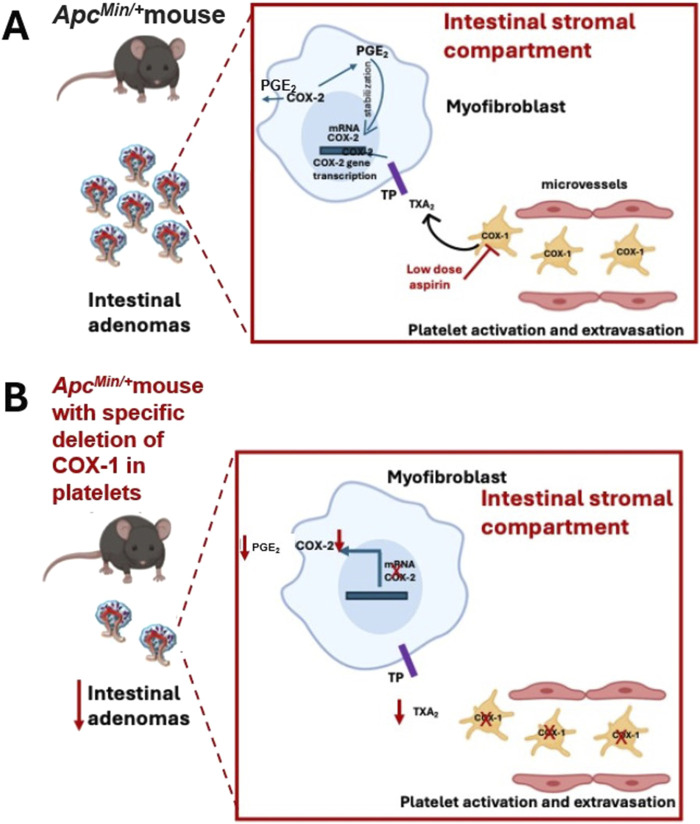
Inflammation plays a critical role in the pathogenesis of various diseases by promoting the acquisition of new functional traits by different cell types. Shared risk factors between cardiovascular disease and cancer, including smoking, obesity, diabetes, high-fat diet, low physical activity, and alcohol consumption, contribute to inflammation linked to platelet activation. Platelets contribute to an inflammatory state by activating various normal cells, such as fibroblasts, immune cells, and vascular cells. This activation is achieved by releasing diverse molecules from platelets, including lipids (eicosanoids), growth and angiogenic factors, and extracellular vesicles (EVs) rich in various RNA species. Antiplatelet agents like low-dose aspirin can prevent cardiovascular disease and cancer by inhibiting platelet functions beyond the antithrombotic action. Throughout the initial phases of tumorigenesis, the activation of platelets induces the overexpression of cyclooxygenase (COX)-2 in stromal cells, leading to increased biosynthesis of prostaglandin (PG)E. This prostanoid can contribute to tumor development by inhibiting apoptosis, promoting cancer cell proliferation and migration, and immune evasion. Notably, platelets induce the epithelial-mesenchymal transition (EMT) in tumor cells, enhancing their metastatic potential. Two platelet eicosanoids, PGE (generated as a minor product of COX-1) and 12S-hydroxyeicosatetraenoic acid (HETE) [derived from the platelet-type 12-lipoxygenase (LOX)], contribute to EMT. In addition to the pharmacological inhibition of eicosanoid biosynthesis, a potential strategy for mitigating platelet-induced metastasis might encompass the inhibition of direct interactions between platelets and cancer cells. For example, there is promise in utilizing revacept to inhibit the interaction between platelet collagen receptors (particularly GPVI) and galectin-3 in cancer cells. Identifying these novel platelet functions suggests the potential application of antiplatelet agents, such as low-dose aspirin, in mitigating cancer risk, particularly in the case of colorectal cancer. It is necessary to investigate the effectiveness of other antiplatelet drugs, such as ADP P2Y receptor antagonists, in cancer prevention. Other new antiplatelet drugs, such as revacept and selective 12-LOX inhibitors, currently under clinical development, are of interest due to their low risk of bleeding. Platelets and EVs carry important clinical information because they contain specific proteins and RNAs associated with disease conditions. Their analysis can improve the accuracy of liquid biopsies for early cancer detection, monitoring progression, and assessing drug response.
炎症通过促进不同细胞类型获得新的功能特性,在各种疾病的发病机制中发挥关键作用。心血管疾病和癌症之间的共同风险因素,包括吸烟、肥胖、糖尿病、高脂饮食、低体力活动和饮酒,都会导致与血小板活化相关的炎症。血小板通过激活各种正常细胞,如成纤维细胞、免疫细胞和血管细胞,促成炎症状态。这种激活是通过血小板释放多种分子来实现的,这些分子包括脂质(类花生酸)、生长因子和血管生成因子,以及富含各种RNA种类的细胞外囊泡(EVs)。低剂量阿司匹林等抗血小板药物可以通过抑制血小板功能(超出抗血栓作用)来预防心血管疾病和癌症。在肿瘤发生的初始阶段,血小板的激活会诱导基质细胞中环氧合酶(COX)-2的过度表达,导致前列腺素(PG)E的生物合成增加。这种前列腺素可以通过抑制细胞凋亡、促进癌细胞增殖和迁移以及免疫逃逸来促进肿瘤发展。值得注意的是,血小板会诱导肿瘤细胞发生上皮-间质转化(EMT),增强其转移潜能。两种血小板类花生酸,PGE(作为COX-1的次要产物产生)和12S-羟基二十碳四烯酸(HETE)[源自血小板型12-脂氧合酶(LOX)],促成EMT。除了对类花生酸生物合成进行药理学抑制外,减轻血小板诱导转移的潜在策略可能包括抑制血小板与癌细胞之间的直接相互作用。例如,利用瑞伐西普抑制血小板胶原受体(特别是糖蛋白VI)与癌细胞中半乳糖凝集素-3之间的相互作用具有前景。识别这些新的血小板功能表明抗血小板药物,如低剂量阿司匹林,在降低癌症风险方面的潜在应用,特别是在结直肠癌的情况下。有必要研究其他抗血小板药物,如ADP P2Y受体拮抗剂,在癌症预防中的有效性。目前正在临床开发的其他新型抗血小板药物,如瑞伐西普和选择性12-LOX抑制剂,因其出血风险低而备受关注。血小板和EVs携带重要的临床信息,因为它们含有与疾病状况相关的特定蛋白质和RNA。对它们的分析可以提高液体活检在早期癌症检测、监测进展和评估药物反应方面的准确性。