Mohd Hana, Michniak-Kohn Bozena
Ernest Mario School of Pharmacy, Rutgers-The State University of New Jersey, 160 Frelinghuysen Road, Piscataway, NJ 08854, USA.
Center for Dermal Research, Rutgers-The State University of New Jersey, 145 Bevier Road, Piscataway, NJ 08854, USA.
Antioxidants (Basel). 2024 Dec 20;13(12):1573. doi: 10.3390/antiox13121573.
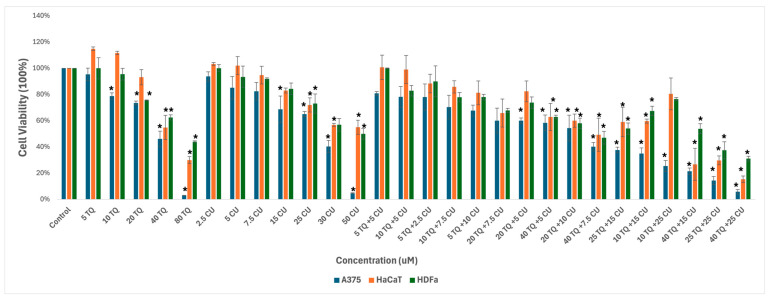
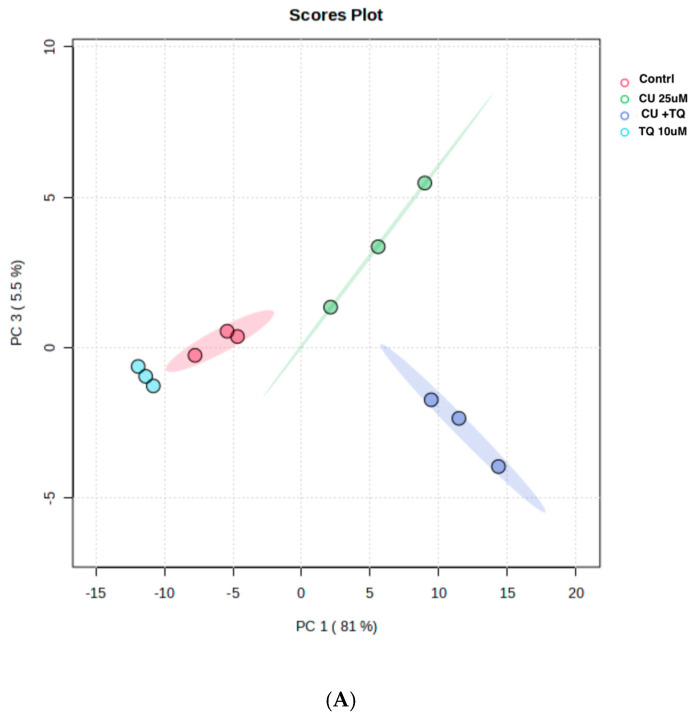
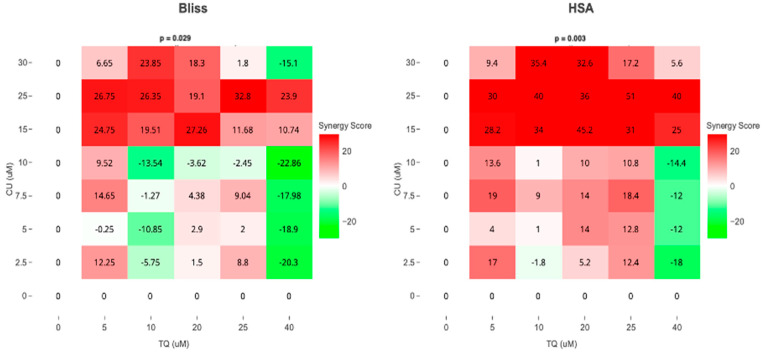
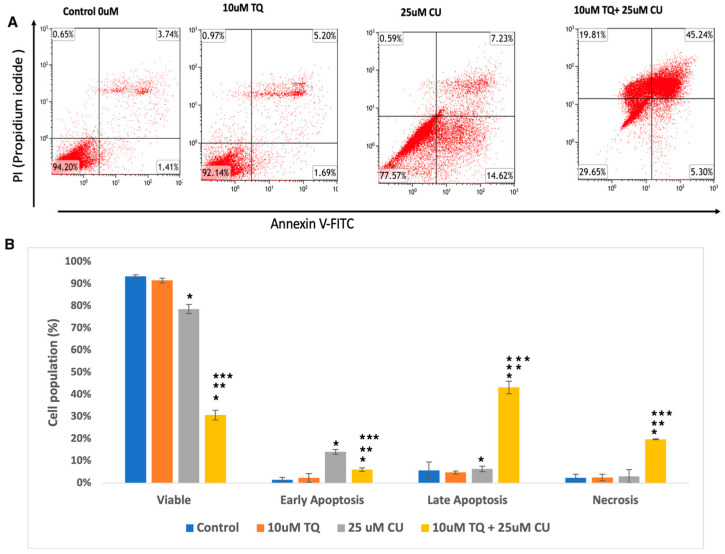
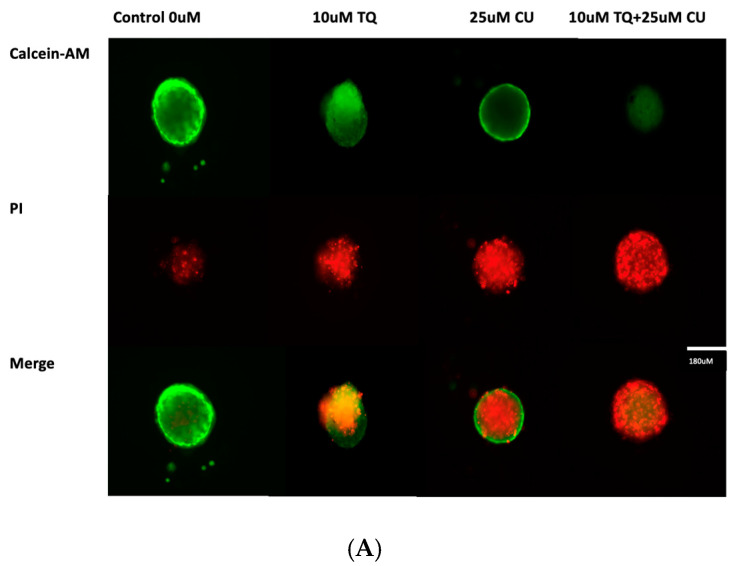
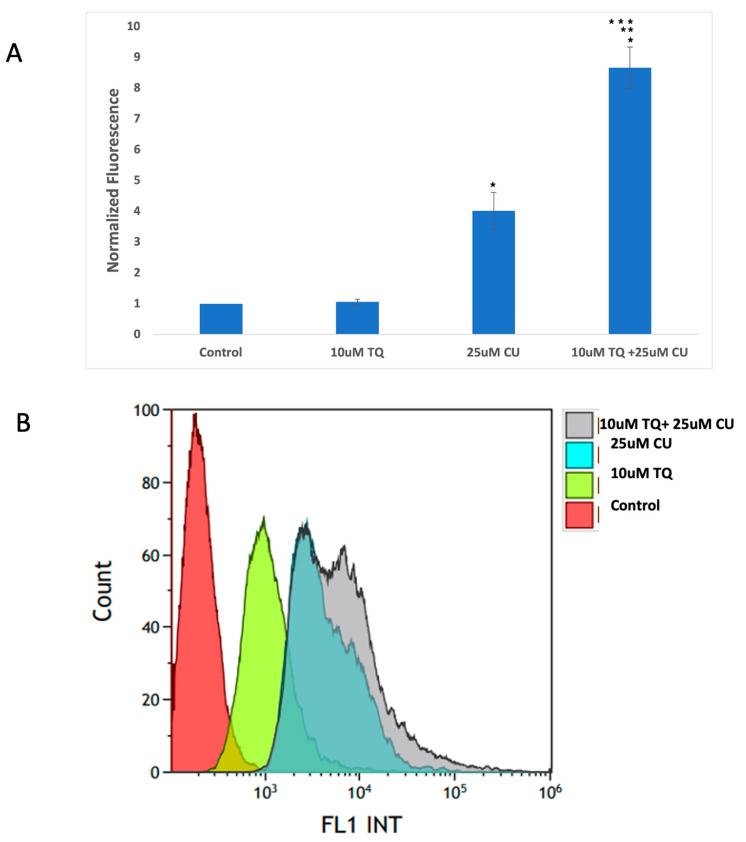
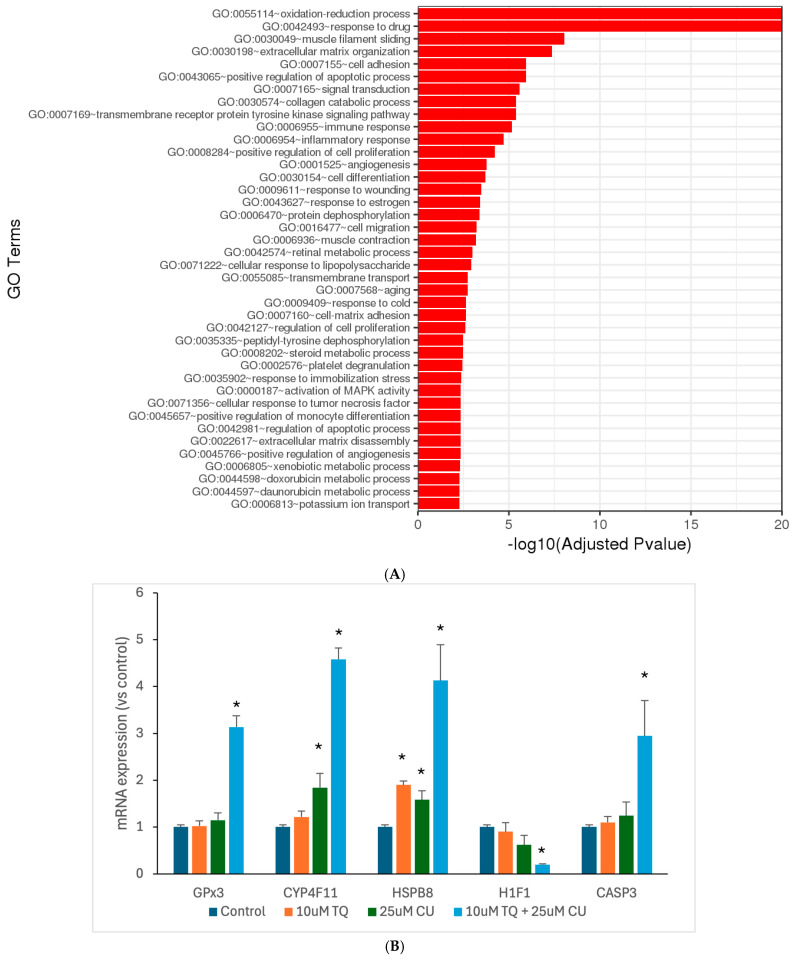
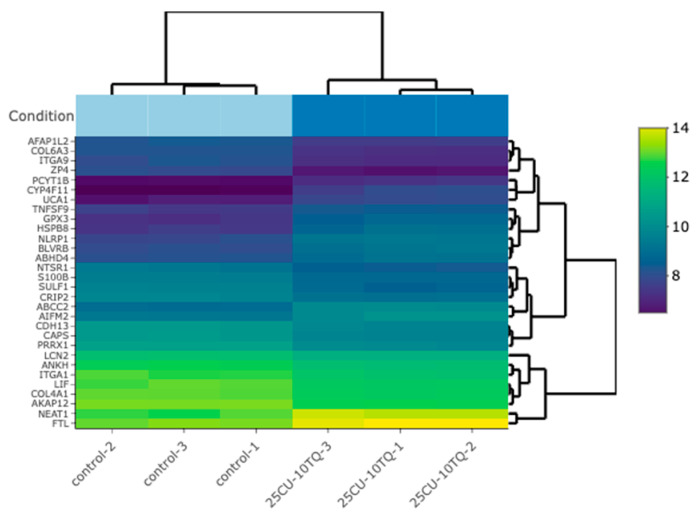
Combining anti-cancer agents in cancer therapies is becoming increasingly common because of their improved efficacy, reduced toxicity, and decreased risk of resistance development. Melanoma, a highly aggressive form of skin cancer characterized by limited treatment options due to chemoresistance, poses a considerable challenge for effective management. Here, we test the hypothesis that dietary supplements such as thymoquinone (TQ) and curcumin (CU) cooperatively modulate cancer-associated cellular mechanisms to inhibit melanoma progression. Through a series of in vitro experiments utilizing the A375 melanoma cell line, including assessments of cell viability, apoptosis, multicellular tumor spheroid models, reactive oxygen species (ROS) quantification, metabolomics analysis, and RNA sequencing, we established that the combined application of TQ and CU exhibited superior anti-tumor effects compared to their individual use. Our results indicate that the combination treatment significantly inhibited cell viability and induced apoptosis more effectively than either agent alone, with optimal synergy observed at concentrations of 25 µM CU and 10 µM TQ against A375 cells. Additionally, the combination treatment markedly elevated ROS levels, selectively activating the mitochondrial apoptotic pathway via caspase-9. Differential gene expression analysis further revealed a unique synergistic effect of the combination treatment, with enhanced regulation of genes related to oxidative stress and apoptosis. Notably, pathways such as mitochondrial apoptotic signaling and redox homeostasis were more effectively influenced by the combination, with genes such as GPX3, CYP4F11, and HSPB8 cooperatively regulated. Overall, the findings suggest that, in combination, TQ and CU acts synergistically against melanoma; however, further experimental and clinical studies are required to confirm its therapeutic potential.
由于联合使用抗癌药物在癌症治疗中疗效提高、毒性降低且耐药性发展风险降低,这种治疗方式正变得越来越普遍。黑色素瘤是一种极具侵袭性的皮肤癌,由于其具有化疗耐药性,治疗选择有限,这给有效治疗带来了巨大挑战。在此,我们验证了一个假设,即百里醌(TQ)和姜黄素(CU)等膳食补充剂可协同调节与癌症相关的细胞机制,以抑制黑色素瘤进展。通过一系列利用A375黑色素瘤细胞系的体外实验,包括细胞活力评估、细胞凋亡检测、多细胞肿瘤球体模型、活性氧(ROS)定量分析、代谢组学分析和RNA测序,我们发现与单独使用相比,TQ和CU联合应用具有更强的抗肿瘤效果。我们的结果表明,联合治疗比单独使用任何一种药物都能更有效地显著抑制细胞活力并诱导细胞凋亡,在针对A375细胞的25 µM CU和10 µM TQ浓度下观察到了最佳协同作用。此外,联合治疗显著提高了ROS水平,通过半胱天冬酶 - 9选择性激活线粒体凋亡途径。差异基因表达分析进一步揭示了联合治疗的独特协同效应,增强了与氧化应激和细胞凋亡相关基因的调控。值得注意的是,线粒体凋亡信号传导和氧化还原稳态等途径受联合治疗的影响更为显著,GPX3、CYP4F11和HSPB8等基因受到协同调控。总体而言,研究结果表明,TQ和CU联合使用对黑色素瘤具有协同作用;然而,需要进一步的实验和临床研究来证实其治疗潜力。