Kolotyeva Nataliya A, Groshkov Alexander A, Rozanova Nataliya A, Berdnikov Arseniy K, Novikova Svetlana V, Komleva Yulia K, Salmina Alla B, Illarioshkin Sergey N, Piradov Mikhail A
Brain Science Institute, Research Center of Neurology, 125367 Moscow, Russia.
Biomolecules. 2024 Dec 6;14(12):1556. doi: 10.3390/biom14121556.
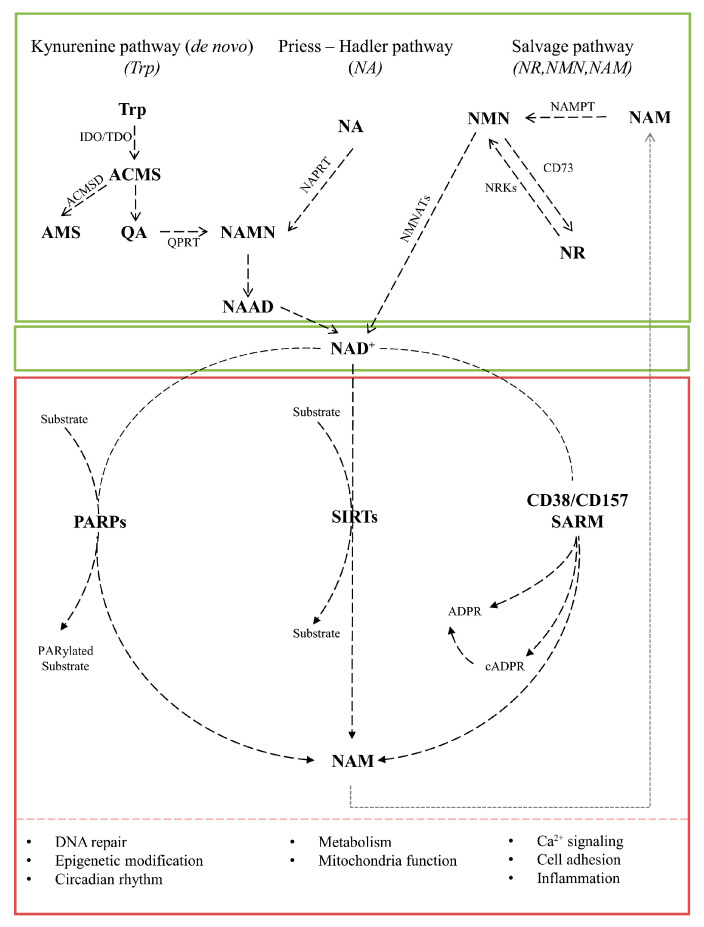
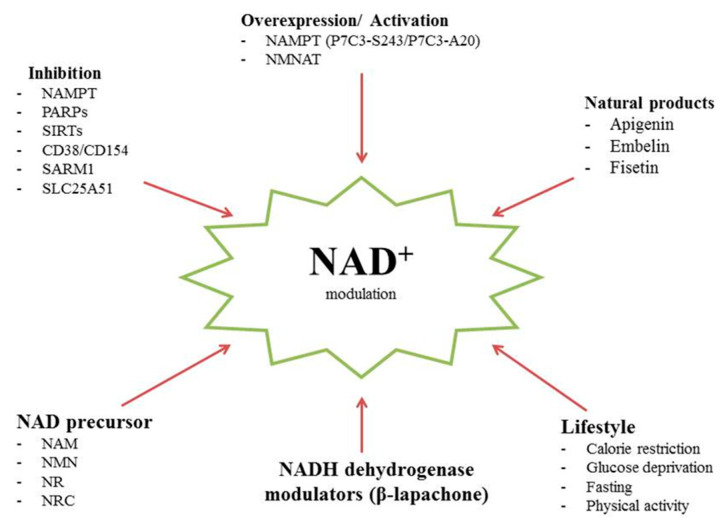
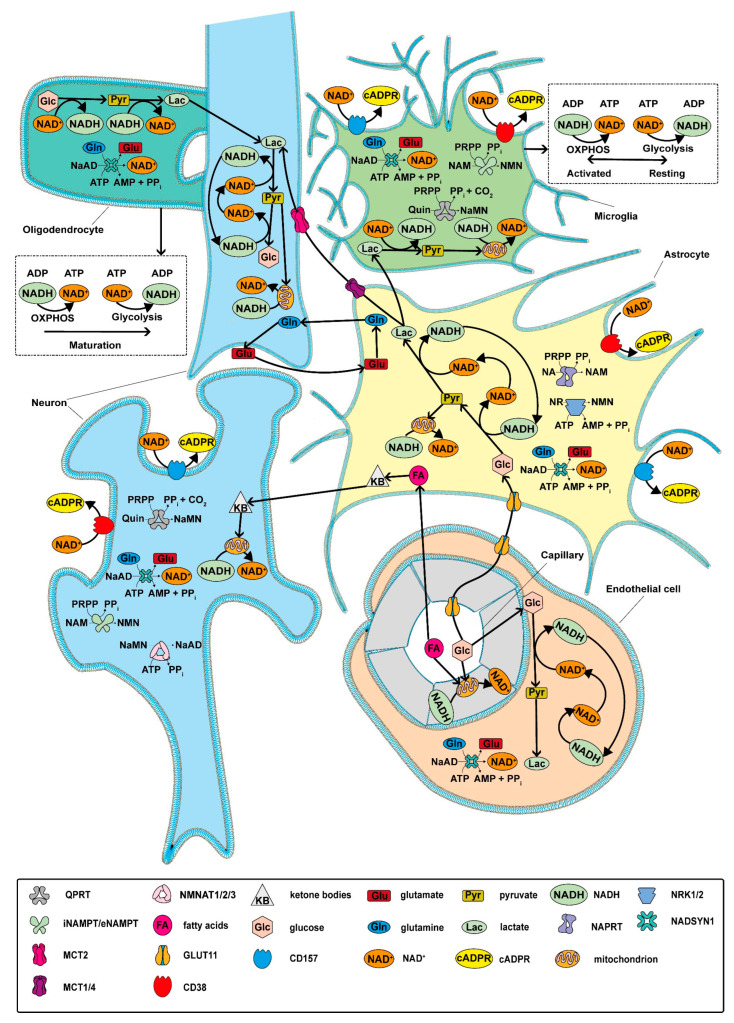
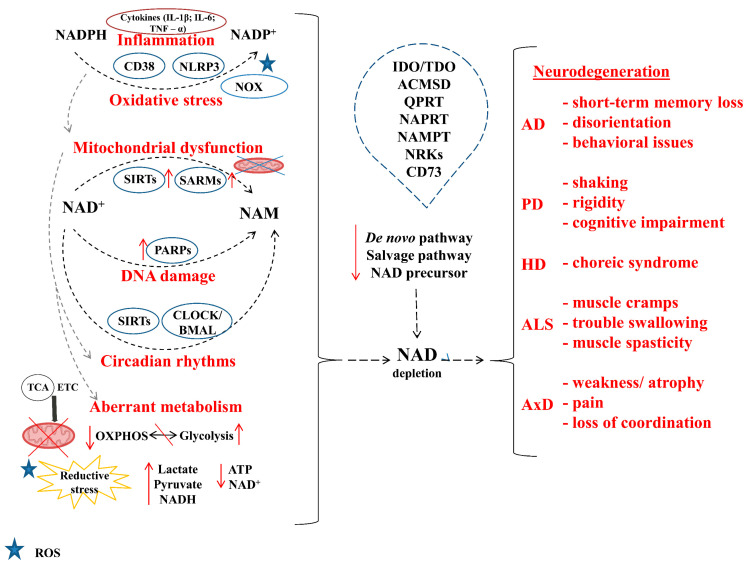
NAD+ plays a pivotal role in energy metabolism and adaptation to external stimuli and stressful conditions. A significant reduction in intracellular NAD+ levels is associated with aging and contributes to the development of chronic cardiovascular, neurodegenerative, and metabolic diseases. It is of particular importance to maintain optimal levels of NAD+ in cells with high energy consumption, particularly in the brain. Maintaining the tissue level of NAD+ with pharmacological tools has the potential to slow down the aging process, to prevent the development of age-related diseases. This review covers key aspects of NAD+ metabolism in terms of brain metabolic plasticity, including NAD+ biosynthesis and degradation in different types of brain cells, as well as its contribution to the development of neurodegeneration and aging, and highlights up-to-date approaches to modulate NAD+ levels in brain cells.
烟酰胺腺嘌呤二核苷酸(NAD+)在能量代谢以及对外界刺激和应激条件的适应过程中发挥着关键作用。细胞内NAD+水平的显著降低与衰老相关,并促进慢性心血管疾病、神经退行性疾病和代谢性疾病的发展。在高能量消耗的细胞中,尤其是在大脑中,维持最佳的NAD+水平尤为重要。利用药理学工具维持组织中的NAD+水平有可能减缓衰老过程,预防与年龄相关疾病的发生。本综述涵盖了NAD+代谢在脑代谢可塑性方面的关键内容,包括不同类型脑细胞中NAD+的生物合成和降解,以及其对神经退行性变和衰老发展的作用,并重点介绍了调节脑细胞中NAD+水平的最新方法。