Sarant Julia Z, Busby Peter A, Schembri Adrian J, Briggs Robert J S, Masters Colin L, Harris David C
Department of Audiology and Speech Pathology, The University of Melbourne, 550 Swanston Street, Carlton, VIC 3010, Australia.
Cogstate Ltd., Level 2/161 Collins Street, Melbourne, VIC 3000, Australia.
Brain Sci. 2024 Dec 19;14(12):1279. doi: 10.3390/brainsci14121279.
Hearing loss is highly prevalent in older adults and is independently associated with accelerated cognitive decline. Cochlear implants are usually the only effective treatment for people with severe-profound hearing loss, who have the highest risk of cognitive decline and dementia, however, very few receive them. Current evidence of the effects of cochlear implant use on cognitive decline/dementia outcomes is limited and unclear. This study aimed to investigate the effect of cochlear implant use on longitudinal cognitive performance, as this intervention may be an effective method of modifying cognitive outcomes for older adults with significant hearing loss.
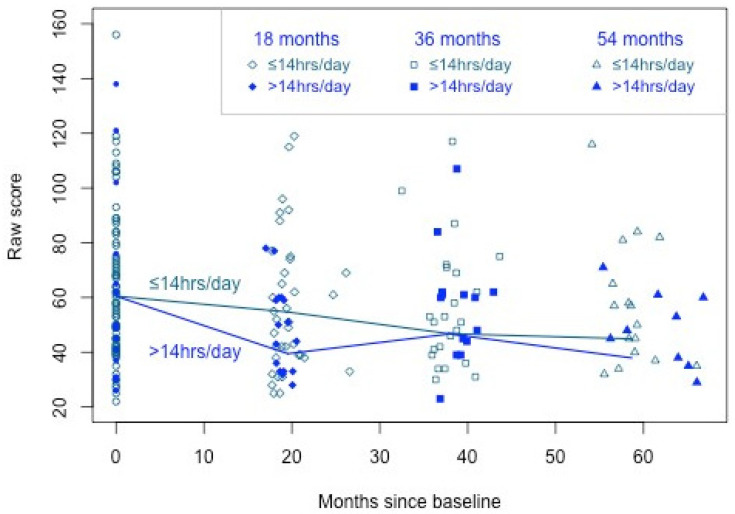
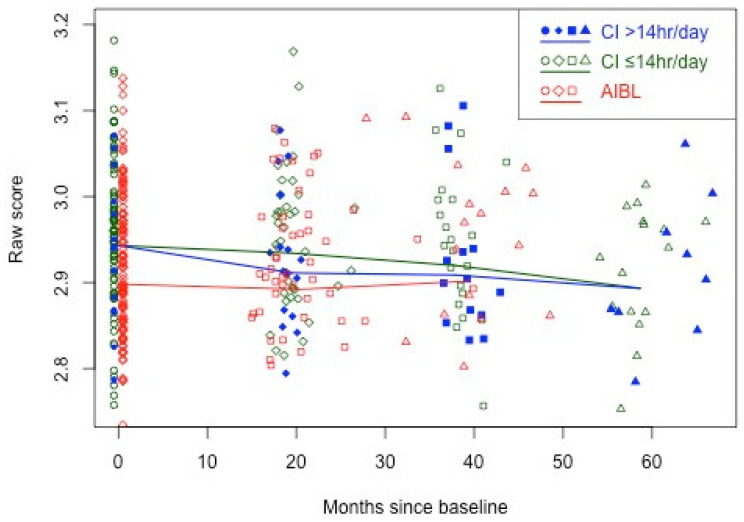
This prospective longitudinal observational study investigated cognitive performance in a convenience sample of older adults (mean age 74 years) with cochlear implants over 4.5 years post-implantation, comparing this with that of community-living adults with untreated hearing loss/normal hearing over 3 years (Australian Imaging, Biomarker and Lifestyle Flagship Study of Ageing; AIBL). All participants were assessed at 18-month intervals from baseline using the same measures. Panel regression was used to compare cognitive trajectories.
Cochlear implant users demonstrated significantly improved performance in executive function and working memory, as well as stability in attention, psychomotor function, and visual learning at 4.5-year follow-up. Comparatively, AIBL participants showed significantly greater worsening performance per year in attention and psychomotor function, and stability in working memory and visual learning at 3-year follow-up.
Cochlear implant use may delay cognitive decline and/or improve cognitive performance in older adults with severe-profound hearing loss, providing proof-of-concept evidence of the positive effects of hearing intervention on cognitive performance in older adults with hearing loss.
听力损失在老年人中极为普遍,且与认知能力加速衰退独立相关。人工耳蜗植入通常是重度至极重度听力损失患者唯一有效的治疗方法,这类患者认知能力衰退和患痴呆症的风险最高,然而接受人工耳蜗植入的人却极少。目前关于使用人工耳蜗对认知能力衰退/痴呆症转归影响的证据有限且不明确。本研究旨在调查使用人工耳蜗对纵向认知表现的影响,因为这种干预措施可能是改善有明显听力损失的老年人认知转归的有效方法。
这项前瞻性纵向观察性研究调查了一组便利样本的植入人工耳蜗的老年人(平均年龄74岁)在植入后4.5年的认知表现,并将其与社区生活的未治疗听力损失/听力正常的成年人在3年中的认知表现进行比较(澳大利亚衰老成像、生物标志物和生活方式旗舰研究;AIBL)。所有参与者从基线开始每隔18个月使用相同的测量方法进行评估。使用面板回归来比较认知轨迹。
在4.5年的随访中,人工耳蜗使用者在执行功能和工作记忆方面表现出显著改善,在注意力、心理运动功能和视觉学习方面表现稳定。相比之下,AIBL参与者在3年随访中注意力和心理运动功能每年的恶化程度显著更大,在工作记忆和视觉学习方面表现稳定。
使用人工耳蜗可能会延缓重度至极重度听力损失老年人的认知衰退和/或改善其认知表现,为听力干预对有听力损失的老年人认知表现的积极影响提供了概念验证证据。