Qu Dong, Schürmann Peter, Rothämel Thomas, Dörk Thilo, Klintschar Michael
Institute of Legal Medicine, Hannover Medical School, Carl-Neuberg-Str. 1, 30625 Hannover, Germany.
Department of Forensic Medicine, School of Basic Medical Sciences, Nanjing Medical University, Longmian Avenue 101, Nanjing 211166, China.
Genes (Basel). 2024 Dec 23;15(12):1656. doi: 10.3390/genes15121656.
Sudden infant death syndrome (SIDS) is the leading cause of death among infants aged between one month and one year. Altered enzyme activities or expression of acetylcholinesterase (AChE) and butyrylcholinesterase (BChE) have been observed in SIDS patients that might lead to disturbed autonomic function and, together with other risk factors, might trigger SIDS. To explore the contribution of AChE and BChE from a genomic viewpoint, we sought to investigate the association between SIDS and selected single nucleotide polymorphisms (SNPs) in the and genes.
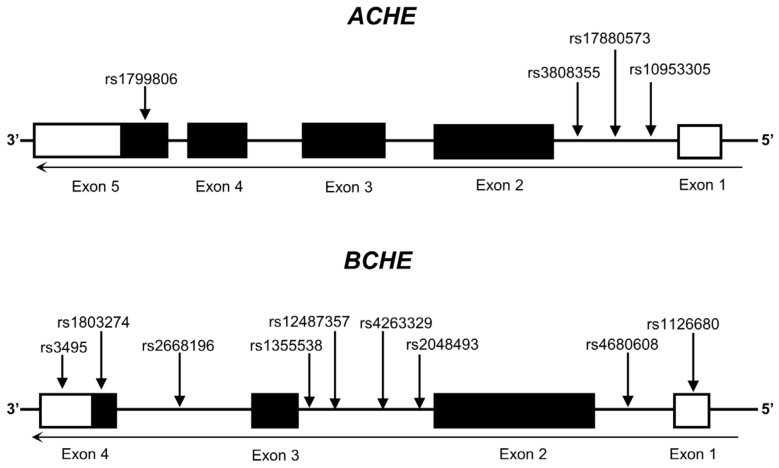
In this case-control study, 13 potentially regulatory SNPs were selected from and and were genotyped in 201 SIDS cases and 338 controls. The association of SIDS with the 11 successfully genotyped candidate variants was examined using statistical analyses of overall or stratified cases and haplotype analyses.
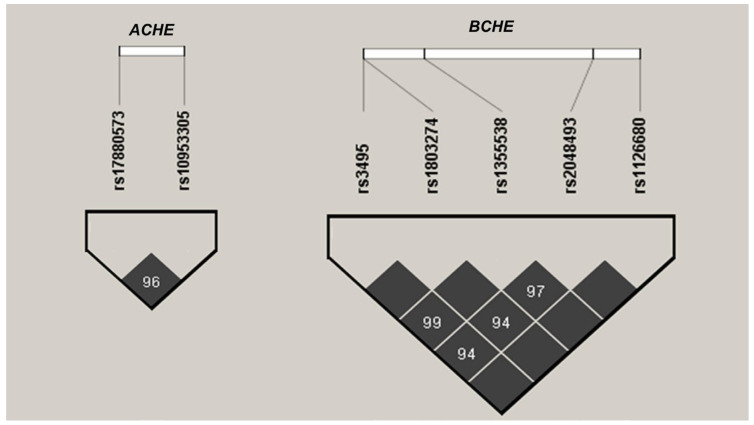
No significant overall associations were observed between SIDS and and variants in allele, genotype, and haplotype analyses. In subgroup analyses, eight variants were found to be nominally associated with SIDS, though these associations did not remain statistically significant after correction for multiple comparisons. One haplotype (T-C-G-C-C in rs3495-rs1803274-rs1355538-rs2048493-rs1126680) of was associated with the female SIDS subgroup (57.3% in controls vs. 46.3% in female SIDS cases, = 0.010).
The selected variants in and were not overall associated with SIDS in this study, and thus cannot generally explain the previously reported dysregulation of enzyme activities in SIDS. However, some evidence of association in subgroups and a possible contribution of variants other than those tested here would need to be explored in larger studies.
婴儿猝死综合征(SIDS)是1个月至1岁婴儿死亡的主要原因。在SIDS患者中观察到乙酰胆碱酯酶(AChE)和丁酰胆碱酯酶(BChE)的酶活性或表达发生改变,这可能导致自主神经功能紊乱,并与其他危险因素一起引发SIDS。为了从基因组角度探讨AChE和BChE的作用,我们试图研究SIDS与AChE和BChE基因中选定的单核苷酸多态性(SNP)之间的关联。
在这项病例对照研究中,从AChE和BChE中选择了13个潜在的调控SNP,并在201例SIDS病例和338例对照中进行基因分型。使用总体或分层病例的统计分析以及单倍型分析来检验SIDS与11个成功基因分型的候选变异之间的关联。
在等位基因、基因型和单倍型分析中,未观察到SIDS与AChE和BChE变异之间存在显著的总体关联。在亚组分析中,发现8个变异与SIDS存在名义上的关联,尽管在进行多重比较校正后,这些关联不再具有统计学意义。AChE的一个单倍型(rs3495-rs1803274-rs1355538-rs2048493-rs1126680中的T-C-G-C-C)与女性SIDS亚组相关(对照组为57.3%,女性SIDS病例组为46.3%,P = 0.010)。
本研究中AChE和BChE中选定的变异与SIDS总体上无关联,因此不能普遍解释先前报道的SIDS中酶活性的失调。然而,在更大规模研究中需要探索亚组中一些关联的证据以及此处未测试的变异可能的作用。