Tao Xiang, Chen Can, Liu Mei
Department of Gastroenterology, Tongji Hospital, Tongji Medical College, Huazhong University of Science and Technology, Wuhan 430030, China.
Clinical Center of Human Gene Research, Union Hospital, Tongji Medical College, Huazhong University of Science and Technology, Wuhan 430022, China.
Biomedicines. 2024 Nov 22;12(12):2665. doi: 10.3390/biomedicines12122665.
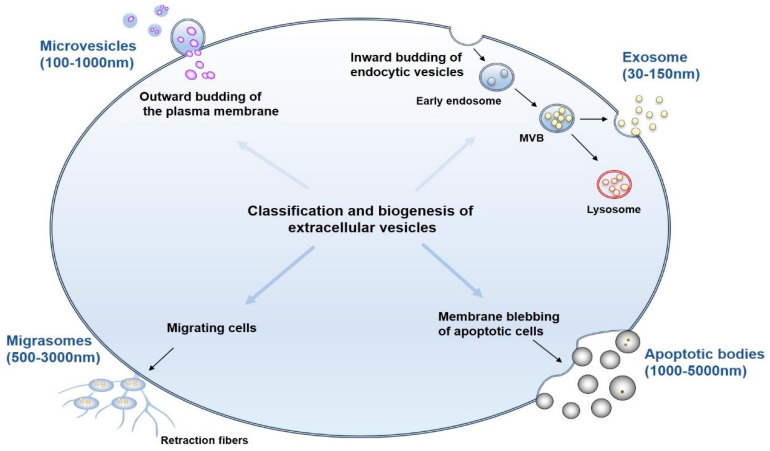
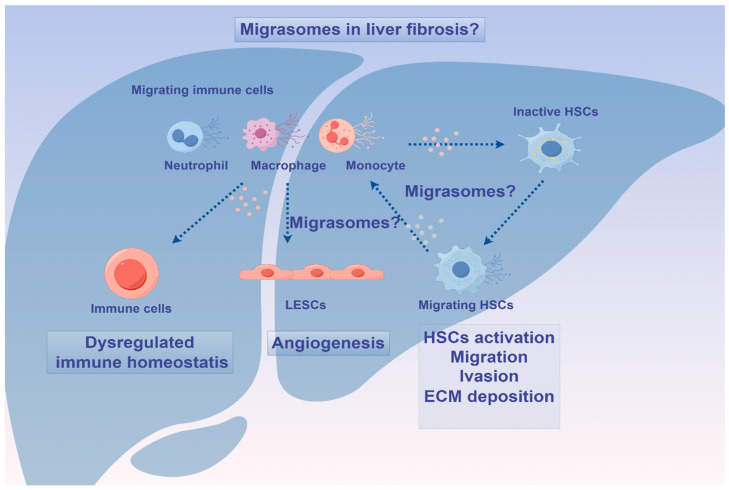
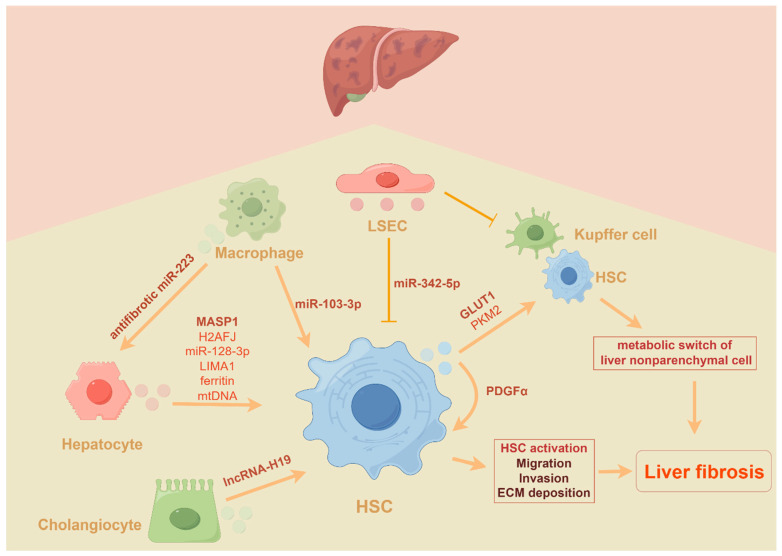
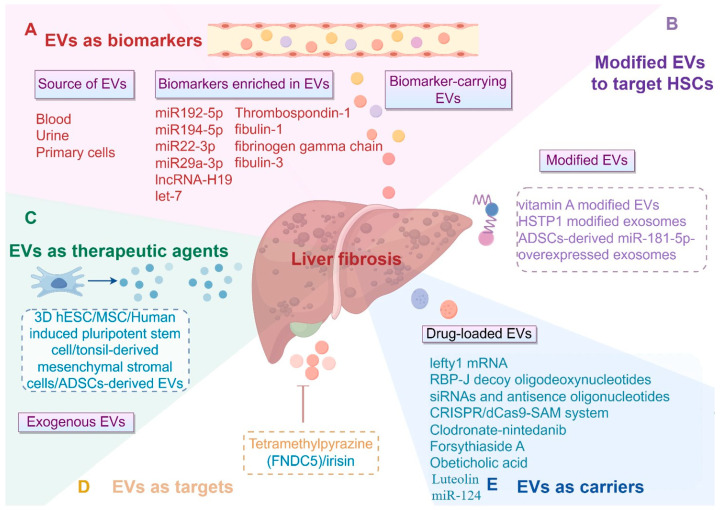
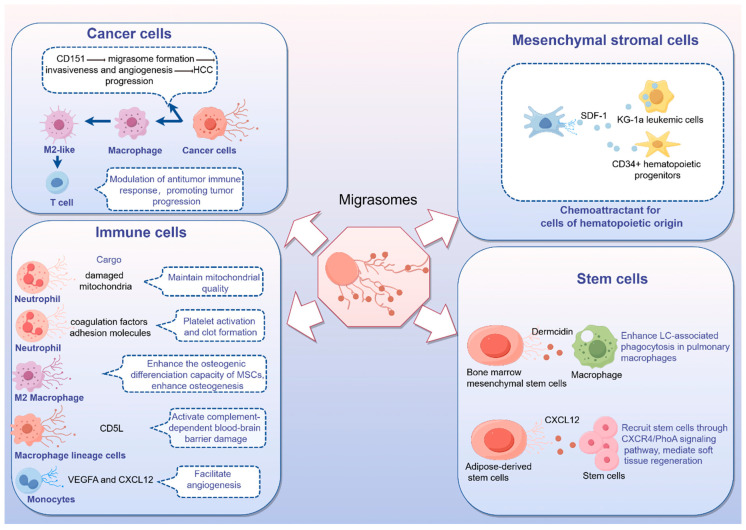
Liver fibrosis represents a common pathway in the progression of various chronic liver diseases towards cirrhosis and liver failure. Extracellular vesicles (EVs) are membrane-enclosed particles secreted by diverse cell types, including exosomes, microvesicles, apoptotic vesicles, and the recently identified migrasomes. These vesicles can be taken up by recipient cells, thereby modulating their function through the transport of cargo molecules. EVs facilitate intercellular communication and play a significant role in the development of liver fibrosis. Moreover, the detection of EVs in various body fluids offers sensitive diagnostic tools for assessing liver fibrosis. Additionally, EVs may serve as therapeutic targets, potential therapeutic agents, and drug delivery vehicles. This article reviews recent advances in the field of EVs concerning liver fibrosis and related diseases, with a particular focus on the potential role of the newly discovered migrasomes in intracellular crosstalk within the liver.
肝纤维化是各种慢性肝病进展为肝硬化和肝衰竭的常见途径。细胞外囊泡(EVs)是由多种细胞类型分泌的膜包被颗粒,包括外泌体、微囊泡、凋亡小体以及最近发现的迁移体。这些囊泡可被受体细胞摄取,从而通过货物分子的运输调节其功能。EVs促进细胞间通讯,并在肝纤维化的发展中发挥重要作用。此外,在各种体液中检测EVs为评估肝纤维化提供了灵敏的诊断工具。此外,EVs可作为治疗靶点、潜在的治疗药物和药物递送载体。本文综述了EVs领域中关于肝纤维化及相关疾病的最新进展,特别关注新发现的迁移体在肝脏内细胞间串扰中的潜在作用。