de Sá Jéssica Maróstica, Thongpan Ilada, Busso Jefferson de Souza, Rodrigues Thainá Dos Santos, Chen Phylip, Helena Alvaro Luiz, Regasini Luis Octavio, Fossey Marcelo Andres, Caruso Ícaro Putinhon, de Souza Fátima Pereira, Peeples Mark Edward
Multiuser Center for Biomolecular Innovation, Institute of Biosciences, Letters and Exact Sciences, São Paulo State University (UNESP), São José do Rio Preto 15054-000, SP, Brazil.
Department of Physics, Institute of Biosciences, Letters and Exact Sciences, São Paulo State University UNESP, São José do Rio Preto 15054-000, SP, Brazil.
Int J Mol Sci. 2024 Dec 11;25(24):13301. doi: 10.3390/ijms252413301.
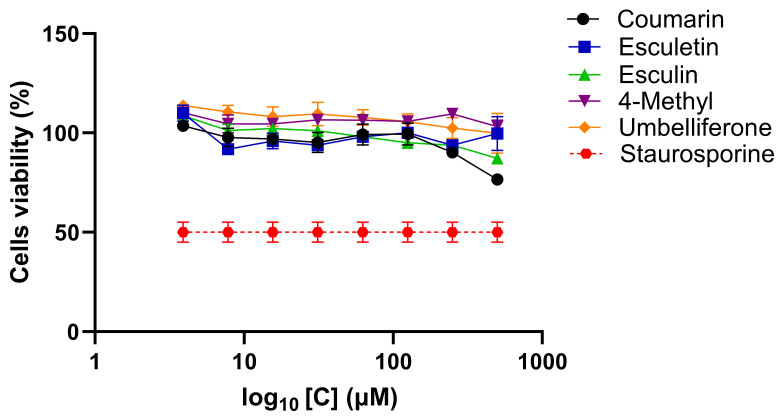
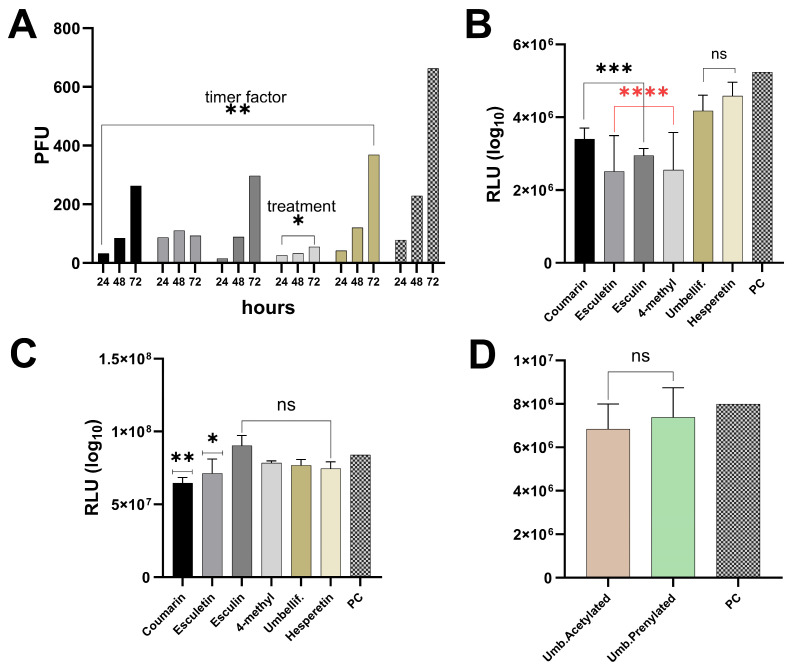
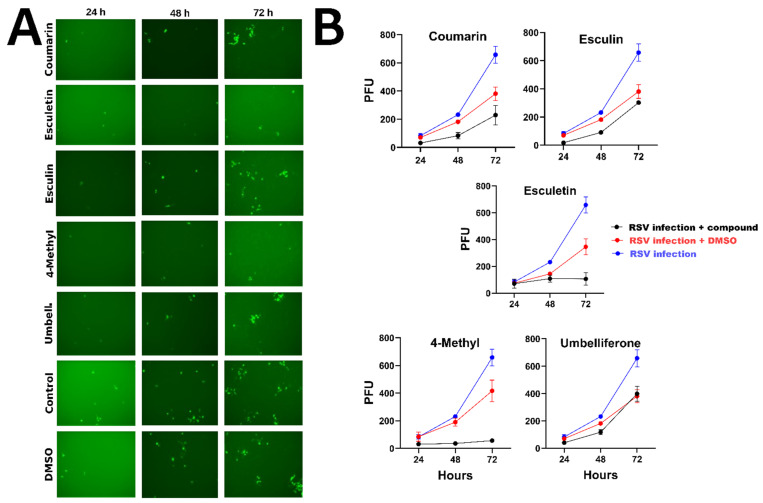
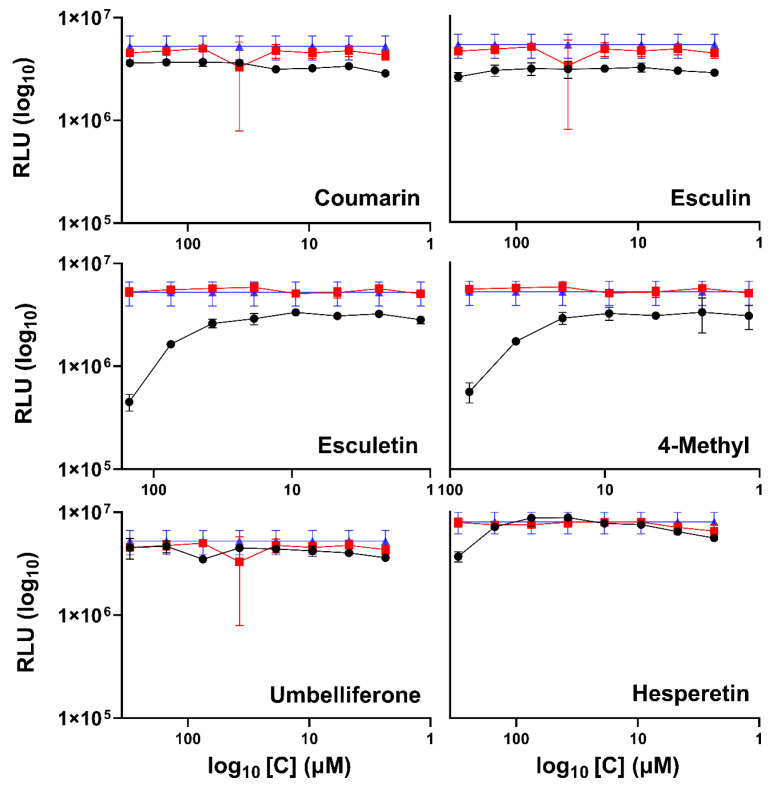
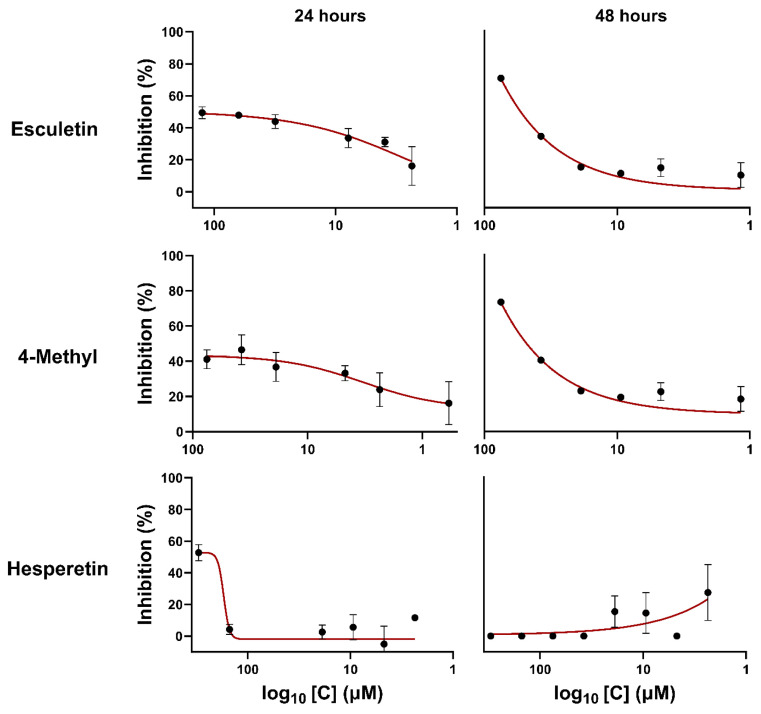
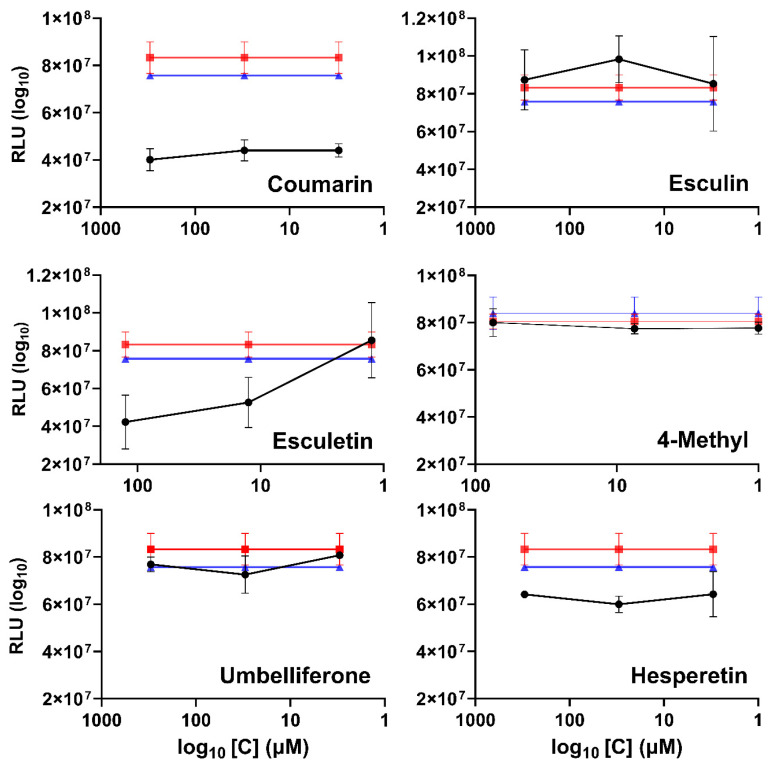
Respiratory syncytial virus (RSV) is one of the most prevalent viruses that causes severe acute lower respiratory tract infections (ALRTIs) in the elderly and young children. There is no specific drug to treat RSV, only a broad-spectrum antiviral, ribavirin, which is only used in critical cases. Our research group is investigating antiviral agents of natural origin, such as coumarins and flavonoids, that may help reduce or prevent RSV infection. The cytotoxic concentrations of coumarins and hesperetin were tested on A549 and HEp-2 cells and used in inhibition tests in which 80% of the cells were viable. The anti-RSV action of the molecules was analyzed in A549 and HEp-2 cells and in HBE cell cultures infected with RSV-luc or rgRSV. We also encapsulated the compounds using β-cyclodextrin to improve the permeability and solubility of the molecules. Esculetin and 4-methyl inhibited rgRSV effectively on A549 and HEp-2 cells after 24 hpi, and when they were encapsulated, coumarin, esculetin, and hesperetin presented inhibition against rgRSV in HBE culture. The coumarins inhibit RSV replication in cell culture and even manage to overcome the mucus barriers of the HBE cultures, and β-cyclodextrin was essential for some of the coumarins to enter the cell and therefore to reach their targets.
呼吸道合胞病毒(RSV)是导致老年人和幼儿严重急性下呼吸道感染(ALRTIs)的最常见病毒之一。目前尚无治疗RSV的特效药物,仅有广谱抗病毒药物利巴韦林,仅在重症病例中使用。我们的研究小组正在研究天然来源的抗病毒剂,如香豆素和黄酮类化合物,它们可能有助于减少或预防RSV感染。测试了香豆素和橙皮素在A549和HEp-2细胞上的细胞毒性浓度,并用于抑制试验,其中80%的细胞存活。在A549和HEp-2细胞以及感染了RSV-luc或rgRSV的HBE细胞培养物中分析了这些分子的抗RSV作用。我们还使用β-环糊精包裹这些化合物,以提高分子的通透性和溶解性。在感染后24小时,七叶亭和4-甲基在A549和HEp-2细胞上有效抑制rgRSV,当它们被包裹时,香豆素、七叶亭和橙皮素在HBE培养物中对rgRSV有抑制作用。香豆素在细胞培养中抑制RSV复制,甚至能够克服HBE培养物的黏液屏障,β-环糊精对于某些香豆素进入细胞并因此到达其靶点至关重要。