
经颅磁刺激增强IGF陷阱在脑胶质瘤模型中的治疗效果。
Transcranial Magnetic Stimulation Enhances the Therapeutic Effect of IGF-Trap in Intracerebral Glioma Models.
作者信息
Perrino Stephanie, Vazana Udi, Prager Ofer, Schori Lior, Ben-Arie Gal, Minarik Anna, Chen Yinhsuan Michely, Haçariz Orçun, Hashimoto Masakazu, Roth Yiftach, Pell Gabriel S, Friedman Alon, Brodt Pnina
机构信息
The Research Institute, The McGill University Health Center, Montreal, QC H4A 3J1, Canada.
Departments of Physiology and Cell Biology, Cognitive and Brain Sciences, The Zelman Center for Brain Science Research, Ben-Gurion University of the Negev, 1 Ben-Gurion Blvd., Beer-Sheva 8410501, Israel.
出版信息
Pharmaceuticals (Basel). 2024 Nov 28;17(12):1607. doi: 10.3390/ph17121607.
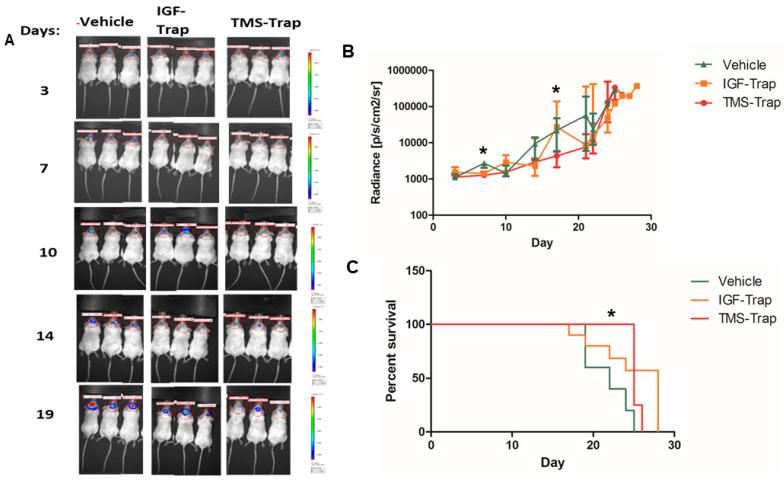
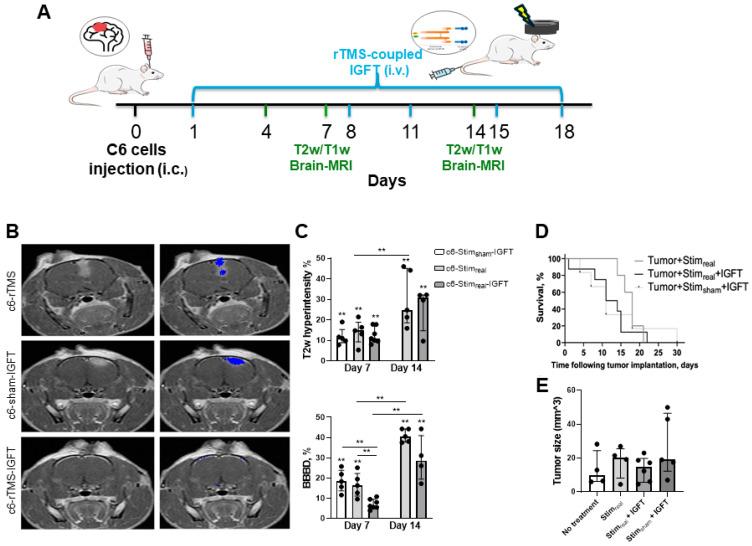
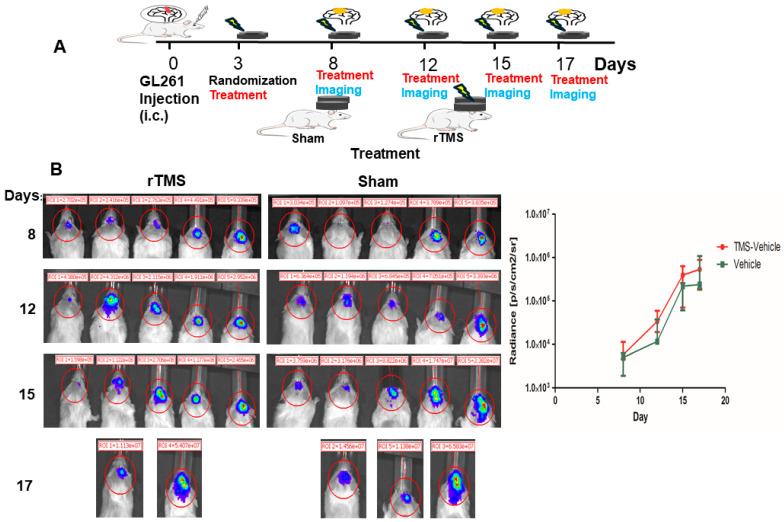
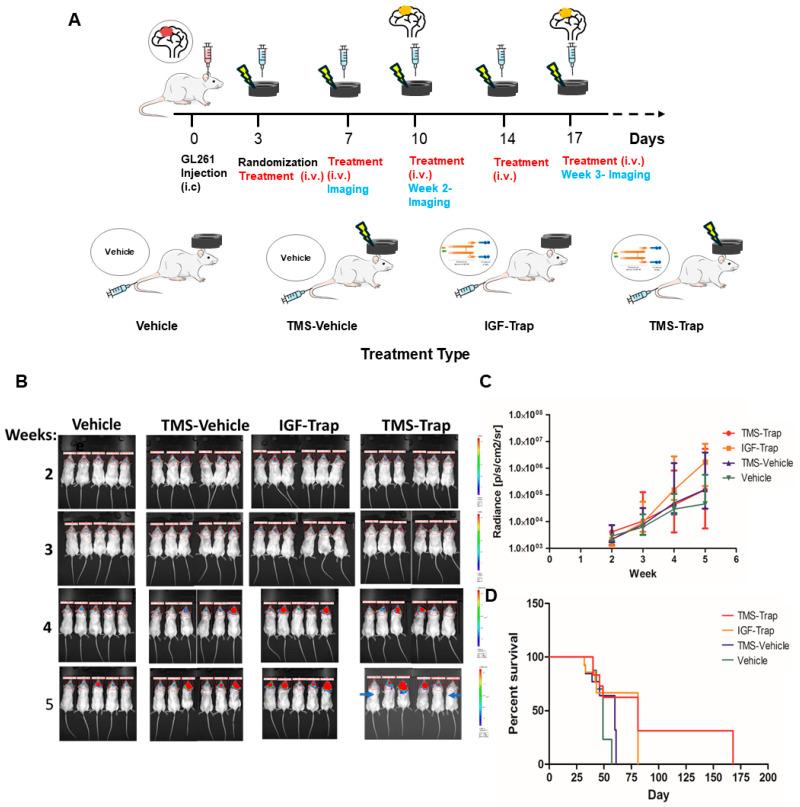
Glioblastoma multiforme is an aggressive malignancy with a dismal 5-year survival rate of 5-10%. Current therapeutic options are limited, due in part to drug exclusion by the blood-brain barrier (BBB). We have previously shown that high-amplitude repetitive transcranial magnetic stimulation (rTMS) in rats allowed the delivery across the BBB of an IGF signaling inhibitor-IGF-Trap. The objective of this study was to assess the therapeutic effect of IGF-Trap when delivered in conjunction with rTMS on the intracerebral growth of glioma. : We found that systemic administration of IGF-Trap without rTMS had a minimal effect on the growth of orthotopically injected glioma cells in rats and mice, compared to control animals injected with vehicle only or treated with sham rTMS. In rats treated with a combination of rTMS and IGF-Trap, we observed a growth retardation of C6 tumors for up to 14 days post-tumor cell injection, although tumors eventually progressed. In mice, tumors were detectable in all control groups by 14-17 days post-injection of glioma GL261 cells and progressed rapidly thereafter. In mice treated with rTMS prior to IGF-Trap administration, tumor growth was inhibited or delayed, although the tumors also eventually progressed. : The results showed that rTMS could increase the anti-tumor effect of IGF-Trap during the early phases of tumor growth. Further optimization of the rTMS protocol is required to improve survival outcomes.
多形性胶质母细胞瘤是一种侵袭性恶性肿瘤,5年生存率低至5%-10%。目前的治疗选择有限,部分原因是血脑屏障(BBB)会阻止药物进入。我们之前已经表明,对大鼠进行高振幅重复经颅磁刺激(rTMS)可以使IGF信号抑制剂IGF-Trap穿过血脑屏障。本研究的目的是评估IGF-Trap与rTMS联合使用时对脑内胶质瘤生长的治疗效果。我们发现,与仅注射赋形剂或接受假rTMS治疗的对照动物相比,在没有rTMS的情况下全身给予IGF-Trap对大鼠和小鼠原位注射的胶质瘤细胞生长影响极小。在用rTMS和IGF-Trap联合治疗的大鼠中,我们观察到在肿瘤细胞注射后长达14天C6肿瘤生长迟缓,尽管肿瘤最终还是进展了。在小鼠中,注射胶质瘤GL261细胞后14-17天,所有对照组都可检测到肿瘤,且此后肿瘤迅速进展。在给予IGF-Trap之前先用rTMS治疗的小鼠中,肿瘤生长受到抑制或延迟,尽管肿瘤最终也还是进展了。结果表明,rTMS在肿瘤生长的早期阶段可以增强IGF-Trap的抗肿瘤作用。需要进一步优化rTMS方案以改善生存结果。
 Zotero 插件