Emala Charles W, Saroya Tarnjot K, Miao Yuqi, Wang Shuang, Sang Shengmin, DiMango Emily A
Department of Anesthesiology, Columbia University Vagelos College of Physicians and Surgeons, 628 W. 168th St. PH 505 Center, New York, NY 10032, USA.
Department of Medicine (Pulmonology, Allergy and Critical Care), Columbia University Vagelos College of Physicians and Surgeons, New York, NY 10032, USA.
Pharmaceuticals (Basel). 2024 Dec 8;17(12):1651. doi: 10.3390/ph17121651.
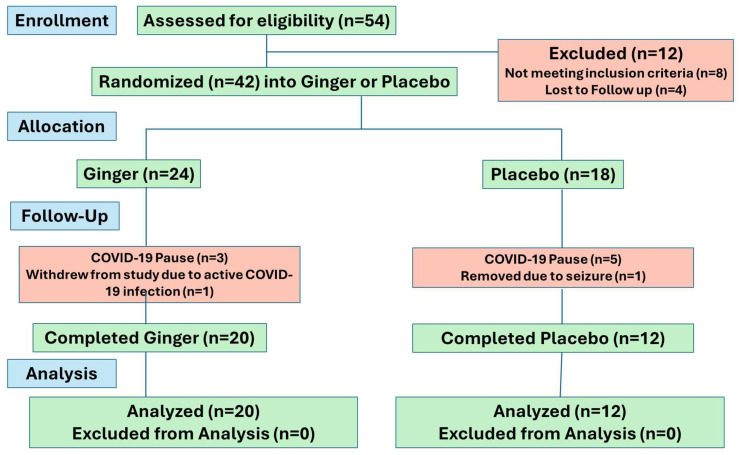
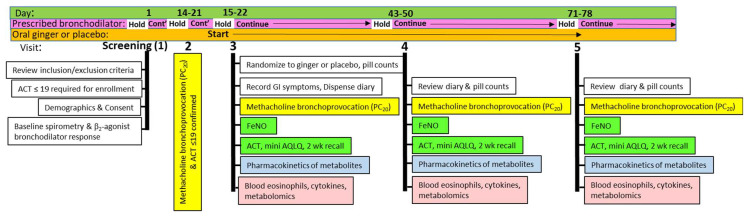
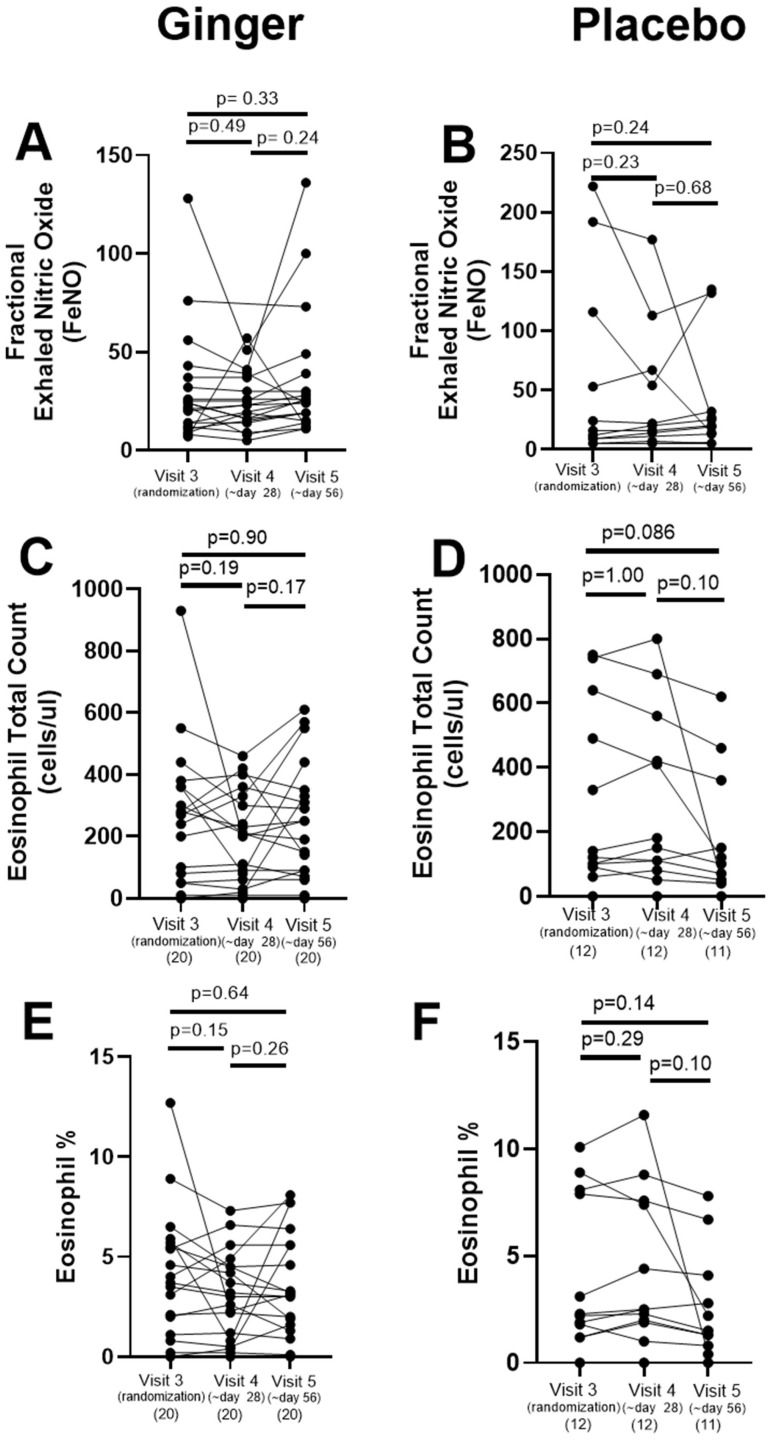
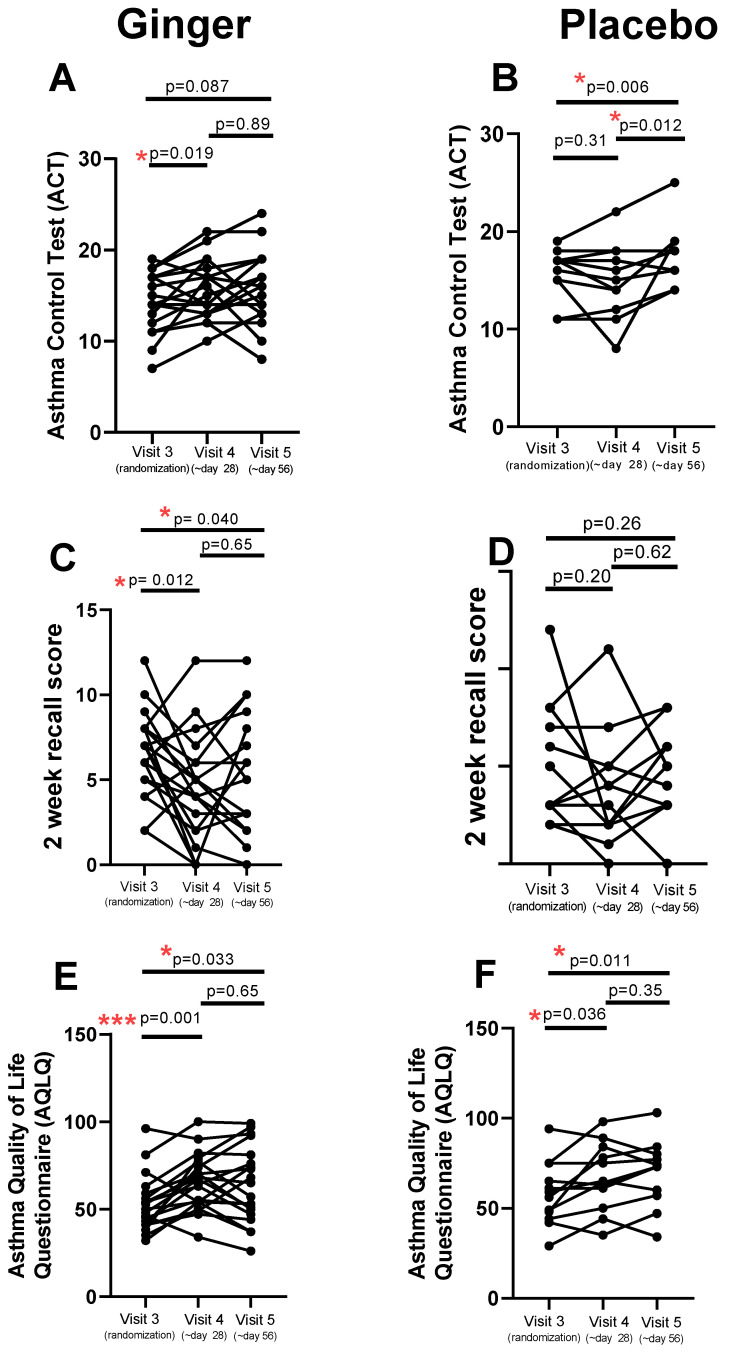
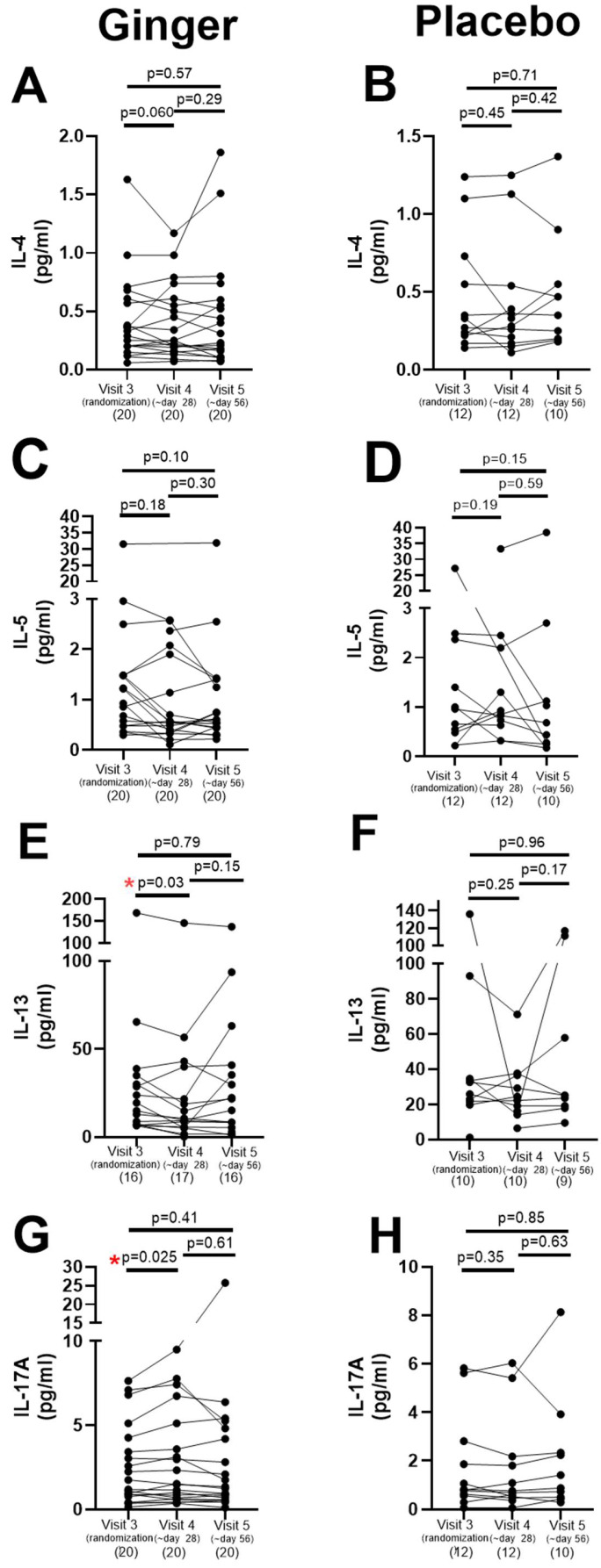
A significant number of individuals with asthma have poorly controlled daily symptoms and utilize dietary supplements such as ginger in a quest for improved symptom control; however, its effectiveness at improving the control of symptoms is unproven. We questioned whether low-dose oral ginger would improve subjective and objective measurements of asthma control in mild-to-moderate asthmatics. We performed a randomized, placebo-controlled, double-blinded study of a low dose (1 g twice daily) of a dietary supplement of ginger in 32 mild-to-moderate uncontrolled asthmatics over a 2-month trial period while maintaining daily conventional asthma therapies. The planned primary outcomes included an increased tolerance to inhaled methacholine and decreased concentrations of fractional excretion of exhaled nitric oxide (FeNO). Secondary planned outcomes included measurements of asthma control by the Asthma Control Test (ACT), a 2-week symptom recall test, and the Juniper mini Asthma Quality of Life Questionnaire (AQLQ), and blood eosinophils and asthma-associated cytokines. Exhaled nitric oxide or blood eosinophils were not changed by oral ginger. However, three different measures of asthma symptom control were improved by the 28-day time point of oral ginger. Asthma-associated serum cytokines (IL-13 and IL-17A) were modulated by oral ginger. This is the first demonstration that a small daily dose of a dietary supplement of ginger may improve asthma symptoms and reduce inflammation in human asthmatics. These findings support the need for additional studies using larger doses of ginger in specific endotypes of asthmatics that may identify a novel therapeutic for asthma.
相当多的哮喘患者日常症状控制不佳,并使用生姜等膳食补充剂来寻求改善症状控制;然而,其改善症状控制的有效性尚未得到证实。我们质疑低剂量口服生姜是否能改善轻至中度哮喘患者哮喘控制的主观和客观指标。我们进行了一项随机、安慰剂对照、双盲研究,在为期2个月的试验期内,让32名轻至中度未得到控制的哮喘患者每天服用低剂量(每日两次,每次1克)的生姜膳食补充剂,同时维持日常常规哮喘治疗。计划的主要结局包括对吸入乙酰甲胆碱的耐受性增加和呼出一氧化氮分数排泄(FeNO)浓度降低。计划的次要结局包括通过哮喘控制测试(ACT)、为期2周的症状回顾测试、朱尼珀小型哮喘生活质量问卷(AQLQ)对哮喘控制的测量,以及血液嗜酸性粒细胞和哮喘相关细胞因子。口服生姜后呼出一氧化氮或血液嗜酸性粒细胞没有变化。然而,在口服生姜28天时,哮喘症状控制的三种不同测量指标得到了改善。口服生姜可调节哮喘相关血清细胞因子(IL-13和IL-17A)。这是首次证明每日小剂量的生姜膳食补充剂可能改善人类哮喘患者的哮喘症状并减轻炎症。这些发现支持需要在特定哮喘亚型中使用更大剂量生姜进行更多研究,这可能会确定一种新的哮喘治疗方法。