Lima Francisco Ronaldo Farias, Monteiro Carlos Eduardo da Silva, Damasceno Samara Rodrigues Bonfim, Pantoja Patricia da Silva, Franco Álvaro Xavier, Silva Renan Oliveira, Sousa Johnatan Alisson Oliveira, Mendes Tiago Santos, Lima Marcos Aurélio, Justino Priscilla Fernanda Campos, de Souza Marcellus Henrique Loiola Ponte, Soares Pedro Marcos Gomes
Laboratory of Gastrointestinal Physio-Pharmacology (LEFFAG), Federal University of Ceará, Coronel Nunes de Melo Street, 1315 Rodolfo Teófilo, Fortaleza 60416-030, CE, Brazil.
Department of Physiology and Pharmacology, Federal University of Pernambuco, Av. da Engenharia-Cidade Universitária, Recife 50670-420, PE, Brazil.
Pharmaceuticals (Basel). 2024 Dec 12;17(12):1676. doi: 10.3390/ph17121676.
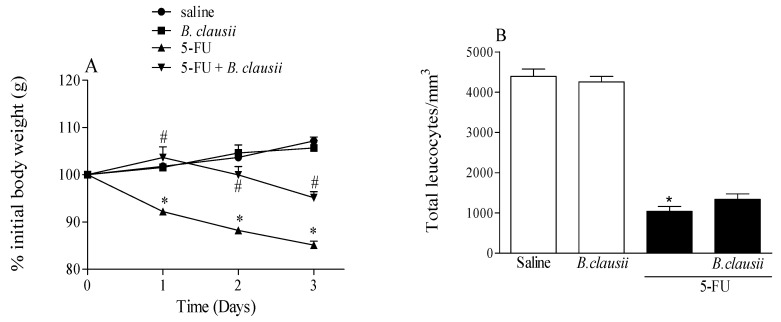
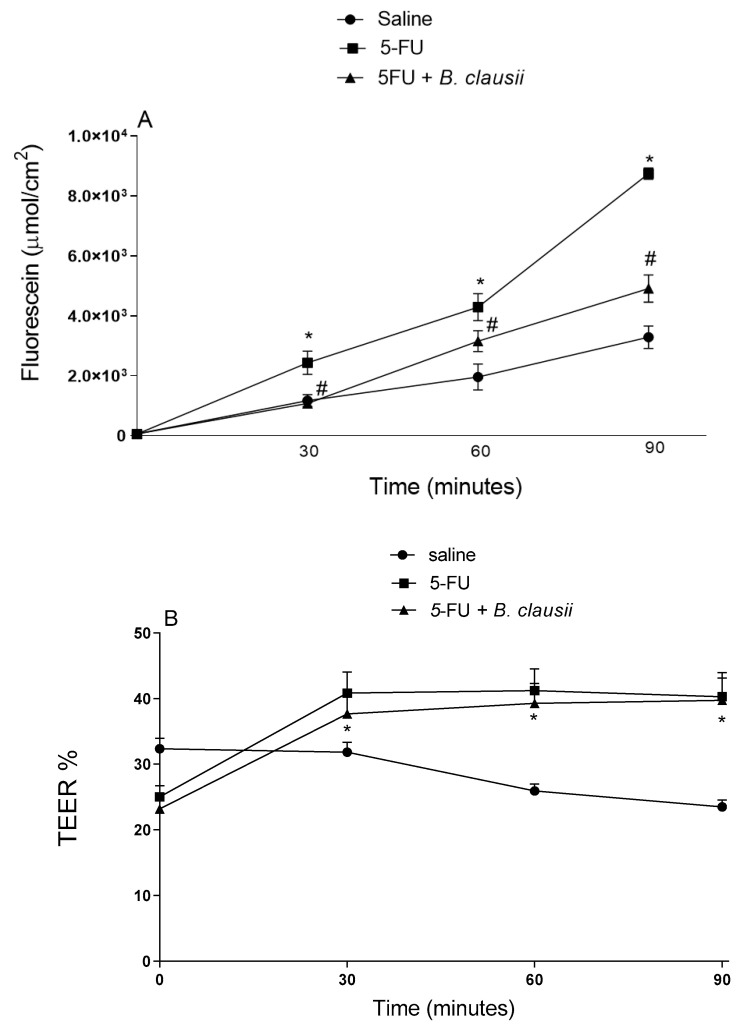
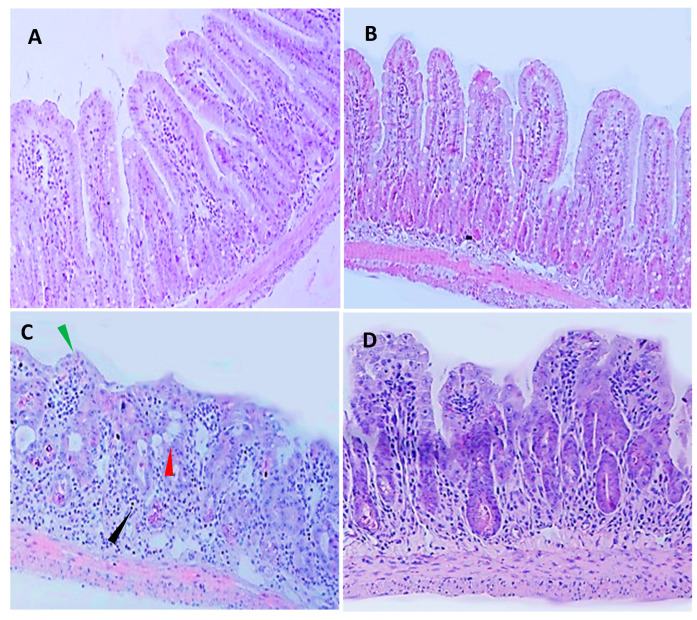
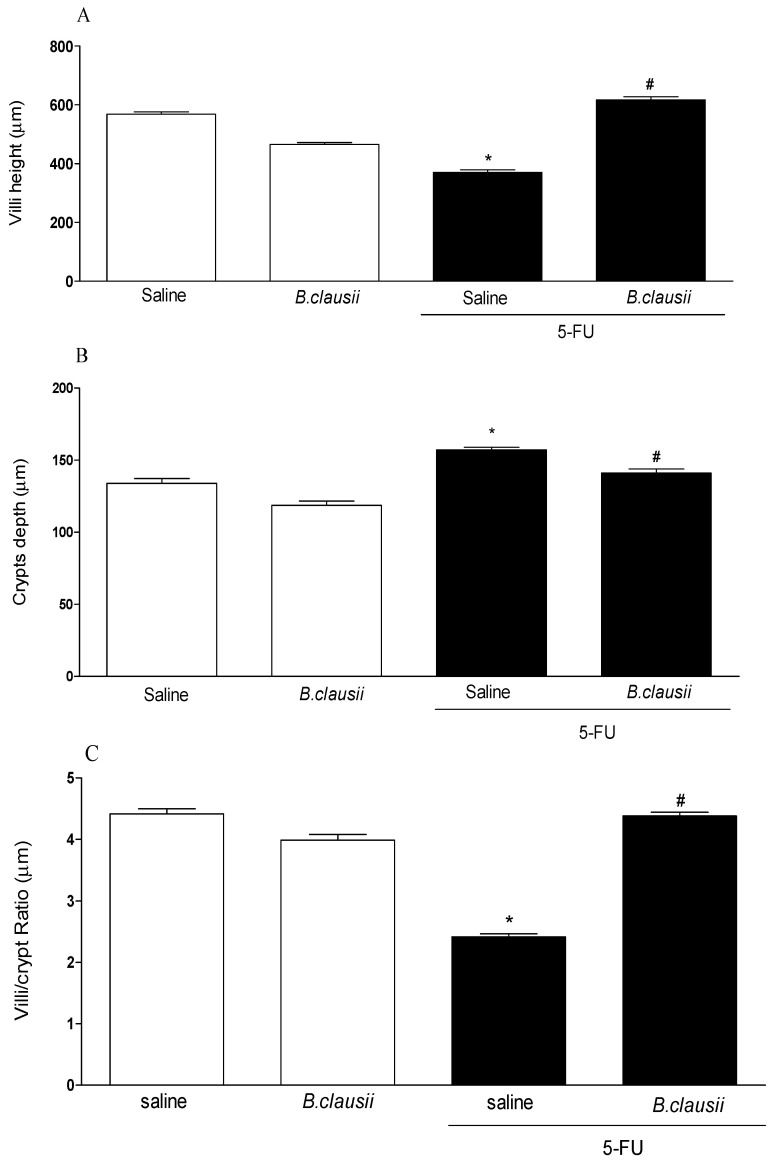
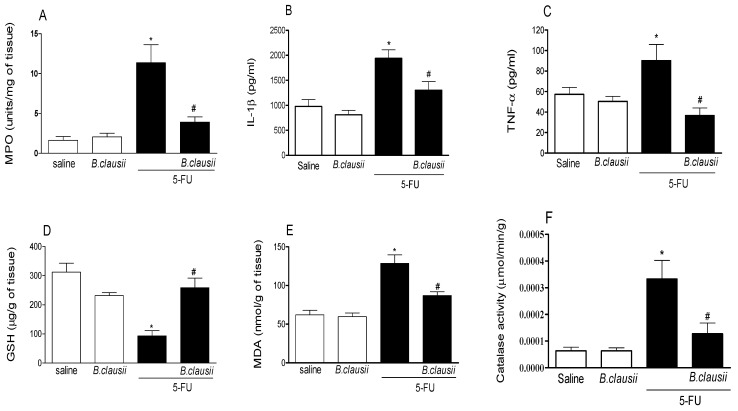
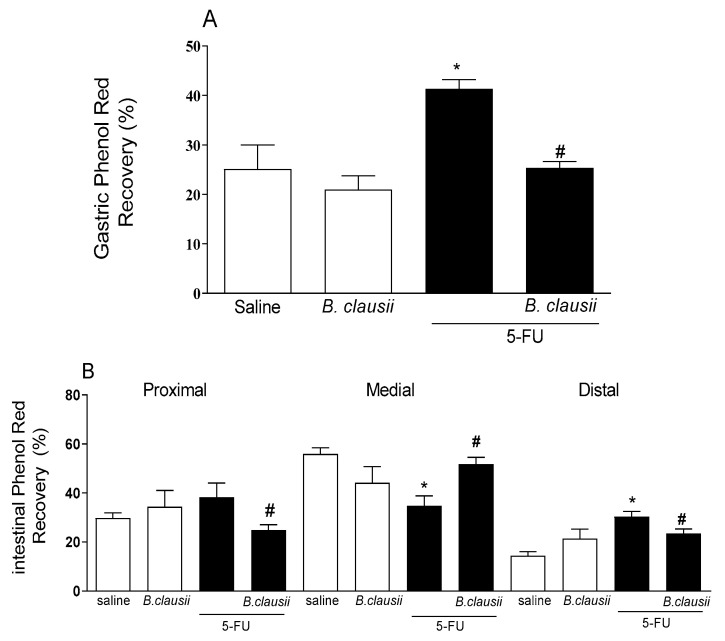
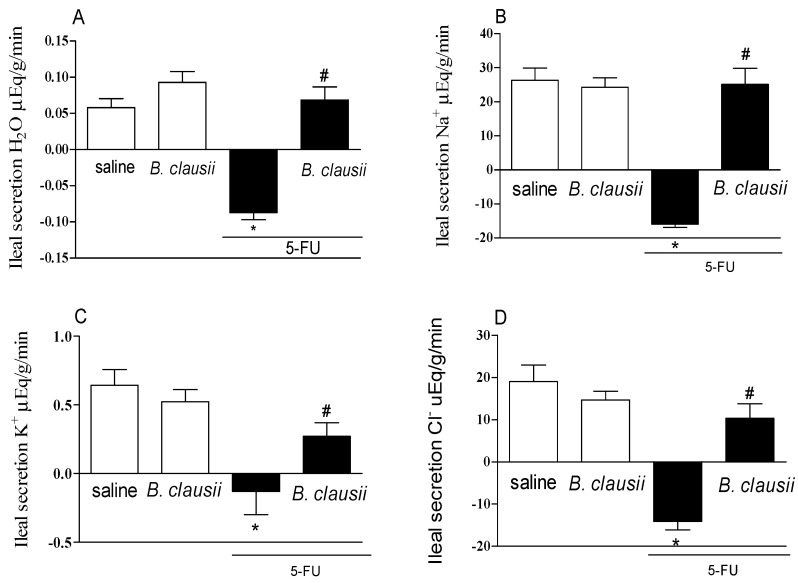
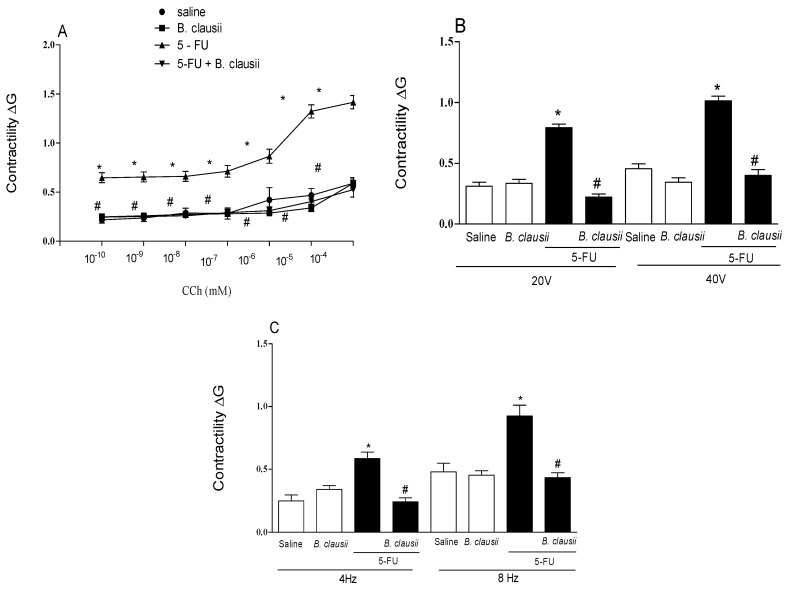
5-Fluorouracil (5-FU) is an antimetabolite widely prescribed in cancer treatments, but its use in highly proliferative tissues can cause significant problems such as mucositis. is a probiotic commonly used for protection against acute diarrhea, gastrointestinal dysbiosis and inflammatory bowel diseases. We investigated the effect of on 5-FU intestinal mucositis in mice. was administered concomitantly with 5-FU on the first day and alone for the other two days. After the third day of 5-FU (450 mg/kg, ip), the animals were euthanized. Ileum samples were removed for evaluation for histopathological and biochemical analyses (myeloperoxidase (MPO), glutathione (GSH), malondialdehyde (MDA), catalase (CAT), interleukin-1 beta (IL-1β) and tumor necrosis factor alpha (TNF-α). In addition, we investigated gastric emptying and intestinal transit, intestinal permeability, intestinal smooth muscle contractility, transepithelial electrical resistance and intestinal transport of water and electrolytes. reduced histopathological scores and increased the villus/crypt ratio in all intestinal segments after mucositis. attenuated 5-FU-induced weight loss. The probiotic treatment increased GSH levels, reduced MPO and CAT activity, and also reduced MDA, IL-1β and TNF-α levels. attenuated the delay in gastric emptying, water and electrolyte secretion and intestinal hypercontractility, and increased 5-FU-induced intestinal permeability. Thus, our data suggest that may be a potential candidate for the treatment of chemotherapy-induced intestinal mucositis.
5-氟尿嘧啶(5-FU)是一种在癌症治疗中广泛应用的抗代谢药物,但其在高增殖组织中的使用会引发诸如粘膜炎等严重问题。[某种益生菌名称未给出]是一种常用于预防急性腹泻、胃肠道生态失调和炎症性肠病的益生菌。我们研究了[某种益生菌名称未给出]对小鼠5-FU诱导的肠道粘膜炎的影响。在第一天,[某种益生菌名称未给出]与5-FU同时给药,后两天单独给药。在5-FU(450毫克/千克,腹腔注射)给药第三天后,对动物实施安乐死。取出回肠样本用于组织病理学和生化分析评估(髓过氧化物酶(MPO)、谷胱甘肽(GSH)、丙二醛(MDA)、过氧化氢酶(CAT)、白细胞介素-1β(IL-1β)和肿瘤坏死因子-α(TNF-α))。此外,我们还研究了胃排空和肠道转运、肠道通透性、肠道平滑肌收缩性、跨上皮电阻以及水和电解质的肠道转运。[某种益生菌名称未给出]降低了粘膜炎后所有肠段的组织病理学评分并增加了绒毛/隐窝比率。[某种益生菌名称未给出]减轻了5-FU诱导的体重减轻。益生菌治疗提高了GSH水平,降低了MPO和CAT活性,还降低了MDA、IL-1β和TNF-α水平。[某种益生菌名称未给出]减轻了胃排空延迟、水和电解质分泌以及肠道过度收缩,并增加了5-FU诱导的肠道通透性。因此,我们的数据表明[某种益生菌名称未给出]可能是治疗化疗诱导的肠道粘膜炎的潜在候选药物。