de Miranda João Antônio Leal, Barreto João Erivan Façanha, Martins Dainesy Santos, de Souza Pimentel Paulo Vitor, da Silva Costa Deiziane Viana, E Silva Reyca Rodrigues, de Souza Luan Kelves Miranda, de Lima Camila Nayane Carvalho, Rocha Jefferson Almeida, de Freitas Ana Paula Fragoso, da Silva Durcilene Alves, Scafuri Ariel Gustavo, de Leitão Renata Ferreira Carvalho, de Castro Brito Gerly Anne, Medeiros Jand Venes Rolim, Cerqueira Gilberto Santos
Department of Morphology, Faculty of Medicine, Federal University of Ceará, s/n Delmiro de Farias Street, Porangabuçu Campus, 60416-030 Fortaleza, Brazil.
Biotechnology and Biodiversity Center Research, BIOTEC, Federal University of Piauí, Parnaíba, 64202-020 Piauí, Brazil.
Pharmaceuticals (Basel). 2019 Apr 3;12(2):51. doi: 10.3390/ph12020051.
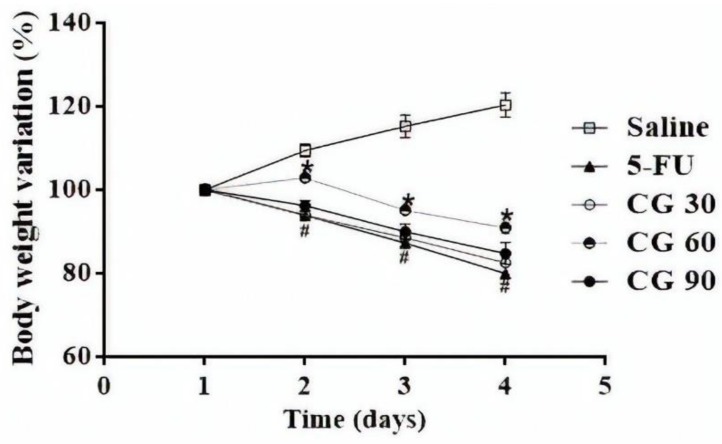
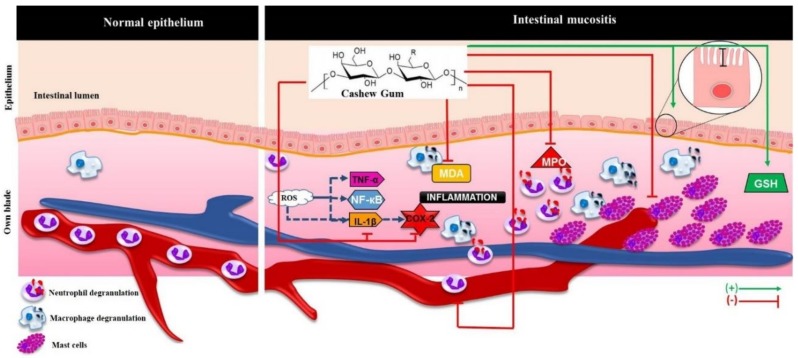
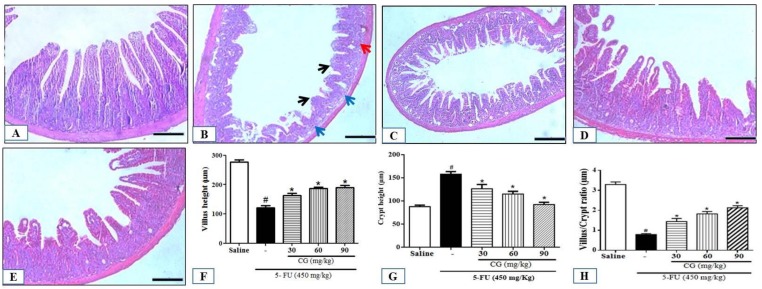
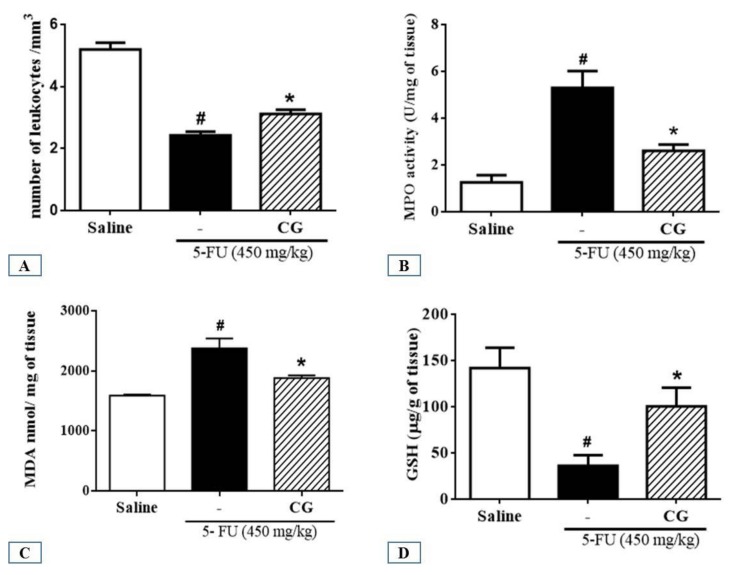
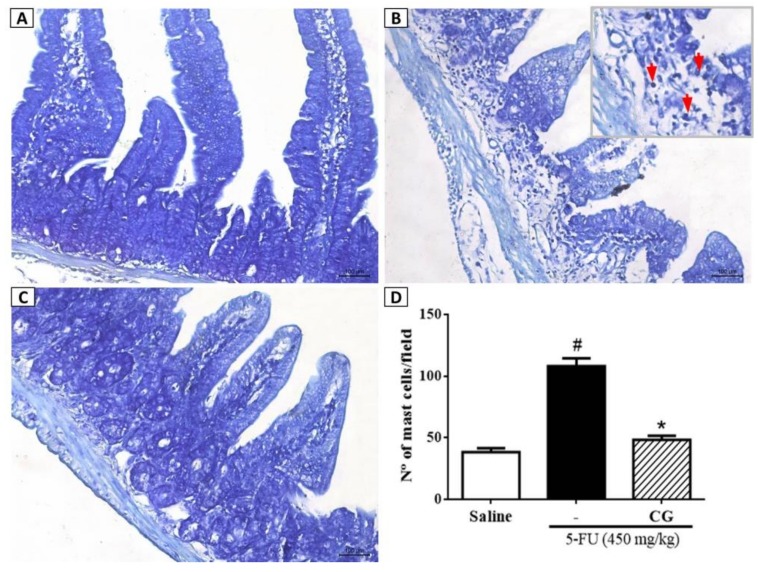
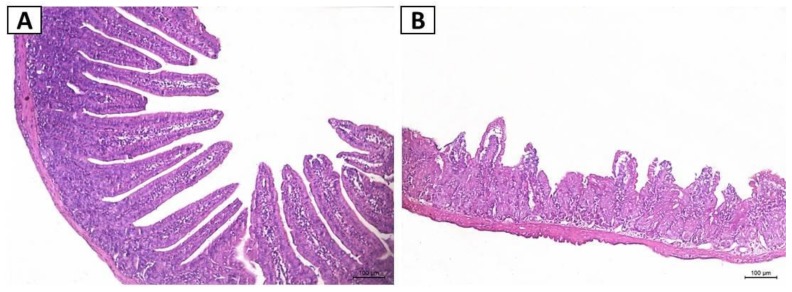
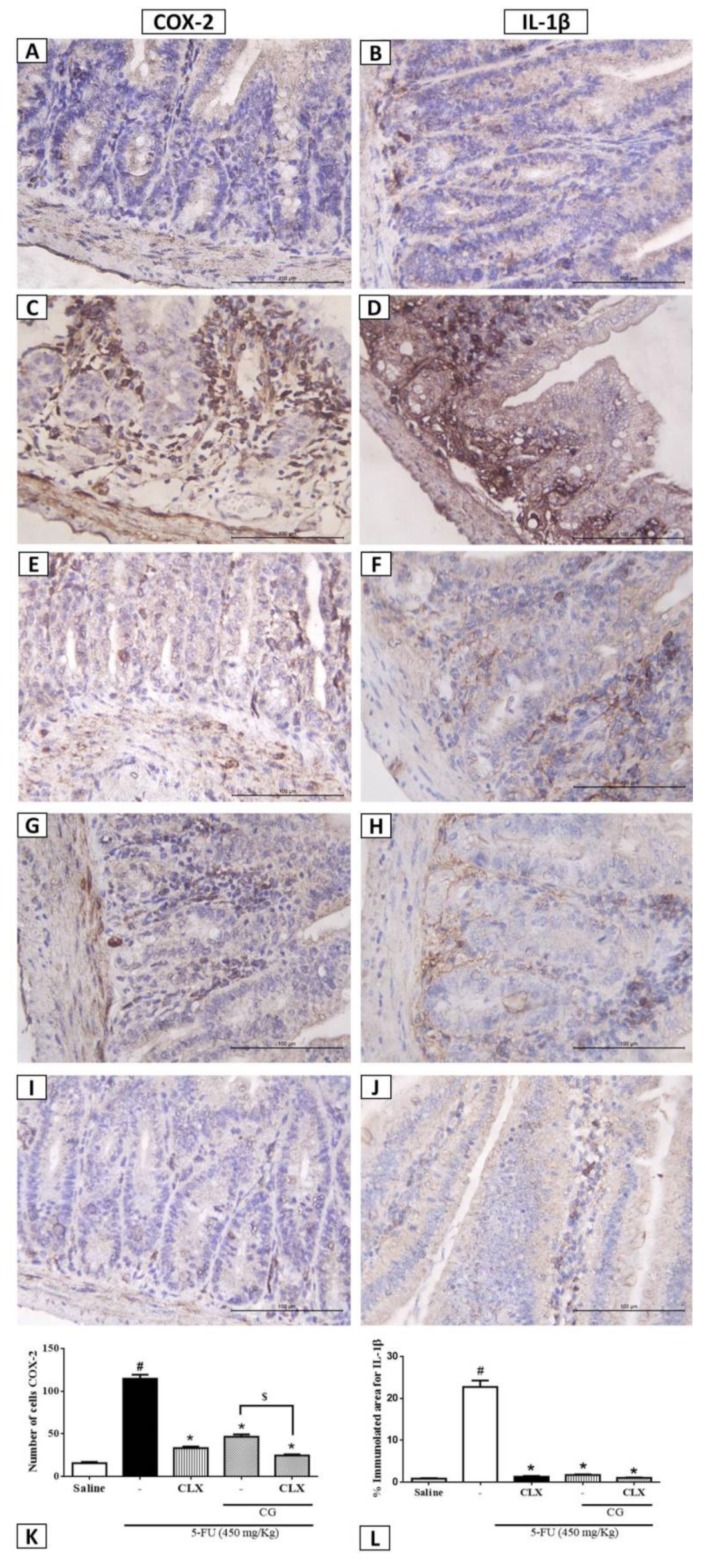
Intestinal mucositis is a common complication associated with 5-fluorouracil (5-FU), a chemotherapeutic agent used for cancer treatment. Cashew gum (CG) has been reported as a potent anti-inflammatory agent. In the present study, we aimed to evaluate the effect of CG extracted from the exudate of L. on experimental intestinal mucositis induced by 5-FU. Swiss mice were randomly divided into seven groups: Saline, 5-FU, CG 30, CG 60, CG 90, Celecoxib (CLX), and CLX + CG 90 groups. The weight of mice was measured daily. After treatment, the animals were euthanized and segments of the small intestine were collected to evaluate histopathological alterations (morphometric analysis), levels of malondialdehyde (MDA), myeloperoxidase (MPO), and glutathione (GSH), and immunohistochemical analysis of interleukin 1 beta (IL-1β) and cyclooxygenase-2 (COX-2). 5-FU induced intense weight loss and reduction in villus height compared to the saline group. CG 90 prevented 5-FU-induced histopathological changes and decreased oxidative stress through decrease of MDA levels and increase of GSH concentration. CG attenuated inflammatory process by decreasing MPO activity, intestinal mastocytosis, and COX-2 expression. Our findings suggest that CG at a concentration of 90 mg/kg reverses the effects of 5-FU-induced intestinal mucositis.
肠道黏膜炎是与5-氟尿嘧啶(5-FU)相关的常见并发症,5-氟尿嘧啶是一种用于癌症治疗的化疗药物。腰果胶(CG)已被报道为一种有效的抗炎剂。在本研究中,我们旨在评估从L.的渗出物中提取的CG对5-FU诱导的实验性肠道黏膜炎的影响。将瑞士小鼠随机分为七组:生理盐水组、5-FU组、CG 30组、CG 60组、CG 90组、塞来昔布(CLX)组和CLX + CG 90组。每天测量小鼠体重。治疗后,对动物实施安乐死并收集小肠段,以评估组织病理学改变(形态计量分析)、丙二醛(MDA)、髓过氧化物酶(MPO)和谷胱甘肽(GSH)水平,以及白细胞介素1β(IL-1β)和环氧化酶-2(COX-2)的免疫组织化学分析。与生理盐水组相比,5-FU导致体重显著减轻和绒毛高度降低。CG 90可预防5-FU诱导的组织病理学变化,并通过降低MDA水平和增加GSH浓度来减轻氧化应激。CG通过降低MPO活性、肠道肥大细胞增多症和COX-2表达来减轻炎症过程。我们的研究结果表明,浓度为90 mg/kg的CG可逆转5-FU诱导的肠道黏膜炎的影响。