Stepanova Ekaterina, Matyushenko Victoria, Mezhenskaya Daria, Bazhenova Ekaterina, Kotomina Tatiana, Rak Alexandra, Donina Svetlana, Chistiakova Anna, Kostromitina Arina, Novitskaya Vlada, Prokopenko Polina, Rodionova Kristina, Sivak Konstantin, Kryshen Kirill, Makarov Valery, Rudenko Larisa, Isakova-Sivak Irina
Institute of Experimental Medicine, Saint Petersburg 197022, Russia.
Smorodintsev Research Institute of Influenza, Saint Petersburg 197376, Russia.
Vaccines (Basel). 2024 Nov 21;12(12):1300. doi: 10.3390/vaccines12121300.
BACKGROUND/OBJECTIVES: Influenza viruses and SARS-CoV-2 are currently cocirculating with similar seasonality, and both pathogens are characterized by a high mutational rate which results in reduced vaccine effectiveness and thus requires regular updating of vaccine compositions. Vaccine formulations combining seasonal influenza and SARS-CoV-2 strains can be considered promising and cost-effective tools for protection against both infections.
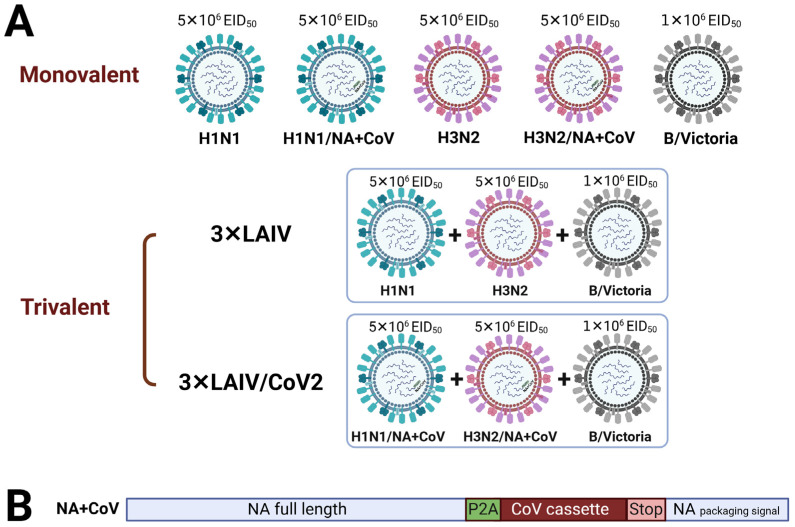
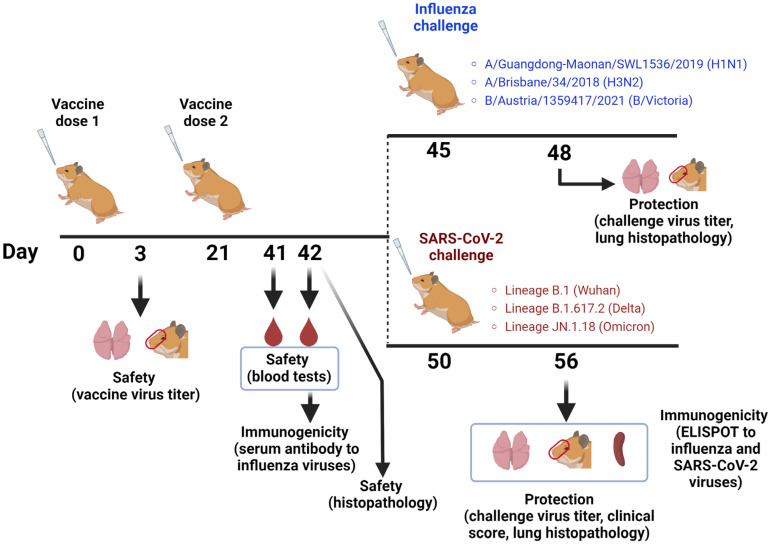
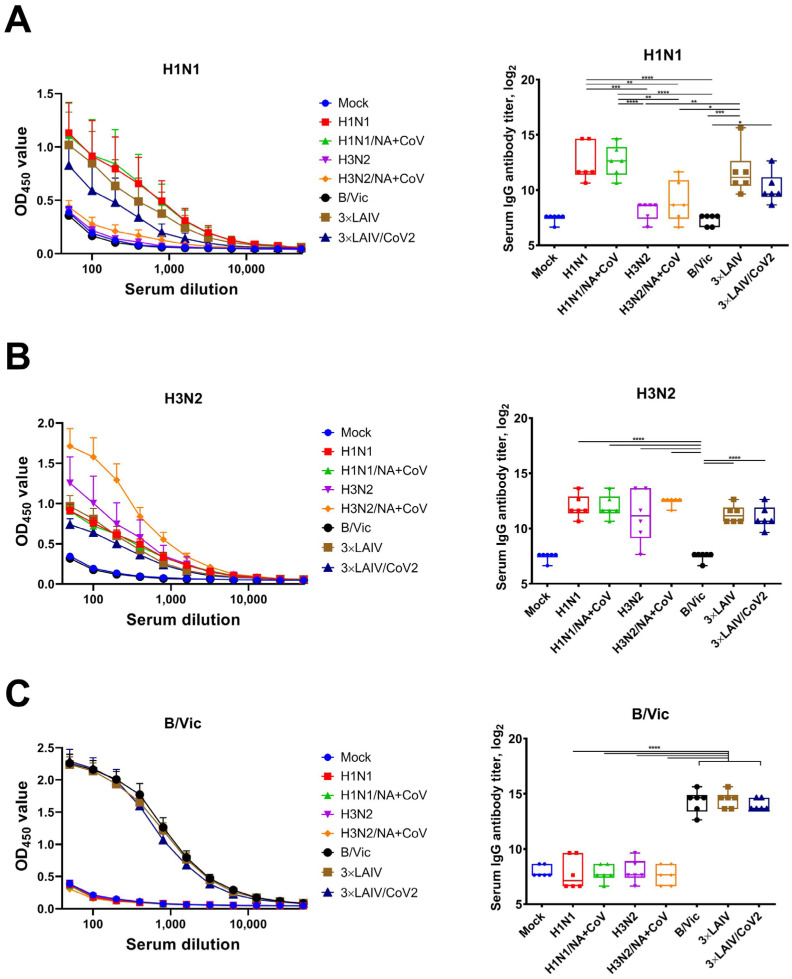
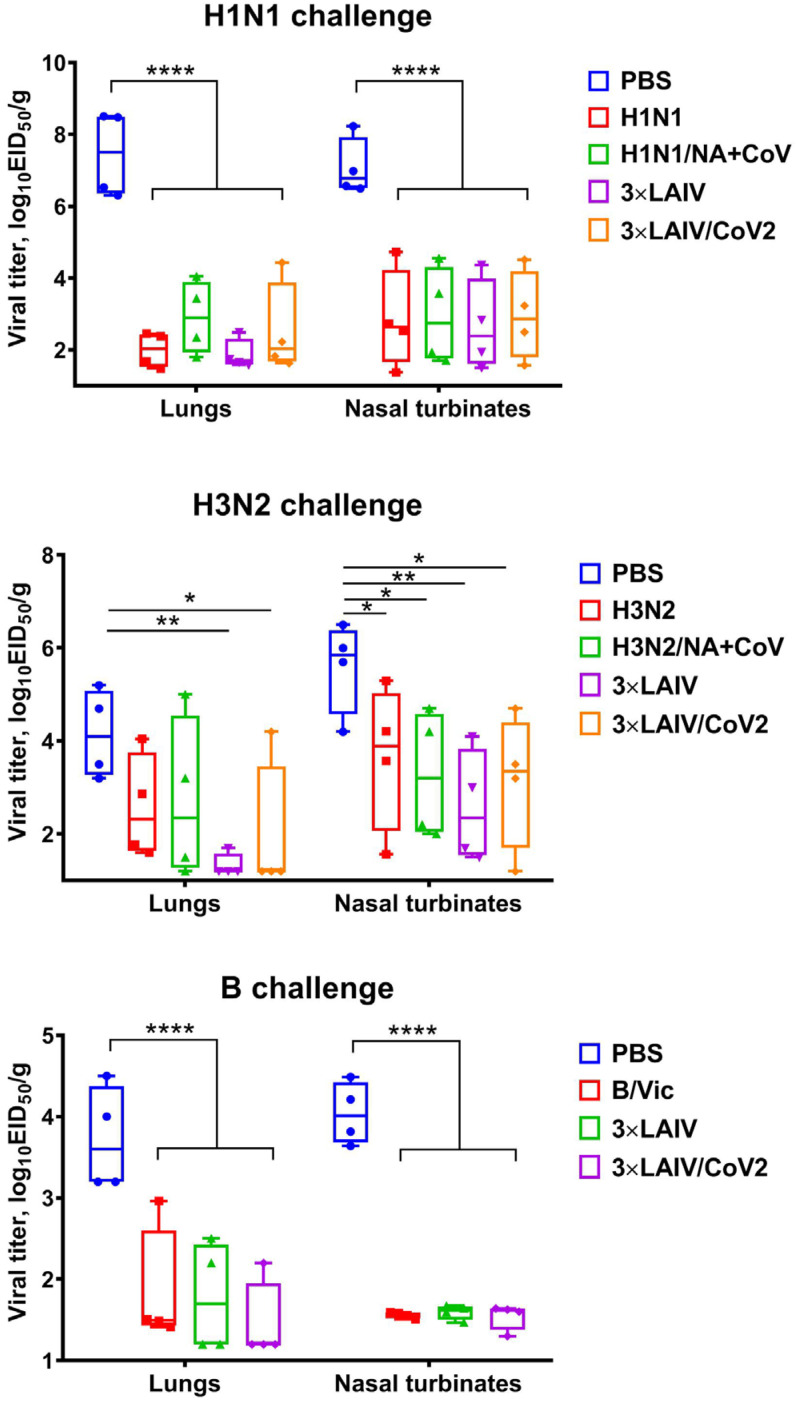
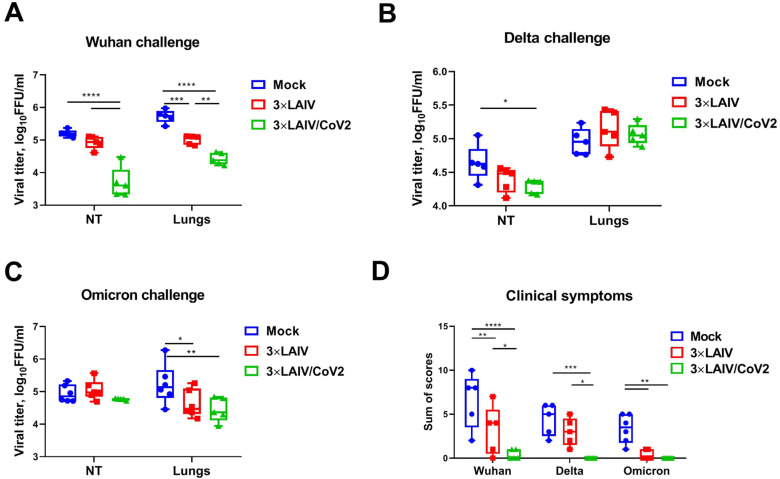
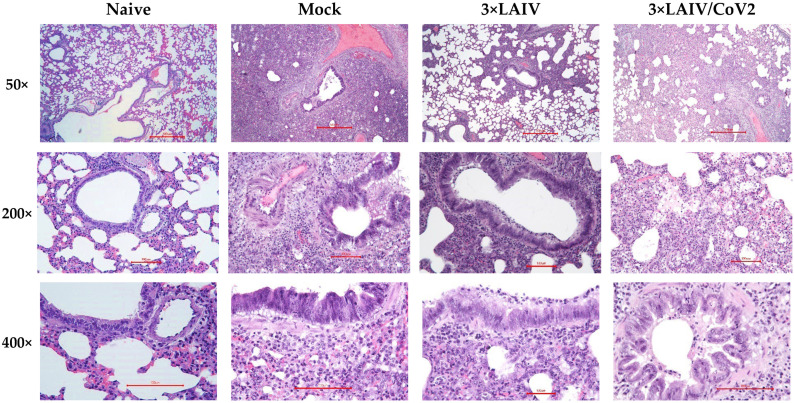
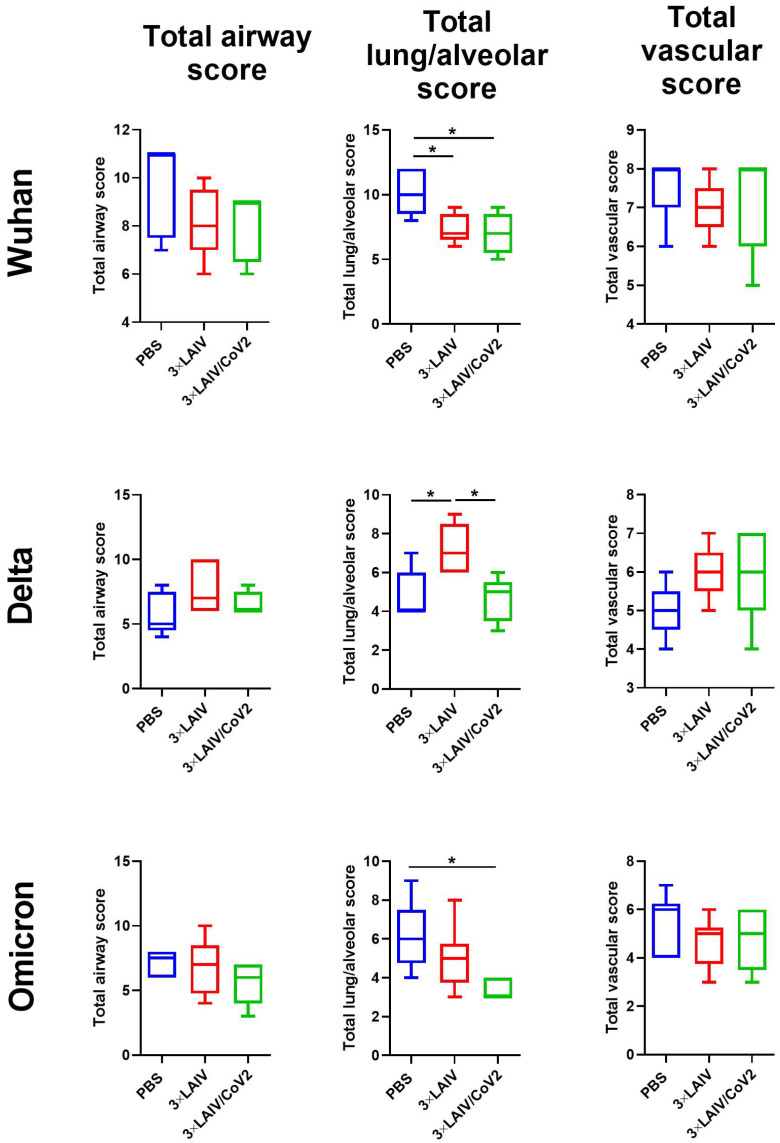
We used a licensed seasonal trivalent live attenuated influenza vaccine (3×LAIV) as a basis for the development of a modified 3×LAIV/CoV-2 vaccine, where H1N1 and H3N2 LAIV strains encoded an immunogenic cassette enriched with conserved T-cell epitopes of SARS-CoV-2, whereas a B/Victoria lineage LAIV strain was unmodified. The trivalent LAIV/CoV-2 composition was compared to the classical 3×LAIV in the golden Syrian hamster model. Animals were intranasally immunized with the mixtures of the vaccine viruses, twice, with a 3-week interval. Immunogenicity was assessed on day 42 of the study, and the protective effect was established by infecting vaccinated hamsters with either influenza H1N1, H3N2 or B viruses or with SARS-CoV-2 strains of the Wuhan, Delta and Omicron lineages.
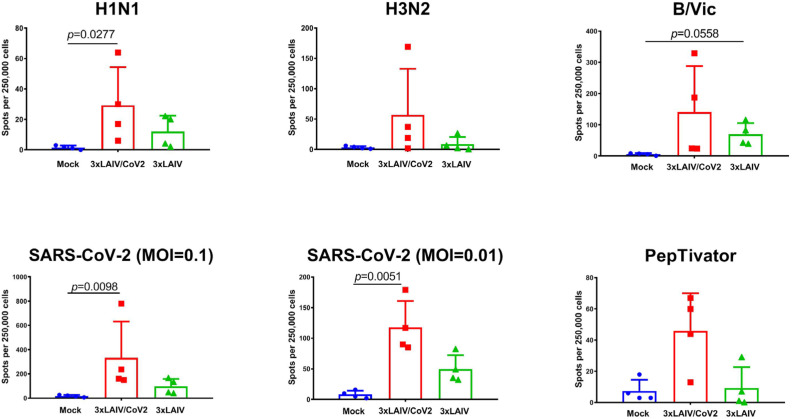
Both the classical 3×LAIV and 3×LAIV/CoV-2 vaccine compositions induced similar levels of serum antibodies specific to all three influenza strains, which resulted in comparable levels of protection against challenge from either influenza strain. Protection against SARS-CoV-2 challenge was more pronounced in the 3×LAIV/CoV-2-immunized hamsters compared to the classical 3×LAIV group. These data were accompanied by the higher magnitude of virus-specific cellular responses detected by ELISPOT in the modified trivalent LAIV group.
The modified trivalent live attenuated influenza vaccine encoding the T-cell epitopes of SARS-CoV-2 can be considered a promising tool for combined protection against seasonal influenza and COVID-19.
背景/目的:流感病毒和严重急性呼吸综合征冠状病毒2(SARS-CoV-2)目前正以相似的季节性共同传播,且这两种病原体都具有高突变率的特点,这导致疫苗效力降低,因此需要定期更新疫苗成分。结合季节性流感和SARS-CoV-2毒株的疫苗配方可被视为预防这两种感染的有前景且具成本效益的工具。
我们使用一种已获许可的季节性三价减毒活流感疫苗(3×LAIV)作为开发改良型3×LAIV/CoV-2疫苗的基础,其中H1N1和H3N2 LAIV毒株编码了富含SARS-CoV-2保守T细胞表位的免疫原性盒式结构,而B/维多利亚谱系LAIV毒株未作修改。在金黄叙利亚仓鼠模型中将三价LAIV/CoV-2组合物与经典的3×LAIV进行比较。用疫苗病毒混合物对动物进行鼻内免疫,间隔3周免疫两次。在研究的第42天评估免疫原性,并通过用甲型H1N1、H3N2或乙型流感病毒或武汉、德尔塔和奥密克戎谱系的SARS-CoV-2毒株感染接种疫苗的仓鼠来确定保护效果。
经典的3×LAIV和3×LAIV/CoV-2疫苗组合物均诱导产生了针对所有三种流感毒株的相似水平的血清抗体,这导致针对任一流感毒株攻击的保护水平相当。与经典3×LAIV组相比,3×LAIV/CoV-2免疫的仓鼠对SARS-CoV-2攻击的保护作用更为明显。这些数据伴随着改良三价LAIV组中通过ELISPOT检测到的更高水平的病毒特异性细胞反应。
编码SARS-CoV-2 T细胞表位的改良三价减毒活流感疫苗可被视为预防季节性流感和2019冠状病毒病(COVID-19)联合保护的有前景的工具。