Yi Zhimin, Yan Wenjing, Hua Guohuan, Wang Ying, Wu Chunmei, Liu Guoqiu, Hao Ming
School of Public Health and Health Management, Gannan Medical University, University Park, Rongjiang new area, Ganzhou City, 341000, Jiangxi Province, China.
Key Laboratory of Prevention and Treatment of Cardiovascular and Cerebrovascular Diseases, Ministry of Education, Gannan Medical University, Ganzhou City, 341000, Jiangxi Province, China.
BMC Public Health. 2025 Jan 7;25(1):76. doi: 10.1186/s12889-025-21282-w.
With the rapid development of society, teenagers have more access to individuals with perfect bodies and are becoming more concerned about their body image. Currently, few studies assess body image and eating disorders comprehensively in China. Given the seriousness of these issues, there is an urgent need to understand the current state of body image and eating behaviors among Chinese people and formulate preventive strategies.
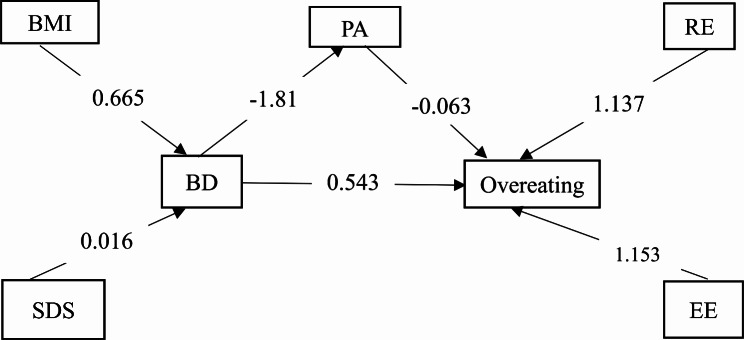
In this study, 1711 college students between 17 and 23 years old in southern China completed relevant anthropometric measurements, essential information and three questionnaires. Multiple linear regression was used to screen the variables, and sex invariant analysis was used to determine whether to separate men and women to fit the structural equation model. Finally, the path diagram of the structural equation model was used to explore the complex relationship between body dissatisfaction and overeating.
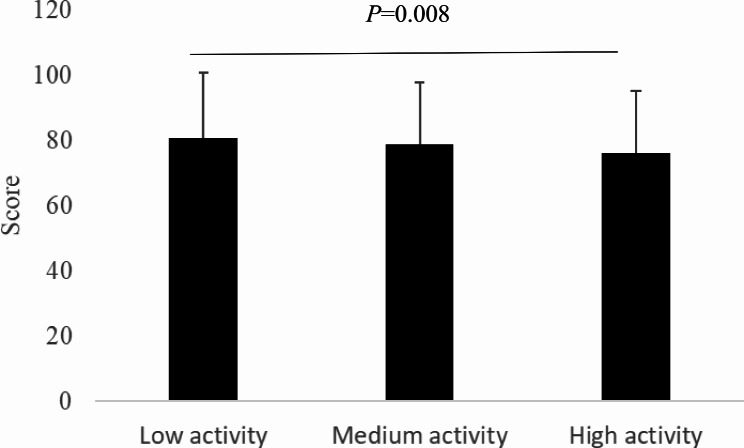
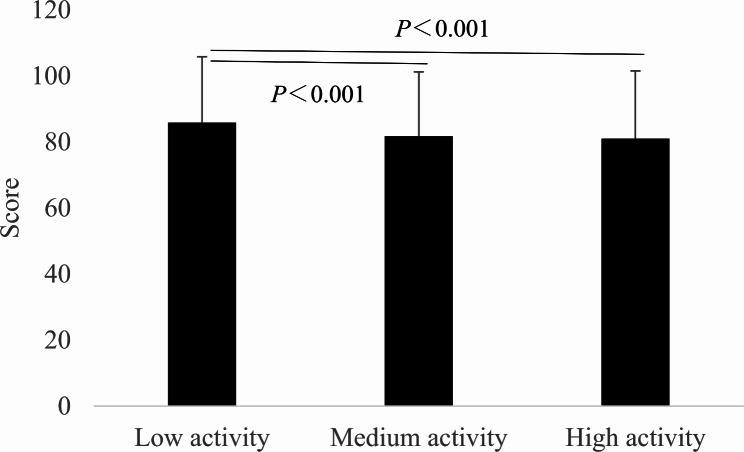
Our results found that 69.4% of participants with a body mass index (BMI) within the normal range were dissatisfied with their weight. Further, body dissatisfaction directly or indirectly leads to overeating. Additionally, exercise played a mediating role in the body dissatisfaction and overeating of college students.
If BMI directs body dissatisfaction, it may lead to overeating. As a mediating factor in structural equation modelling, exercise may provide strategies to reduce body dissatisfaction and prevent overeating.
随着社会的快速发展,青少年有更多机会接触到身材完美的人,并且越来越关注自己的身体形象。目前,在中国很少有研究全面评估身体形象和饮食失调问题。鉴于这些问题的严重性,迫切需要了解中国人身体形象和饮食行为的现状,并制定预防策略。
在本研究中,中国南方1711名年龄在17至23岁之间的大学生完成了相关人体测量、基本信息和三份问卷。采用多元线性回归筛选变量,并使用性别不变性分析来确定是否将男性和女性分开以拟合结构方程模型。最后,利用结构方程模型的路径图来探讨身体不满与暴饮暴食之间的复杂关系。
我们的研究结果发现,体重指数(BMI)在正常范围内的参与者中有69.4%对自己的体重不满意。此外,身体不满直接或间接地导致暴饮暴食。此外,运动在大学生的身体不满和暴饮暴食之间起中介作用。
如果BMI导致身体不满,可能会导致暴饮暴食。作为结构方程模型中的一个中介因素,运动可能为减少身体不满和预防暴饮暴食提供策略。