Kuang Wenlong, Huang Jianwu, Yang Yulu, Liao Yuhua, Zhou Zihua, Liu Qian, Wu Hailang
Department of Cardiology, Traditional Chinese and Western Medicine Hospital of Wuhan, Tongji Medical College, Huazhong University of Science and Technology, Wuhan, Hubei, China.
Department of Cardiology, Wuhan No.1 Hospital, Wuhan, Hubei, China.
PLoS One. 2024 Dec 30;19(12):e0316463. doi: 10.1371/journal.pone.0316463. eCollection 2024.
Myocardial infarction (MI), one of the most serious cardiovascular diseases, is also affected by altered mitochondrial metabolism and immune status, but their crosstalk is poorly understood. In this paper, we use bioinformatics to explore key targets associated with mitochondrial metabolic function in MI.
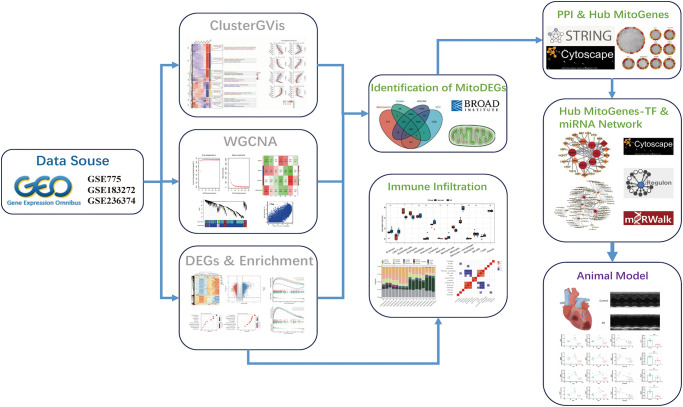
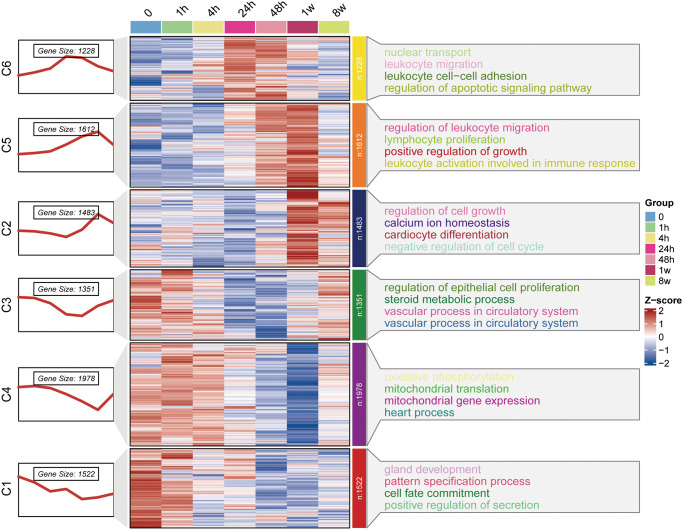
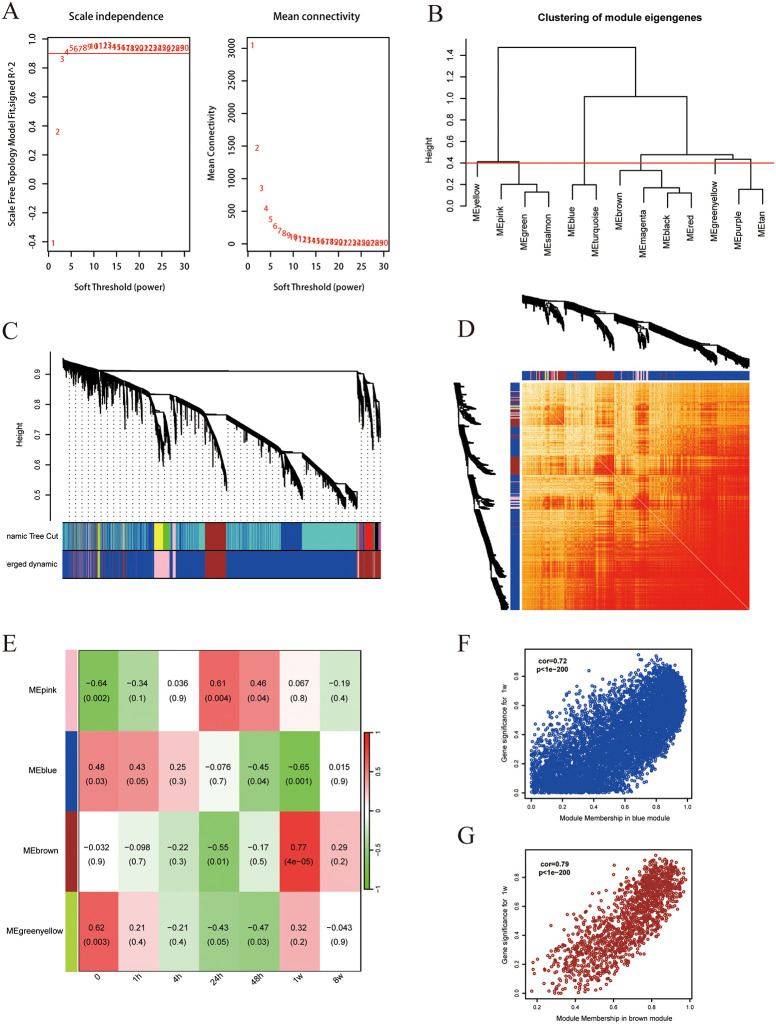
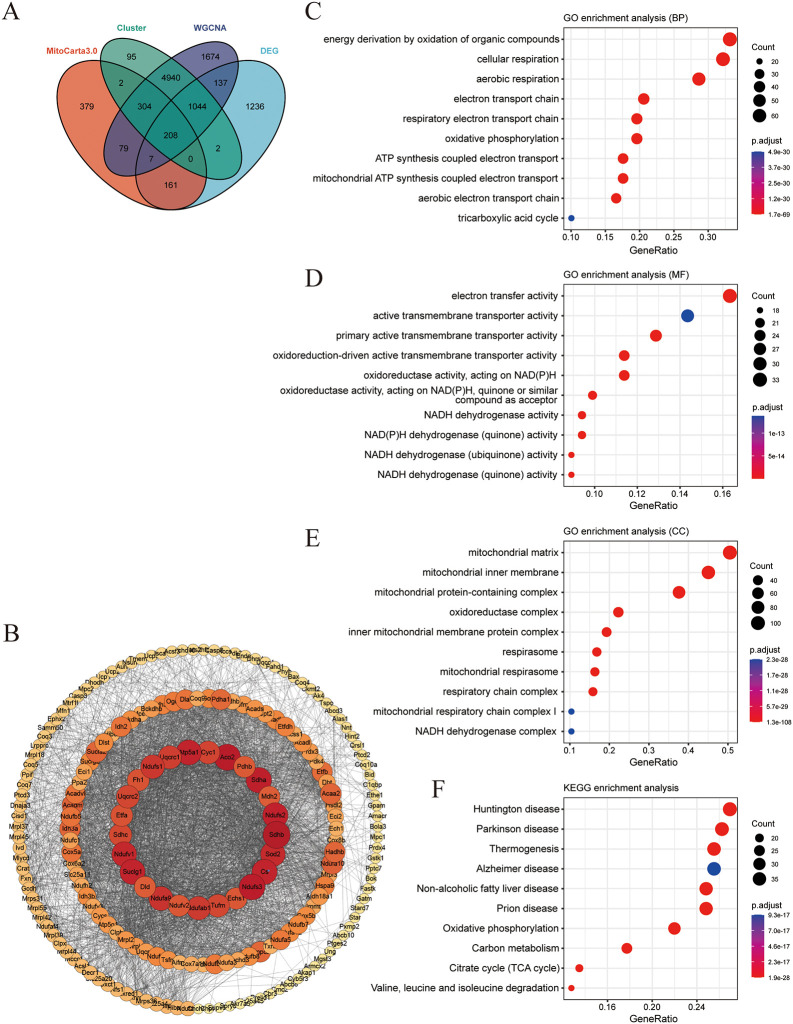
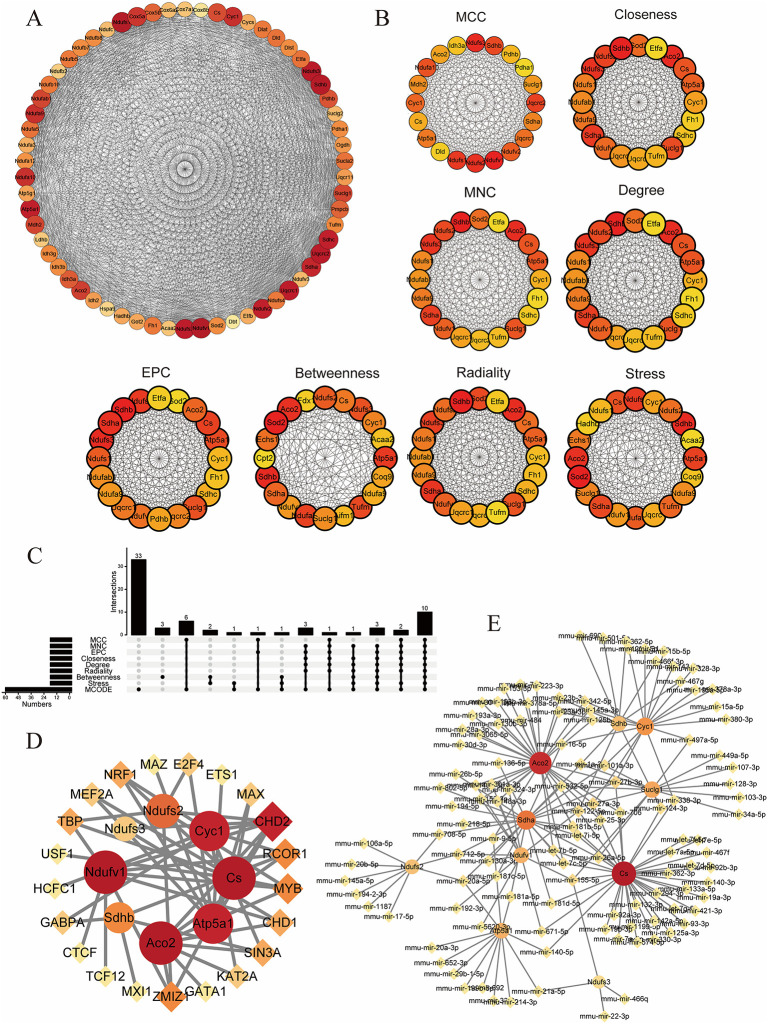
The datasets (GSE775, GSE183272 and GSE236374) were from National Center for Biotechnology Information (NCBI) Gene Expression Omnibus (GEO) in conjunction with mitochondrial gene data that were downloaded from the MitoCarta 3.0 database. Differentially expressed genes (DEGs) in the dataset were screened by ClusterGVis, Weighted Gene Co-Expression Network Analysis (WGCNA) and GEO2R, and functional enrichment was performed by Gene Set Enrichment Analysis (GSEA) and Kyoto Encyclopedia of Genomes (KEGG). Then mitochondria-associated DEGs (MitoDEGs) were obtained. Protein-protein interaction (PPI) networks were constructed to identify central MitoDEGs that are strongly associated with MI. The Cytoscape and miRWalk databases were then used to predict the transcription factors and target miRNAs of the central MitoDEG, respectively. Finally, the mouse model has been established to demonstrate the expression of MitoDEGs and their association with cardiac function.
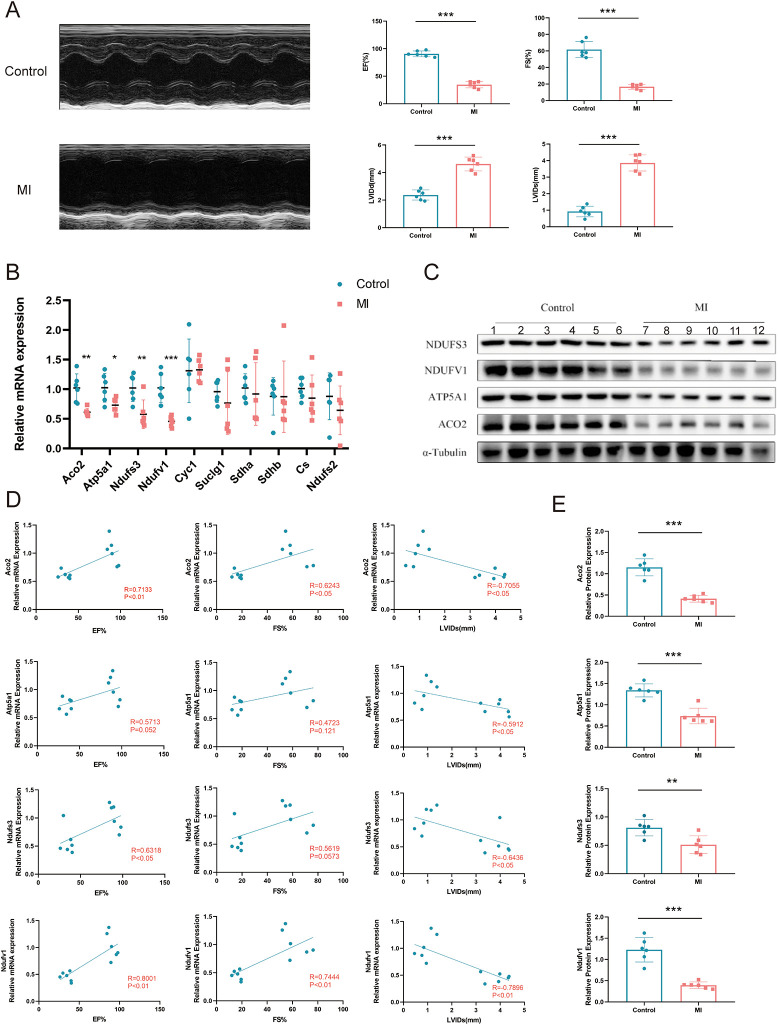
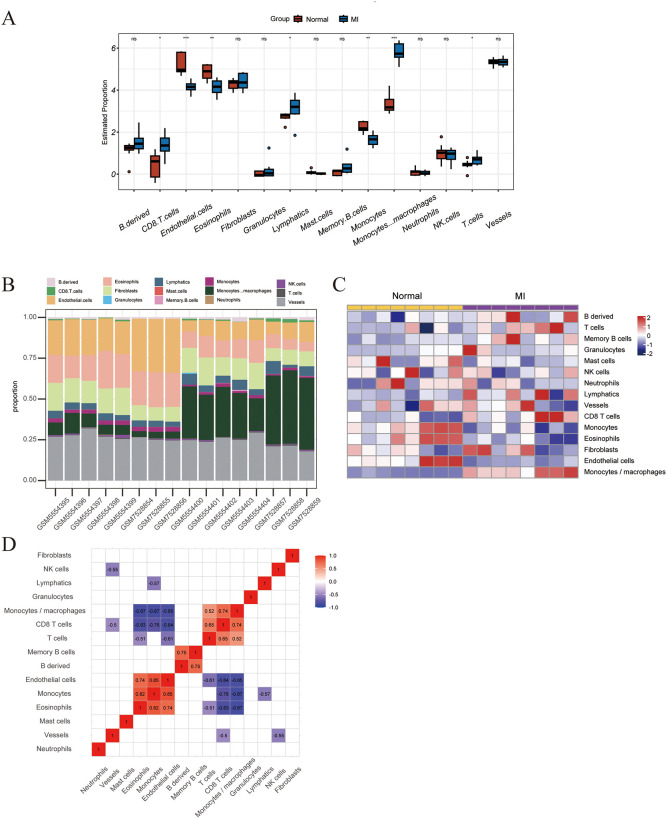
MitoDEGs in MI were mainly involved in mitochondrial function and adenosine triphosphate (ATP) synthesis pathways. The 10 MI-related hub MitoDEGs were then obtained by eight different algorithms. Immunoassays showed a significant increase in monocyte macrophage and T cell infiltration. According to animal experiments, the expression trends of the four hub MitoDEGs (Aco2, Atp5a1, Ndufs3, and Ndufv1) were verified to be consistent with the bioinformatics results.
Our study identified key genes (Aco2, Atp5a1, Ndufs3, and Ndufv1) associated with mitochondrial function in myocardial infarction.
心肌梗死(MI)是最严重的心血管疾病之一,其也受到线粒体代谢和免疫状态改变的影响,但它们之间的相互作用尚不清楚。在本文中,我们使用生物信息学方法来探索与MI中线粒体代谢功能相关的关键靶点。
数据集(GSE775、GSE183272和GSE236374)来自美国国立生物技术信息中心(NCBI)的基因表达综合数据库(GEO),并结合从MitoCarta 3.0数据库下载的线粒体基因数据。通过ClusterGVis、加权基因共表达网络分析(WGCNA)和GEO2R筛选数据集中的差异表达基因(DEG),并通过基因集富集分析(GSEA)和京都基因与基因组百科全书(KEGG)进行功能富集。然后获得线粒体相关的DEG(MitoDEG)。构建蛋白质-蛋白质相互作用(PPI)网络以识别与MI密切相关的核心MitoDEG。然后分别使用Cytoscape和miRWalk数据库预测核心MitoDEG的转录因子和靶miRNA。最后,建立小鼠模型以证明MitoDEG的表达及其与心脏功能的关联。
MI中的MitoDEG主要参与线粒体功能和三磷酸腺苷(ATP)合成途径。然后通过八种不同算法获得了10个与MI相关的核心MitoDEG。免疫分析显示单核细胞巨噬细胞和T细胞浸润显著增加。根据动物实验,验证了四个核心MitoDEG(Aco2、Atp5a1、Ndufs3和Ndufv1)的表达趋势与生物信息学结果一致。
我们的研究确定了与心肌梗死线粒体功能相关的关键基因(Aco2、Atp5a1、Ndufs3和Ndufv1)。