Buenzli Pascal R, Kuba Shahak, Murphy Ryan J, Simpson Matthew J
School of Mathematical Sciences, Queensland University of Technology (QUT), Brisbane, Australia.
School of Mathematics and Statistics, The University of Melbourne, Parkville, Australia.
Bull Math Biol. 2025 Jan 7;87(2):29. doi: 10.1007/s11538-024-01406-w.
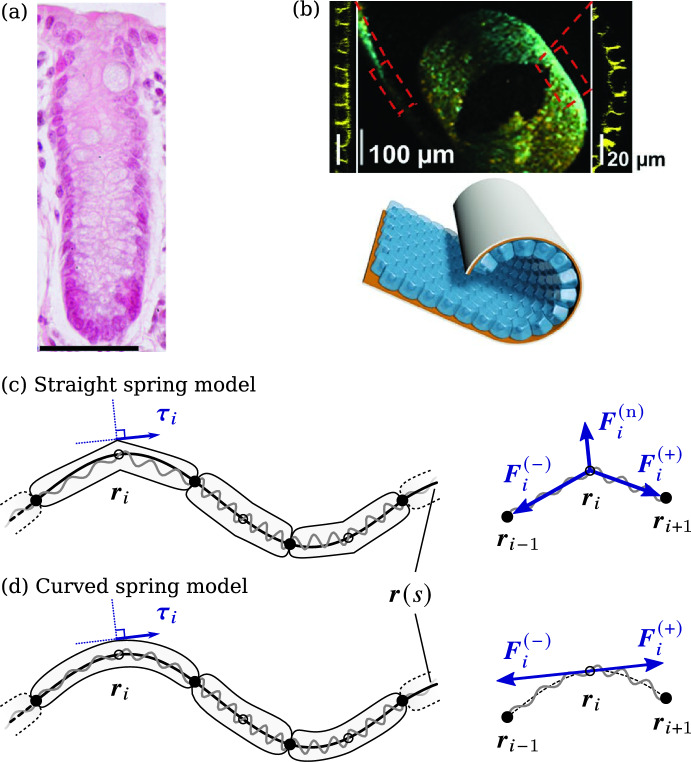
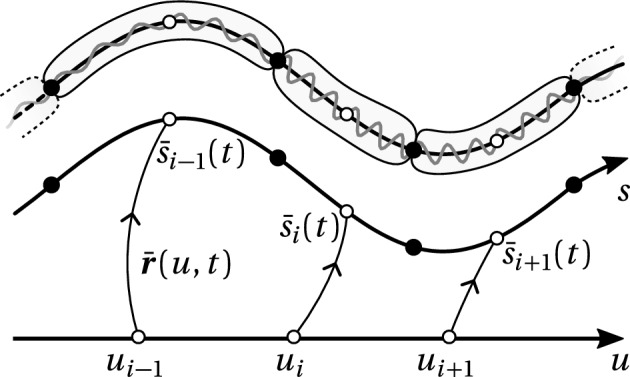
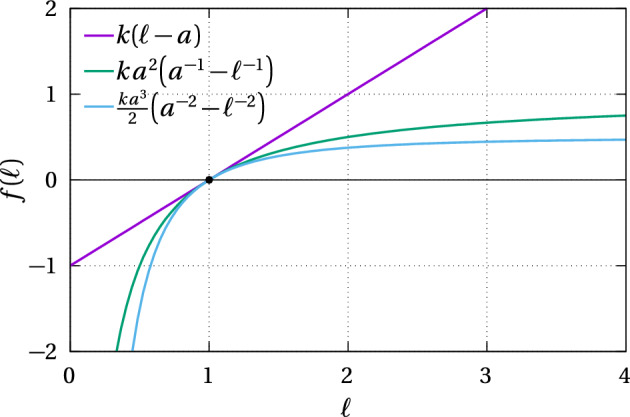
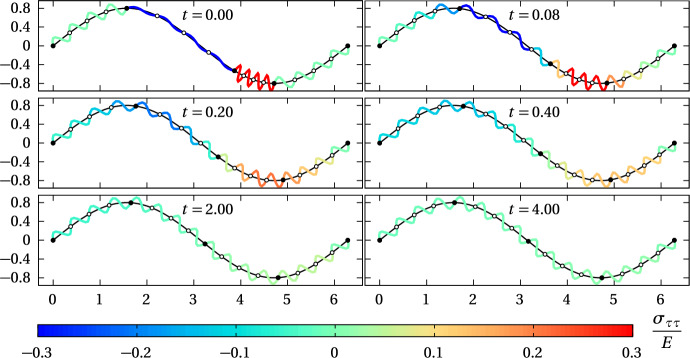
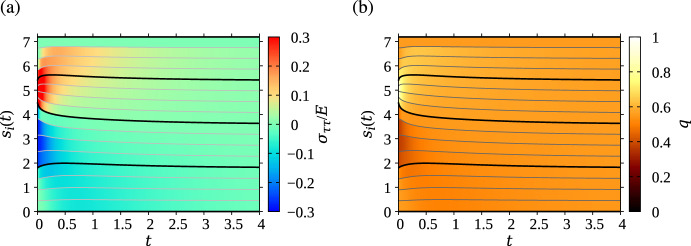
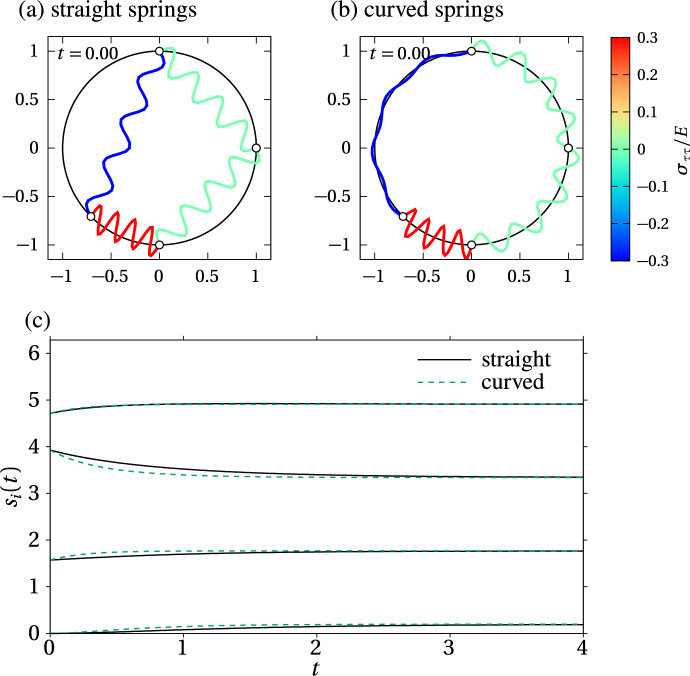
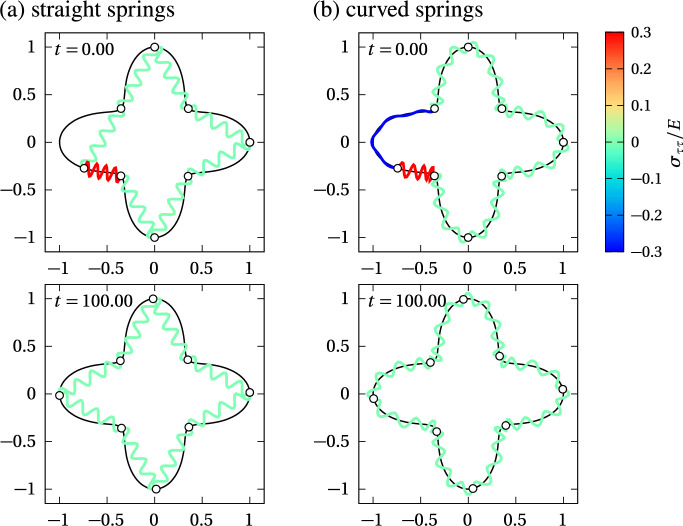
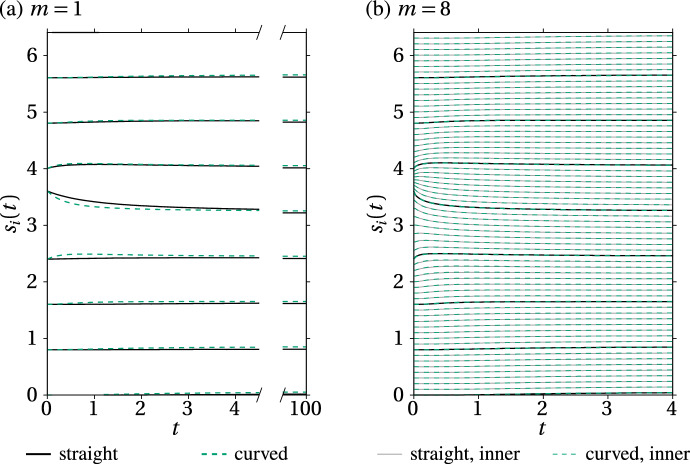
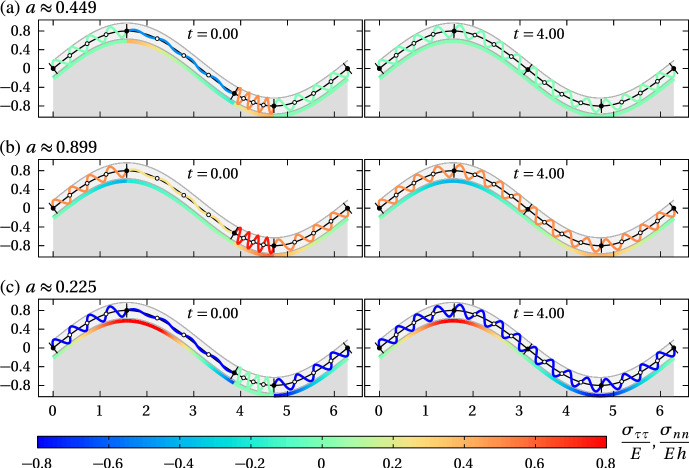
We propose a simple mathematical model to describe the mechanical relaxation of cells within a curved epithelial tissue layer represented by an arbitrary curve in two-dimensional space. This model generalises previous one-dimensional models of flat epithelia to investigate the influence of curvature for mechanical relaxation. We represent the mechanics of a cell body either by straight springs, or by curved springs that follow the curve's shape. To understand the collective dynamics of the cells, we devise an appropriate continuum limit in which the number of cells and the length of the substrate are constant but the number of springs tends to infinity. In this limit, cell density is governed by a diffusion equation in arc length coordinates, where diffusion may be linear or nonlinear depending on the choice of the spring restoring force law. Our results have important implications about modelling cells on curved geometries: (i) curved and straight springs can lead to different dynamics when there is a finite number of springs, but they both converge quadratically to the dynamics governed by the diffusion equation; (ii) in the continuum limit, the curvature of the tissue does not affect the mechanical relaxation of cells within the layer nor their tangential stress; (iii) a cell's normal stress depends on curvature due to surface tension induced by the tangential forces. Normal stress enables cells to sense substrate curvature at length scales much larger than their cell body, and could induce curvature dependences in experiments.
我们提出了一个简单的数学模型,用于描述二维空间中由任意曲线表示的弯曲上皮组织层内细胞的力学松弛。该模型将先前关于扁平上皮的一维模型进行了推广,以研究曲率对力学松弛的影响。我们用直弹簧或遵循曲线形状的弯曲弹簧来表示细胞体的力学特性。为了理解细胞的集体动力学,我们设计了一个合适的连续极限,其中细胞数量和底物长度保持不变,但弹簧数量趋于无穷大。在这个极限下,细胞密度由弧长坐标中的扩散方程控制,扩散可能是线性的,也可能是非线性的,这取决于弹簧恢复力定律的选择。我们的结果对于在弯曲几何形状上对细胞进行建模具有重要意义:(i)当弹簧数量有限时,弯曲弹簧和直弹簧可能导致不同的动力学,但它们都以二次方的方式收敛到由扩散方程控制的动力学;(ii)在连续极限中,组织的曲率不影响层内细胞的力学松弛及其切向应力;(iii)由于切向力引起的表面张力,细胞的法向应力取决于曲率。法向应力使细胞能够在比其细胞体大得多的长度尺度上感知底物曲率,并可能在实验中诱导曲率依赖性。