Tan Guozhu, Zhong Qinjie, Zhang Jibin, He Peiyi, Zhao Xiaoxi, Miao Guifeng, Xu Yafei, Wang Xiaorui
Department of Orthopaedics and Traumatology, The Seventh Affiliated Hospital, Southern Medical University 528000, Foshan, Guangdong Province, China.
Biomaterials Research Center, School of Biomedical Engineering, Southern Medical University 510515, Guangzhou, Guangdong Province, China.
Theranostics. 2025 Jan 1;15(3):943-964. doi: 10.7150/thno.100597. eCollection 2025.
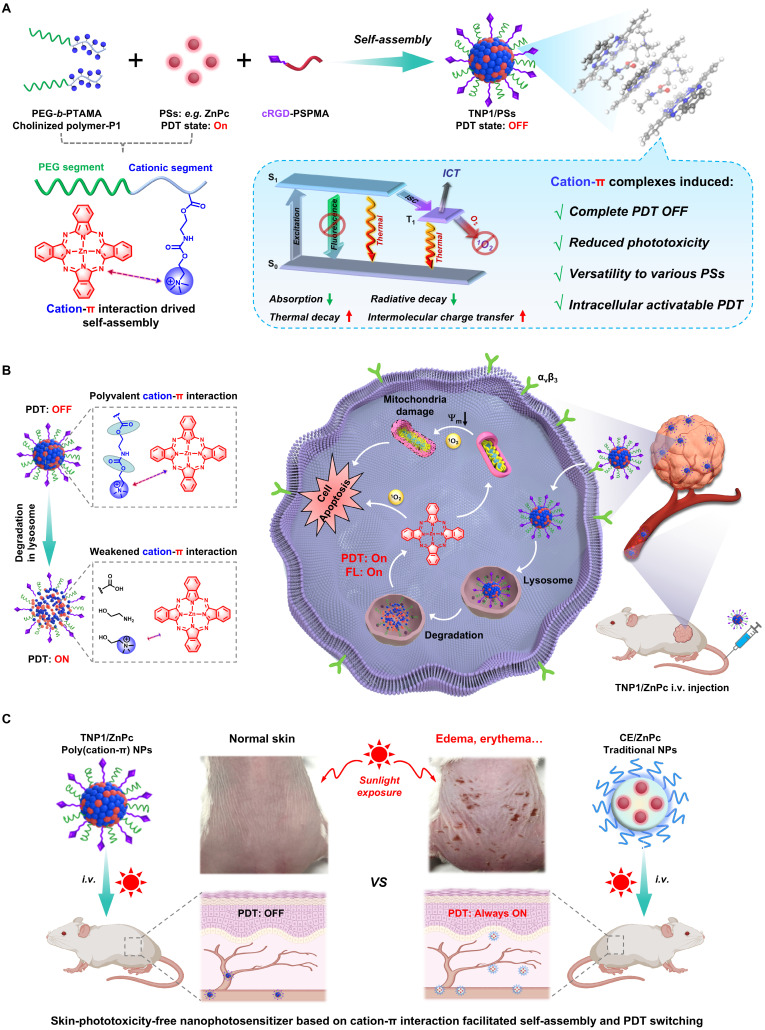
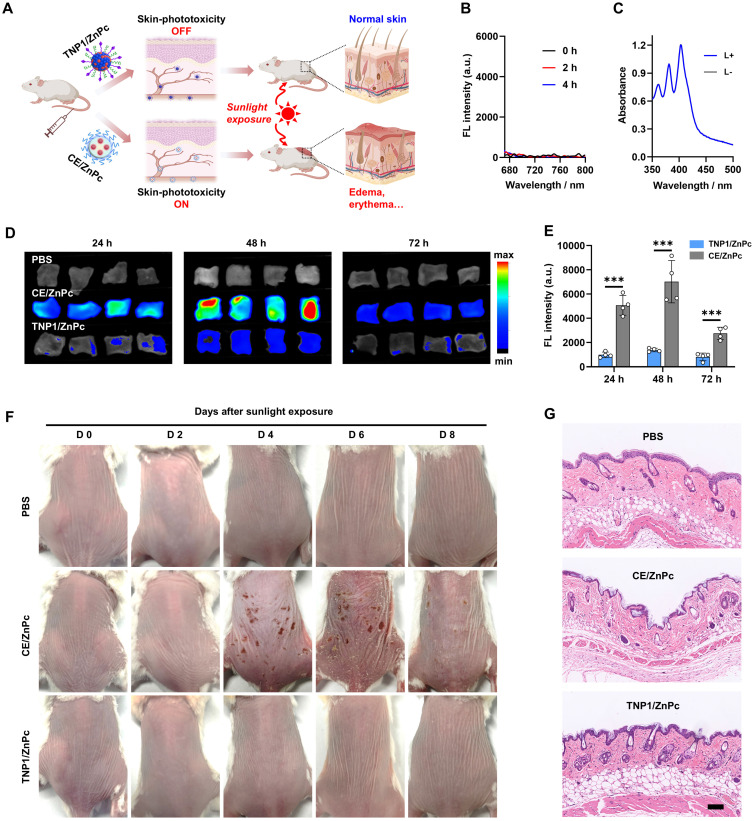
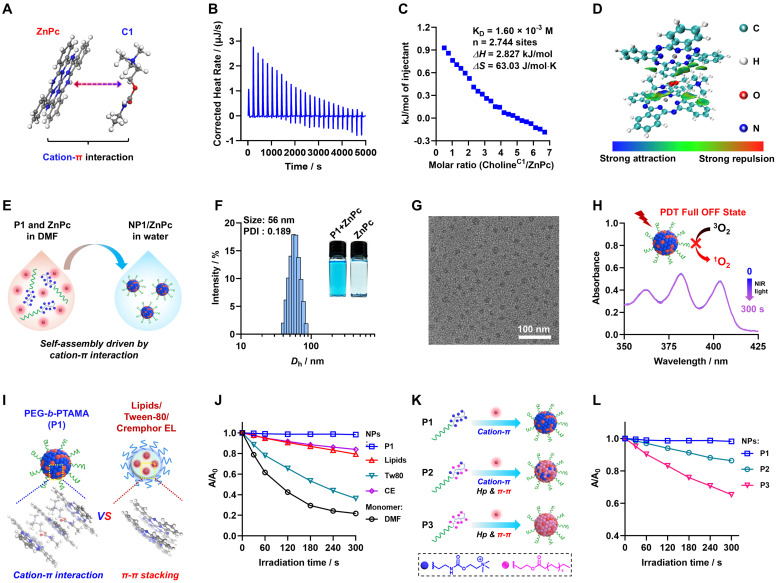
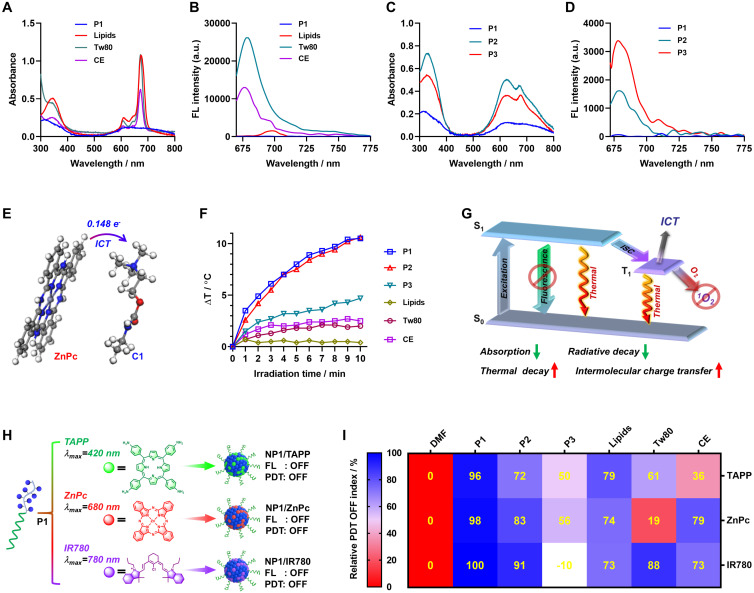
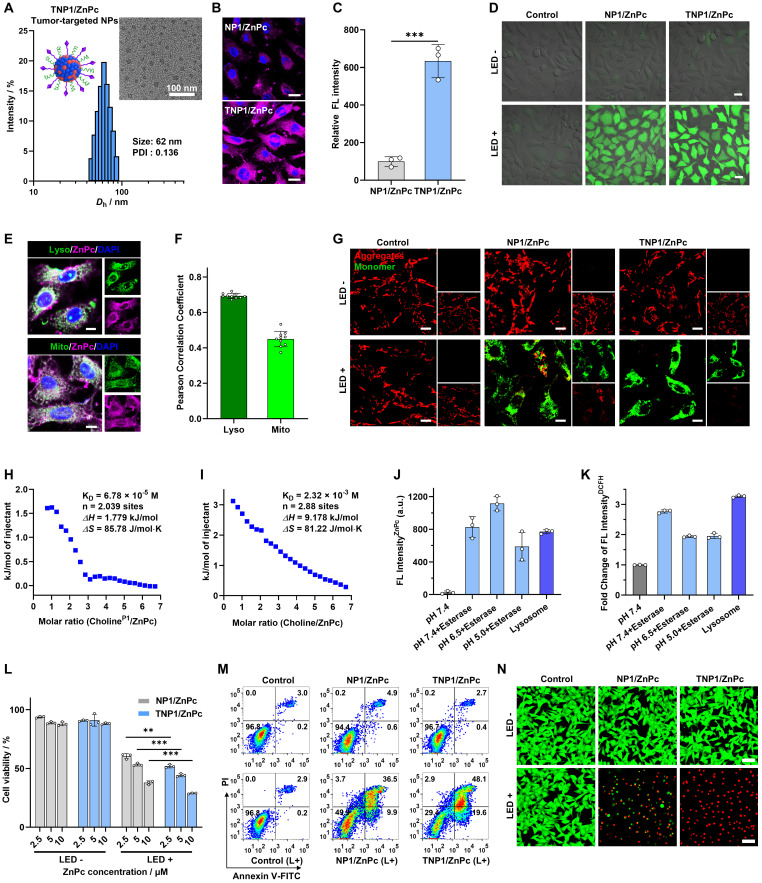
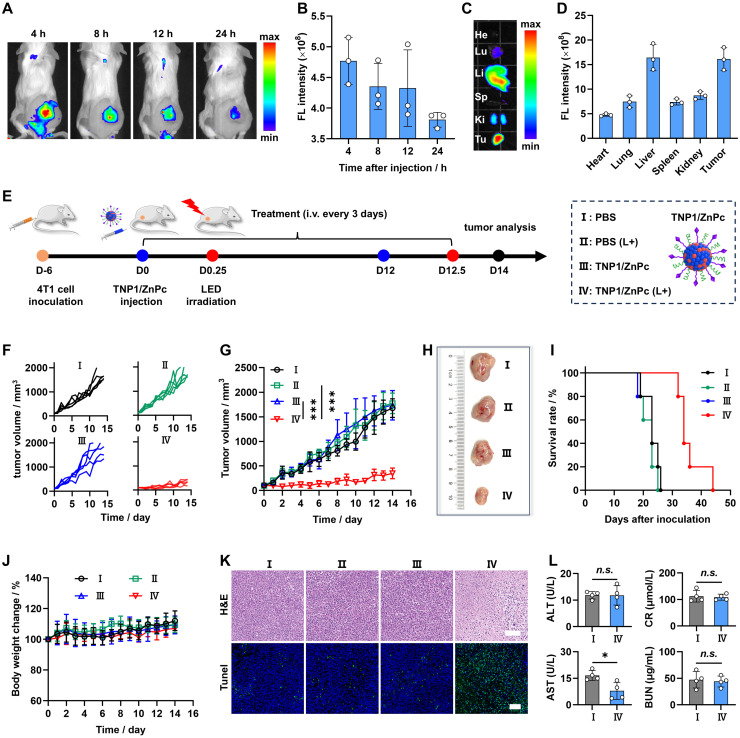
Photodynamic therapy (PDT) has gained widespread attention in cancer treatment, but it still faces clinical problems such as skin phototoxicity. Activatable photosensitizers offer a promising approach to addressing this issue. However, several significant hurdles need to be overcome, including developing effective activation strategies and achieving the optimal balance between photodynamic effects and related side effects. Herein, we present a novel and general strategy for the construction of tumor-targeted activatable nanophotosensitizers (TNP1/PSs). TNP1/PSs were constructed through simple nanoprecipitation method, leveraging the strong cation-π interaction between cationic polymers and aromatic photosensitizers. We conducted a comprehensive characterization and investigation of the photoactivity, as well as the mechanisms underlying both OFF state and switched-on properties of TNP1/PSs. Additionally, we thoroughly evaluated the cytotoxicity, tumor-targeted ability, and anti-tumor efficacy of TNP1/PSs in the 4T1 cell line. TNP1/PSs exhibit a markedly fully OFF state of photoactivity, subsequent to self-assembly through cation-π interactions in aqueous media. The mechanism study reveals a multi-pathway process induced by cation-π complexes, which includes reduced absorption and radiative decay, as well as enhanced thermal decay and intermolecular charge transfer. Upon targeting tumor cells, TNP1/PSs were effectively endocytosed and predominantly traversed the lysosomes, where degradation of the cationic polymer occurs, resulting in the spontaneous switch-on of PDT activity. studies employing small animal models demonstrated that the as-synthesized nanophotosensitizer possesses remarkable anti-tumor activity while completely avoiding skin phototoxicity. This work provides a powerful platform for efficiently constructing tumor-targeted activatable nanophotosensitizers, paving the way for safe and effective photodynamic therapy in cancer treatment.
光动力疗法(PDT)在癌症治疗中已受到广泛关注,但它仍面临诸如皮肤光毒性等临床问题。可激活光敏剂为解决这一问题提供了一种有前景的方法。然而,仍有几个重大障碍需要克服,包括开发有效的激活策略以及在光动力效应和相关副作用之间实现最佳平衡。在此,我们提出了一种构建肿瘤靶向可激活纳米光敏剂(TNP1/PSs)的新颖且通用的策略。TNP1/PSs通过简单的纳米沉淀法构建,利用阳离子聚合物与芳香族光敏剂之间强大的阳离子 - π相互作用。我们对TNP1/PSs的光活性以及关闭状态和开启特性的潜在机制进行了全面表征和研究。此外,我们在4T1细胞系中全面评估了TNP1/PSs的细胞毒性、肿瘤靶向能力和抗肿瘤疗效。TNP1/PSs在水性介质中通过阳离子 - π相互作用自组装后,呈现出明显的完全关闭状态的光活性。机制研究揭示了由阳离子 - π复合物诱导的多途径过程,其中包括吸收和辐射衰减降低,以及热衰减和分子间电荷转移增强。靶向肿瘤细胞后,TNP1/PSs被有效地内吞,并主要穿过溶酶体,在那里阳离子聚合物发生降解,导致PDT活性自发开启。使用小动物模型的研究表明,合成的纳米光敏剂具有显著的抗肿瘤活性,同时完全避免了皮肤光毒性。这项工作为高效构建肿瘤靶向可激活纳米光敏剂提供了一个强大的平台,为癌症治疗中安全有效的光动力疗法铺平了道路。