Li Min, Zheng Rong, Liu Zairu, Zhang Peiyuan, Zhu Tingwei, Xin Xueyi, Zhao Hongli, Chen Wenyi, Zheng Binjiao, Zhao Ai, Gao Jimin
Key Laboratory of Laboratory Medicine, Ministry of Education, School of Laboratory Medicine and Life Science, Wenzhou Medical University, Wenzhou, China.
Yicheng County People's Hospital, Linfen, Shanxi, China.
Front Immunol. 2024 Dec 24;15:1502936. doi: 10.3389/fimmu.2024.1502936. eCollection 2024.
Challenges remain in reducing antigen escape and tumor recurrence while CAR-T cell therapy has substantially improved outcomes in the treatment of multiple myeloma. T cell receptor fusion construct (TRuC)-T cells, which utilize intact T cell receptor (TCR)-CD3 complex to eliminate tumor cells in a non-major histocompatibility complex (MHC)-restricted manner, represent a promising strategy. Moreover, interleukin-7 (IL-7) is known to enhance the proliferation and survival of T cells. C-C motif chemokine ligand 21 (CCL21) is a ligand for chemokine C-C motif receptor 7 (CCR7) and exhibits strong chemotaxis against naïve T cells and antigen-presenting cells such as dendritic cells.
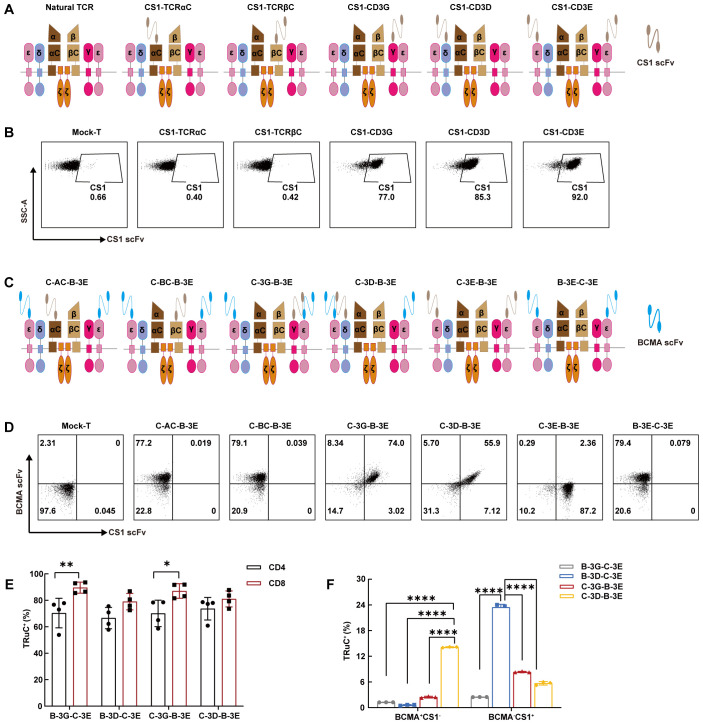
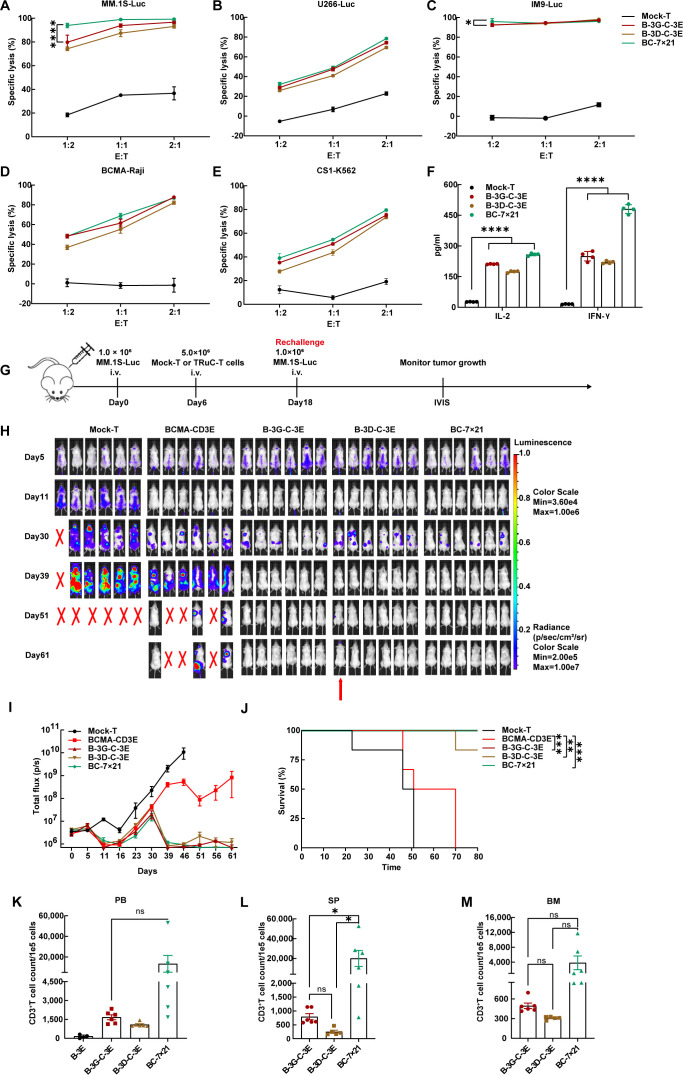
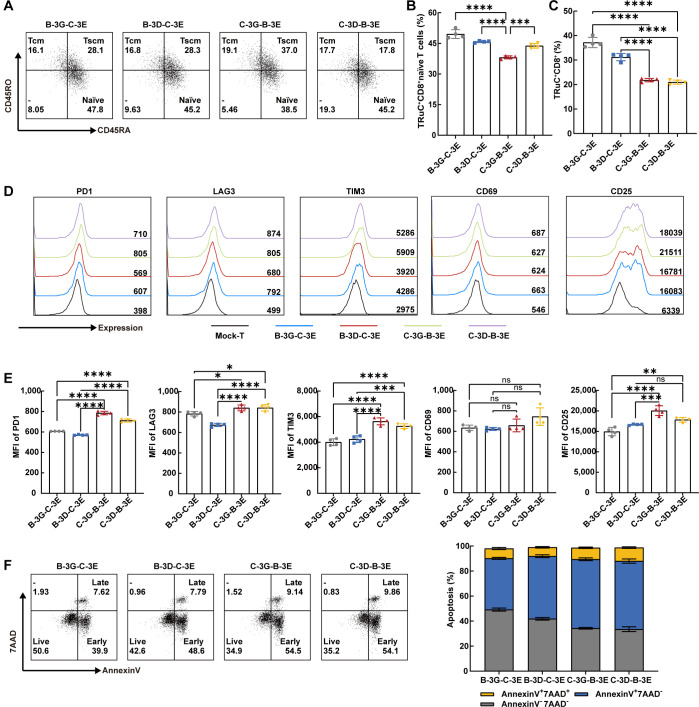
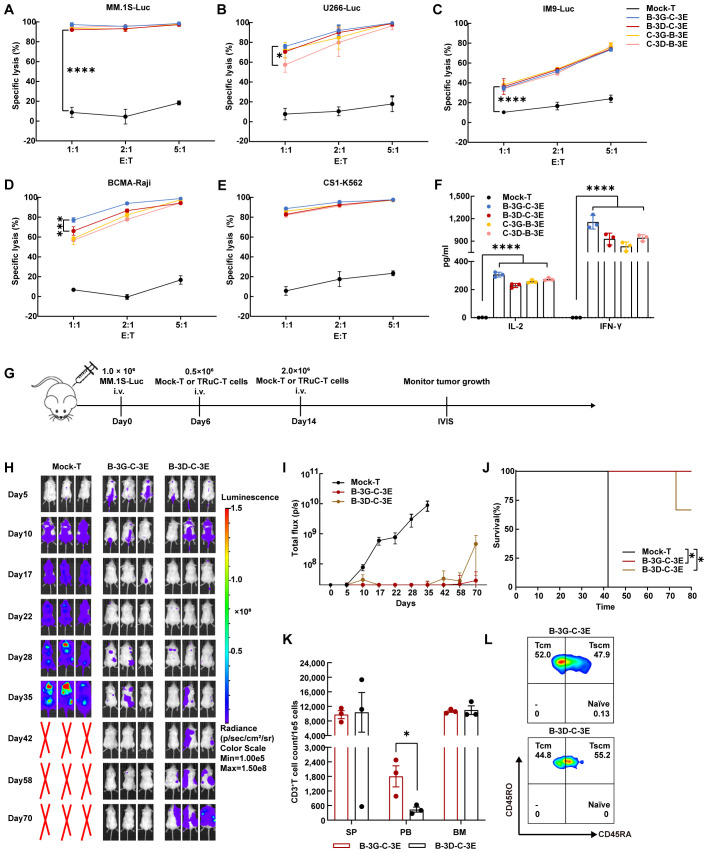
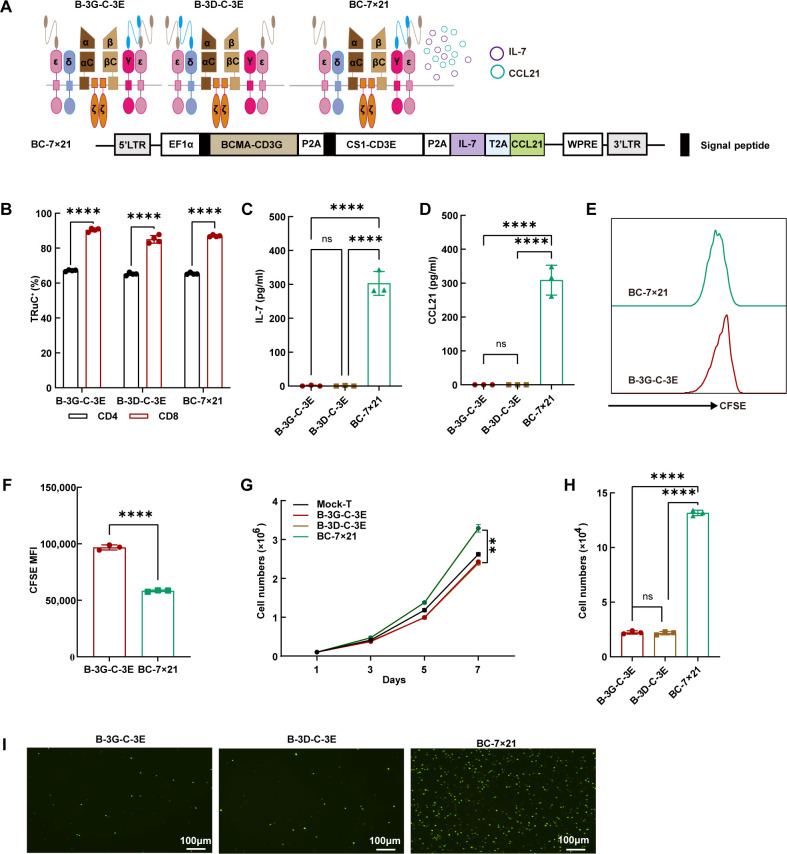
The bispecific TRuC-T cells simultaneously targeting B cell maturation antigen (BCMA) and CD2 subset 1 (CS1) were constructed by pairing two of five subunits (i.e., TCRαC, TCRβC, CD3γ, CD3δ, and CD3ϵ) in the TCR/CD3 complex and were named C-AC-B-3E, C-BC-B-3E, C-3G-B-3E, C-3D-B-3E, C-3E-B-3E, B-3E-C-3E, B-3G-C-3E, and B-3D-C-3E. Additionally, the BCMA/CS1 bispecific TRuC-T cells secreting IL-7 and CCL21, named BC-7×21 TRuC-T cells, were generated. All of the bispecific TRuC-T cells were characterized and tested and .
Following the optimization of various pairs of two subunits of TCR/CD3 complex, B-3G-C-3E TRuC-T cells, characterized by incorporating CD3γ and CD3ε, exhibited the strongest myeloma-specific cytotoxicity. Furthermore, the bispecific BC-7×21 TRuC-T cells had stronger proliferation, chemotaxis, and cytotoxicity . Accordingly, the bispecific BC-7×21 TRuC-T cells showed better persistence in vivo so as to effectively suppress tumor growth in the NCG mouse xenograft model of MM.1S multiple myeloma.
This study demonstrated that BC-7×21 TRuC-T cells, engineered through the optimization of the two subunits of TCR/CD3 complex and a co-expression cytokine strategy, may offer a novel and effective therapy for relapsed/refractory multiple myeloma.
虽然嵌合抗原受体T细胞(CAR-T)疗法在多发性骨髓瘤的治疗中显著改善了治疗效果,但在减少抗原逃逸和肿瘤复发方面仍存在挑战。T细胞受体融合构建体(TRuC)-T细胞利用完整的T细胞受体(TCR)-CD3复合物以非主要组织相容性复合体(MHC)限制的方式消除肿瘤细胞,是一种很有前景的策略。此外,已知白细胞介素-7(IL-7)可增强T细胞的增殖和存活。C-C基序趋化因子配体21(CCL21)是趋化因子C-C基序受体7(CCR7)的配体,对幼稚T细胞和树突状细胞等抗原呈递细胞具有很强的趋化作用。
通过将TCR/CD3复合物中的五个亚基(即TCRαC、TCRβC、CD3γ、CD3δ和CD3ε)中的两个配对,构建同时靶向B细胞成熟抗原(BCMA)和CD2亚群1(CS1)的双特异性TRuC-T细胞,并将其命名为C-AC-B-3E、C-BC-B-3E、C-3G-B-3E、C-3D-B-3E、C-3E-B-3E、B-3E-C-3E、B-3G-C-3E和B-3D-C-3E。此外,还产生了分泌IL-7和CCL21的BCMA/CS1双特异性TRuC-T细胞,命名为BC-7×21 TRuC-T细胞。对所有双特异性TRuC-T细胞进行了表征和测试。
在优化TCR/CD3复合物的两个亚基的各种配对后,以包含CD3γ和CD3ε为特征的B-3G-C-3E TRuC-T细胞表现出最强的骨髓瘤特异性细胞毒性。此外,双特异性BC-7×21 TRuC-T细胞具有更强的增殖、趋化和细胞毒性。因此,双特异性BC-7×21 TRuC-T细胞在体内表现出更好的持久性,从而有效抑制MM.1S多发性骨髓瘤的NCG小鼠异种移植模型中的肿瘤生长。
本研究表明,通过优化TCR/CD3复合物的两个亚基和共表达细胞因子策略构建的BC-7×21 TRuC-T细胞可能为复发/难治性多发性骨髓瘤提供一种新的有效治疗方法。