
分泌四价双特异性串联抗体(CD3/BCMA)的人脐带间充质干细胞的构建及其在治疗多发性骨髓瘤中的疗效
Construction of tetravalent bispecific Tandab (CD3/BCMA)-secreting human umbilical cord mesenchymal stem cells and its efficiency in the treatment of multiple myeloma.
作者信息
Xiong Mengshang, Kong Chunfang, Lu Yang, Liu Jiaojun, Ding Weirong, Zhang Tingting, Zuo Wei, Cao Lixia, Lu Qiling, Li Anna, Li Chaoyu, Ding Liting, Yan Yutao, Ke Bo, Wan Caishui
机构信息
Department of Hematology, Jiangxi Provincial People's Hospital, The First Affiliated Hospital of Nanchang Medical College, Nanchang, 330006, China.
Jiangxi Province Key Laboratory of Hematologic Diseases, Nanchang, 330006, China.
出版信息
Stem Cell Res Ther. 2025 Feb 12;16(1):69. doi: 10.1186/s13287-025-04212-w.
BACKGROUND
Highly efficient targeted therapy is urgently needed for multiple myeloma (MM). Mesenchymal stem cells (MSCs) are an attractive candidate of cell-based, targeted therapy due to their inherent tumor tropism. However, there is still no MSCs-based tandem diabody for treating MM.
METHODS
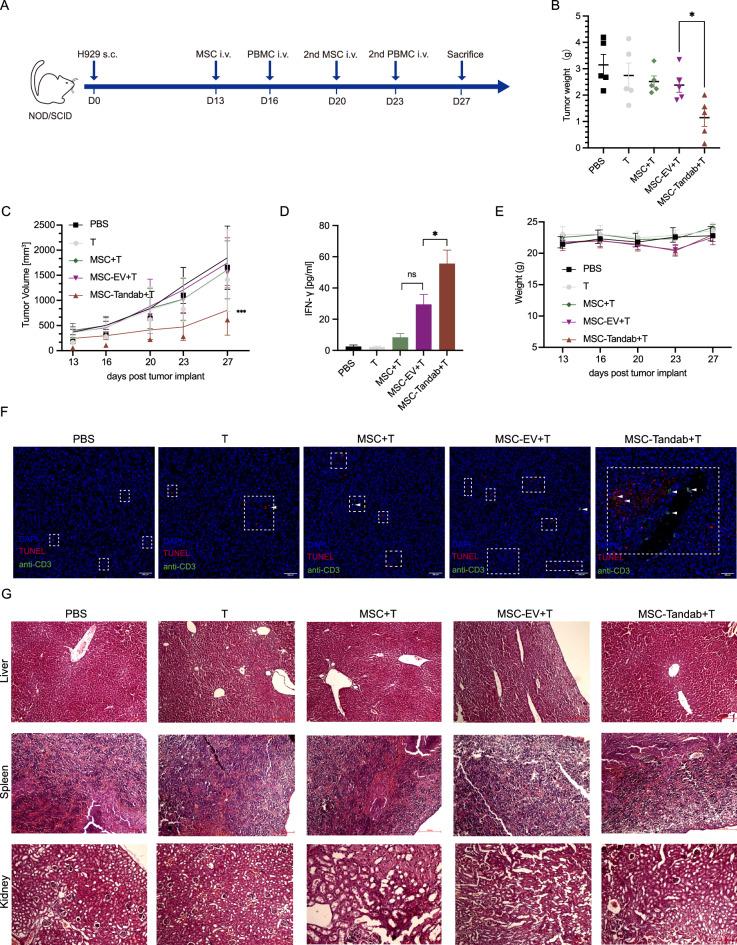
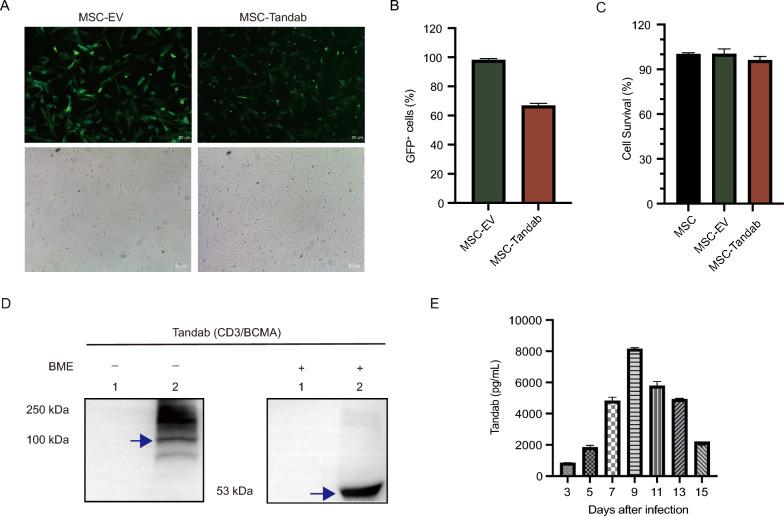
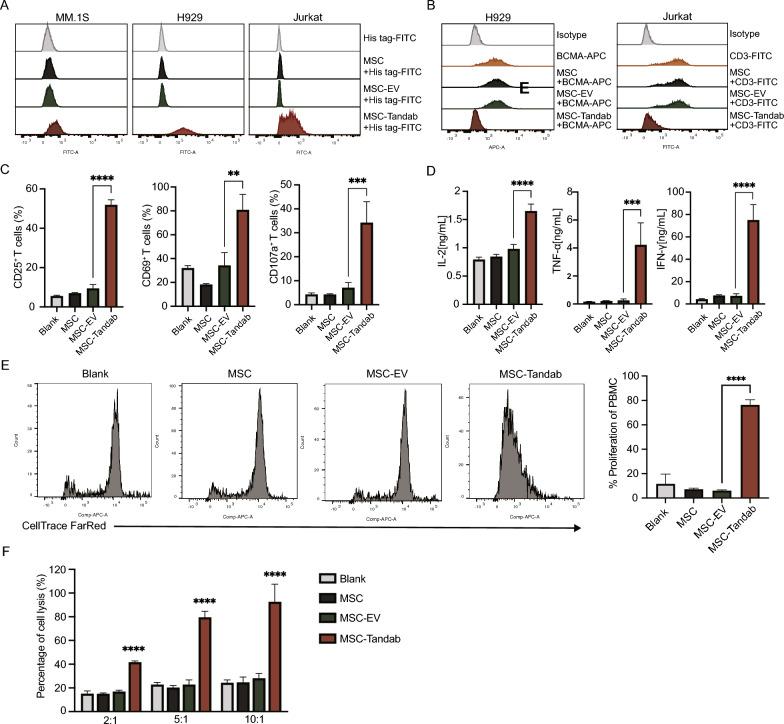
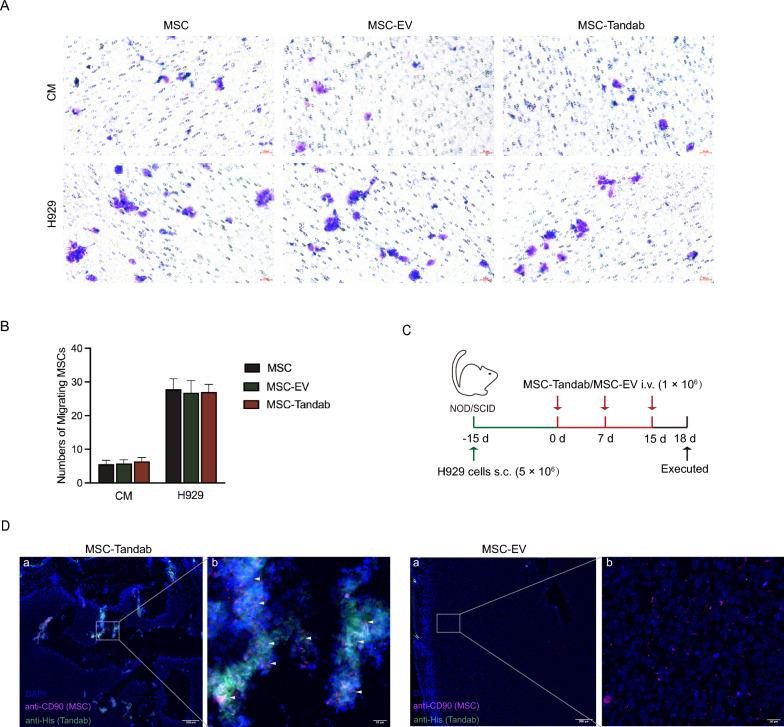
Here, we designed a dual-target therapeutic system in which human umbilical cord MSCs (UCMSCs) were engineered to produce and deliver Tandab (CD3/BCMA), a tetravalent bispecific tandem diabody with two binding sites for CD3 and two for B-cell maturation antigen (BCMA). Western blot and flow cytometry were used to confirm the lentivirus-mediated construction of UCMSCs for diabody expression. The tropism of MSCs towards H929 cells in vitro was determined by migration assays, and the in vivo homing capacity of MSCs was analyzed by immunofluorescence staining. The activation and antitumor efficacy of human T cells mediated by MSCs secreting Tandab (CD3/BCMA) were evaluated in vitro. Finally, an MM xenograft NOD/SCID mouse model was established to investigate the therapeutic effect in vivo.
RESULTS
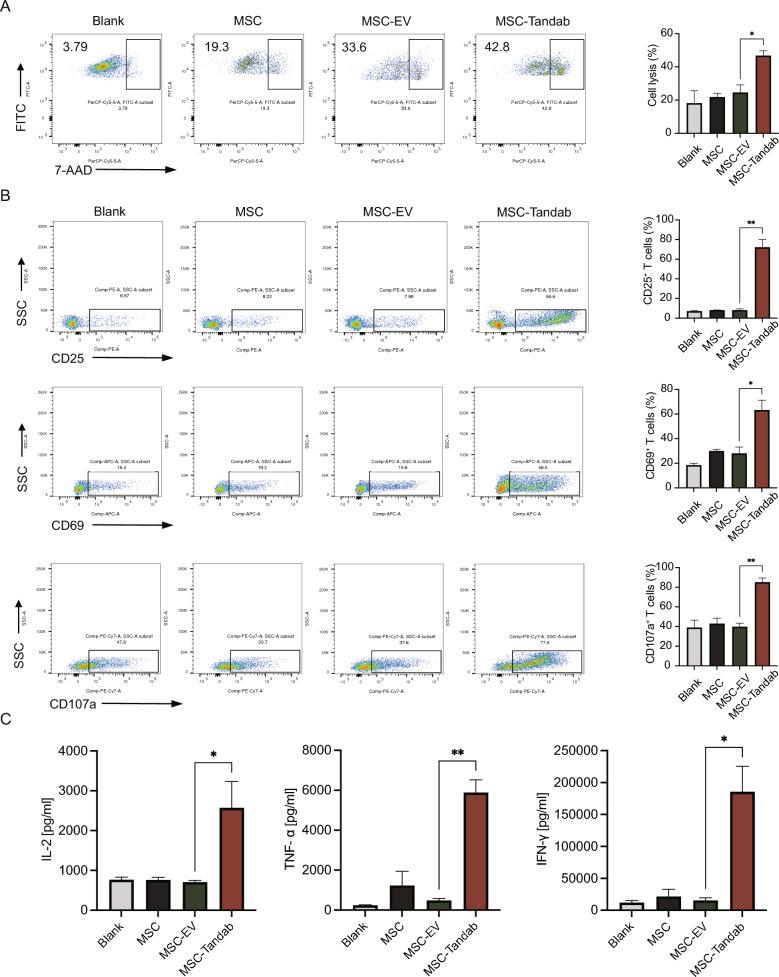
We successfully constructed MSCs that can continuously secrete bioactive Tandab (CD3/BCMA), whereby lentiviral transduction did not affect the morphology, proliferation, and lineage differentiation potential of the MSCs. The tropism of MSC-Tandab for MM was verified both in vitro and in vivo. Furthermore, MSC-Tandab promoted the expansion and activation of primary human T cells and induced healthy donor T cells to selectively eliminate BCMA-positive cell lines and primary blasts from patients but not BCMA-negative cells. A similar ability was also observed in the patient-derived T cells. Finally, MSC-Tandab significantly alleviated the MM xenograft tumor burden in NOD/SCID mice without toxic side effects in vivo, whereby the cytokine levels (IFN-γ) in the peripheral blood (PB) were higher in the MSC-Tandab group, and the tumor infiltration of T cells was significantly enhanced.
CONCLUSIONS
These results suggest that UCMSCs releasing Tandab (CD3/BCMA) are a promising new tool for the treatment of MM, opening a new avenue for the development of cell-based therapy.
背景
多发性骨髓瘤(MM)迫切需要高效的靶向治疗。间充质干细胞(MSCs)因其固有的肿瘤趋向性,是基于细胞的靶向治疗的有吸引力的候选者。然而,目前仍没有用于治疗MM的基于MSCs的串联双特异性抗体。
方法
在此,我们设计了一种双靶点治疗系统,其中工程化人脐带间充质干细胞(UCMSCs)以产生并递送Tandab(CD3/BCMA),这是一种四价双特异性串联双特异性抗体,具有两个针对CD3的结合位点和两个针对B细胞成熟抗原(BCMA)的结合位点。采用蛋白质免疫印迹法和流式细胞术确认慢病毒介导的UCMSCs构建体用于双特异性抗体表达。通过迁移试验测定MSCs在体外对H929细胞的趋向性,并通过免疫荧光染色分析MSCs在体内的归巢能力。在体外评估分泌Tandab(CD3/BCMA)的MSCs介导的人T细胞的活化和抗肿瘤功效。最后,建立MM异种移植NOD/SCID小鼠模型以研究体内治疗效果。
结果
我们成功构建了能够持续分泌生物活性Tandab(CD3/BCMA)的MSCs,慢病毒转导不影响MSCs的形态、增殖和谱系分化潜能。体外和体内均验证了MSC-Tandab对MM的趋向性。此外,MSC-Tandab促进原代人T细胞的扩增和活化,并诱导健康供体T细胞选择性消除BCMA阳性细胞系和患者的原代母细胞,但不消除BCMA阴性细胞。在患者来源的T细胞中也观察到类似的能力。最后,MSC-Tandab显著减轻了NOD/SCID小鼠体内MM异种移植肿瘤负担,且无体内毒性副作用,MSC-Tandab组外周血(PB)中的细胞因子水平(IFN-γ)较高,T细胞的肿瘤浸润显著增强。
结论
这些结果表明,释放Tandab(CD3/BCMA)的UCMSCs是治疗MM的一种有前景的新工具,为基于细胞的治疗开发开辟了一条新途径。


 Zotero 插件