Nguyen Dang Khoa, Kang Min-Jung, Oh Su-Jeong, Park Hee-Jeong, Kim Seong Hui, Yu Jeong Hyun, Lee Yunji, Lee Hyeon Seo, Yang Ji Won, Seo Yoojin, Ahn Ji-Su, Kim Hyung-Sik
Department of Oral Biochemistry, Dental and Life Science Institute, School of Dentistry, Pusan National University, Yangsan, Republic of Korea.
Department of Life Science in Dentistry, School of Dentistry, Pusan National University, Yangsan, Republic of Korea.
Anim Cells Syst (Seoul). 2024 Dec 21;29(1):24-34. doi: 10.1080/19768354.2024.2442401. eCollection 2025.
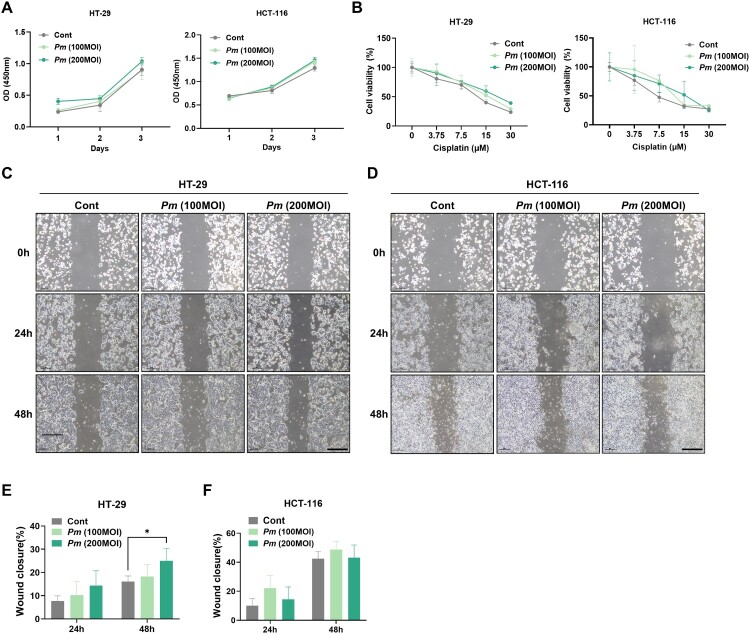
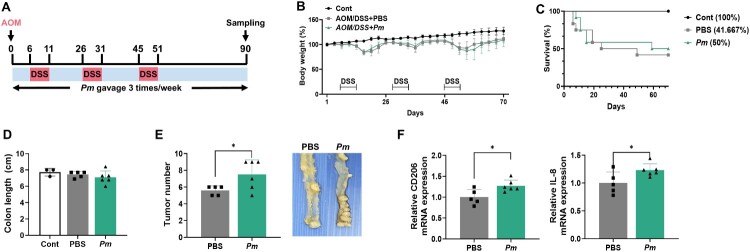
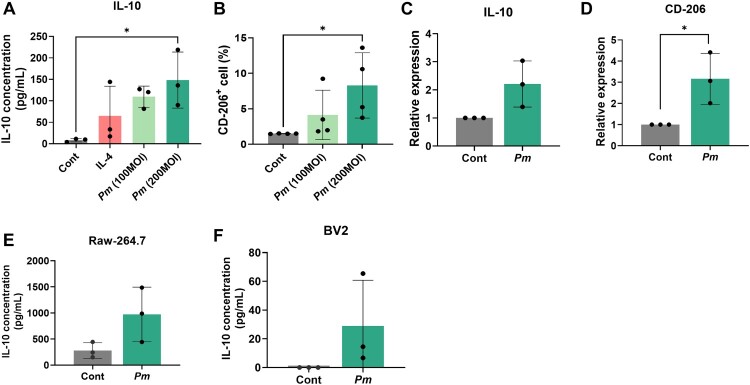
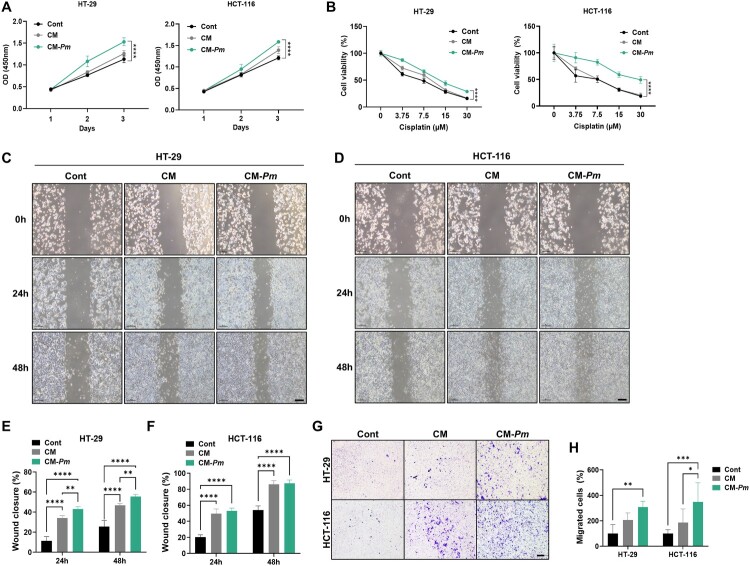
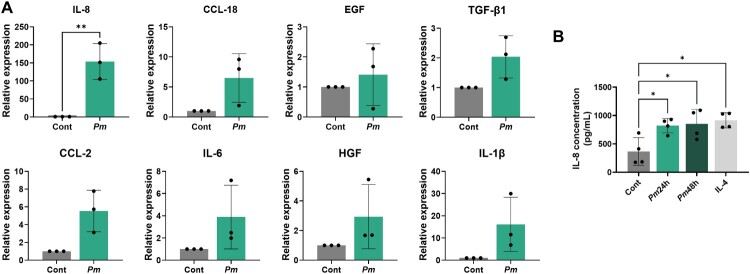
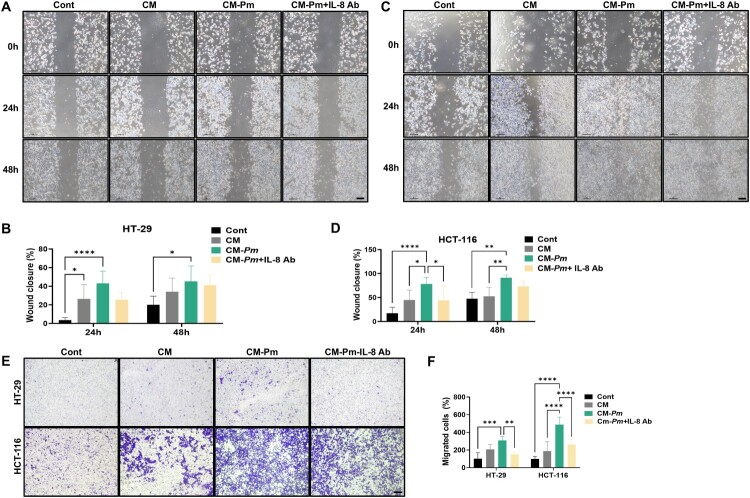
(), a periodontal pathogen, has been implicated in the impairment of anti-tumor responses in colorectal cancer (CRC). The tumor microenvironment in CRC involves tumor-associated macrophages (TAMs), which are pivotal in modulating tumor-associated immune responses. The polarization of TAMs towards an M2-like phenotype promotes CRC progression by suppressing the immune system. However, the mechanisms by which affects the progression of CRC remain inadequately elucidated. In this study, we explored the impact of infection on CRC cell characteristics, including proliferation, chemoresistance, migration, and macrophage polarization. We found that -infected THP-1-derived macrophages exhibited elevated interleukin-10 levels, a well-established M2 marker. Conditioned media from -treated THP-1 cells significantly enhanced CRC cell proliferation, cisplatin resistance, and migration, and interleukin-8 was identified as a key factor. Consistent with the in vitro results, an azoxymethane/dextran sodium sulfate mouse model treated with oral showed accelerated CRC tumor growth. These results offer mechanistic insights into the influence of infection on tumor microenvironment in CRC through M2-like macrophage polarization. The identified pathways may serve as potential targets for therapeutic interventions for CRC.
(某牙周病原体),一种牙周病原体,已被认为与结直肠癌(CRC)的抗肿瘤反应受损有关。CRC中的肿瘤微环境涉及肿瘤相关巨噬细胞(TAM),其在调节肿瘤相关免疫反应中起关键作用。TAM向M2样表型的极化通过抑制免疫系统促进CRC进展。然而,(该病原体)影响CRC进展的机制仍未得到充分阐明。在本研究中,我们探讨了(该病原体)感染对CRC细胞特性的影响,包括增殖、化疗耐药性、迁移和巨噬细胞极化。我们发现,受(该病原体)感染的THP-1衍生巨噬细胞表现出白细胞介素-10水平升高,白细胞介素-10是一种公认的M2标志物。来自经(该病原体)处理的THP-1细胞的条件培养基显著增强了CRC细胞的增殖、顺铂耐药性和迁移,并且白细胞介素-8被确定为关键因素。与体外结果一致,用口服(该病原体)处理的氧化偶氮甲烷/葡聚糖硫酸钠小鼠模型显示CRC肿瘤生长加速。这些结果为(该病原体)感染通过M2样巨噬细胞极化对CRC肿瘤微环境的影响提供了机制性见解。所确定的途径可能成为CRC治疗干预的潜在靶点。