Ai Ruoqi, Cui Ximin, Li Yang, Zhuo Xiaolu
College of Electronics and Information Engineering, Shenzhen University, Shenzhen, 518060, People's Republic of China.
School of Science and Engineering, The Chinese University of Hong Kong, Shenzhen, 518172, People's Republic of China.
Nanomicro Lett. 2025 Jan 8;17(1):104. doi: 10.1007/s40820-024-01611-1.
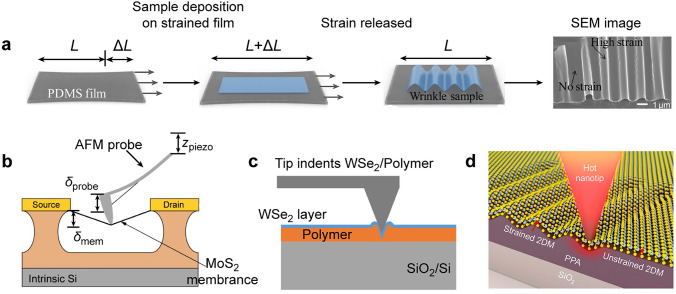
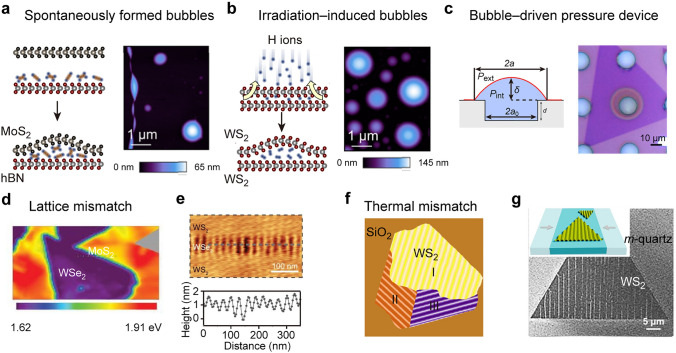
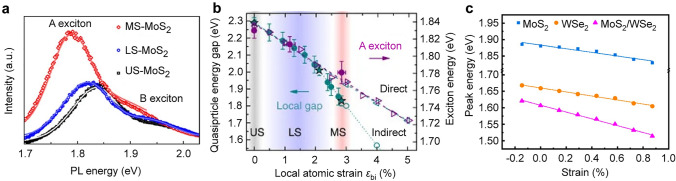
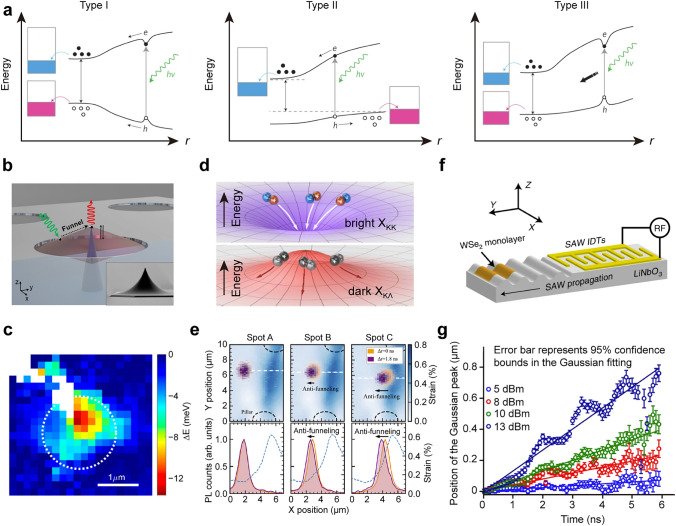
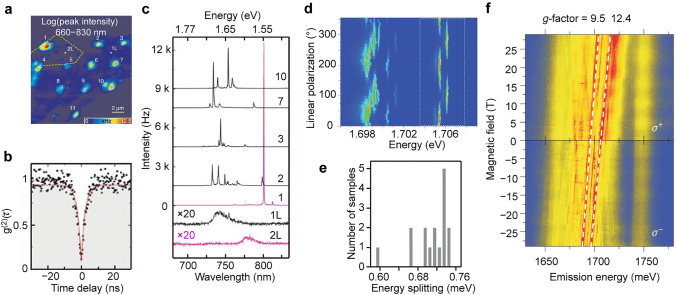
Two-dimensional transition metal dichalcogenides (2D TMDCs) have received considerable attention in local strain engineering due to their extraordinary mechanical flexibility, electonic structure, and optical properties. The strain-induced out-of-plane deformations in 2D TMDCs lead to diverse excitonic behaviors and versatile modulations in optical properties, paving the way for the development of advanced quantum technologies, flexible optoelectronic materials, and straintronic devices. Research on local strain engineering on 2D TMDCs has been delved into fabrication techniques, electronic state variations, and quantum optical applications. This review begins by summarizing the state-of-the-art methods for introducing local strain into 2D TMDCs, followed by an exploration of the impact of local strain engineering on optical properties. The intriguing phenomena resulting from local strain, such as exciton funnelling and anti-funnelling, are also discussed. We then shift the focus to the application of locally strained 2D TMDCs as quantum emitters, with various strategies outlined for modulating the properties of TMDC-based quantum emitters. Finally, we discuss the remaining questions in this field and provide an outlook on the future of local strain engineering on 2D TMDCs.
二维过渡金属二硫属化物(2D TMDCs)因其卓越的机械柔韧性、电子结构和光学特性,在局部应变工程领域受到了广泛关注。二维过渡金属二硫属化物中由应变引起的面外变形会导致多种激子行为以及光学特性的多样调制,为先进量子技术、柔性光电子材料和应变电子器件的发展铺平了道路。关于二维过渡金属二硫属化物局部应变工程的研究已深入到制造技术、电子态变化和量子光学应用等方面。本综述首先总结了将局部应变引入二维过渡金属二硫属化物的最新方法,接着探讨局部应变工程对光学特性的影响。还讨论了由局部应变产生的有趣现象,如激子漏斗效应和反漏斗效应。然后我们将重点转向局部应变二维过渡金属二硫属化物作为量子发射体的应用,并概述了各种用于调制基于过渡金属二硫属化物的量子发射体特性的策略。最后,我们讨论了该领域尚存的问题,并对二维过渡金属二硫属化物局部应变工程的未来发展进行了展望。