Du Bingran, Li Kaichen, Shen Zhiling, Cheng Yihang, Yu Jiayan, Pan Yaopeng, Huang Ziyan, Hu Fei, Rausch-Fan Xiaohui, Zhu Yuanpeng, Zhang Xueyang
Department of Stomatology, Shunde Hospital, Southern Medical University (The First People's Hospital of Shunde, Foshan), Foshan, 528308, Guangdong, China.
School of Mathematics, South China University of Technology, Guangzhou, 510641, Guangdong, China.
BMC Oral Health. 2025 Jan 8;25(1):42. doi: 10.1186/s12903-024-05345-9.
A comprehensive analysis of the occlusal plane (OP) inclination in predicting anteroposterior mandibular position (APMP) changes is still lacking. This study aimed to analyse the relationships between inclinations of different OPs and APMP metrics and explore the feasibility of OP inclination in predicting changes in APMP.
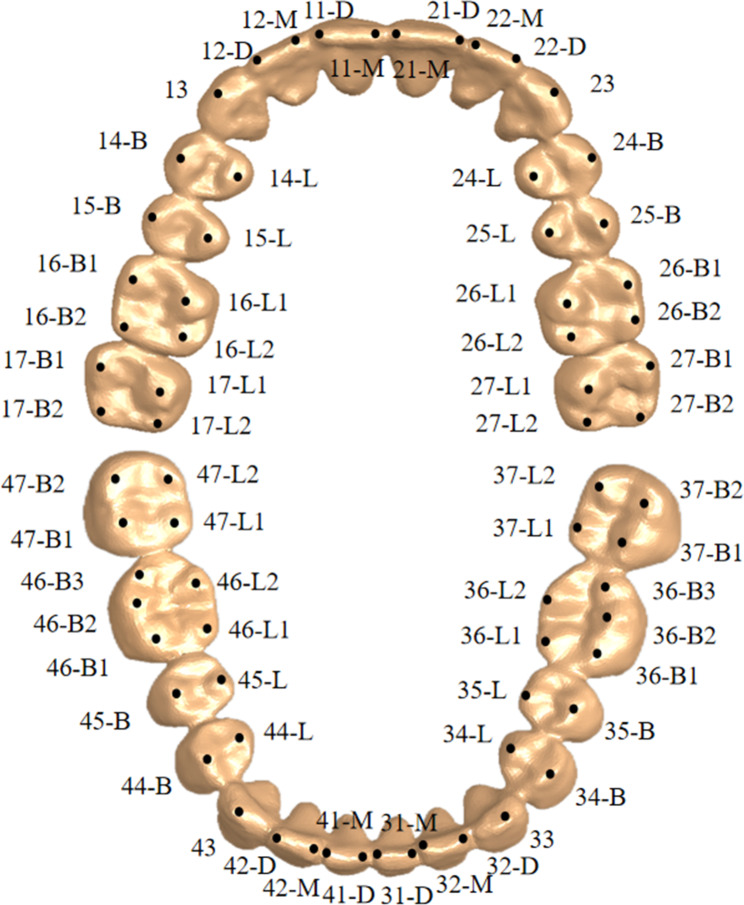
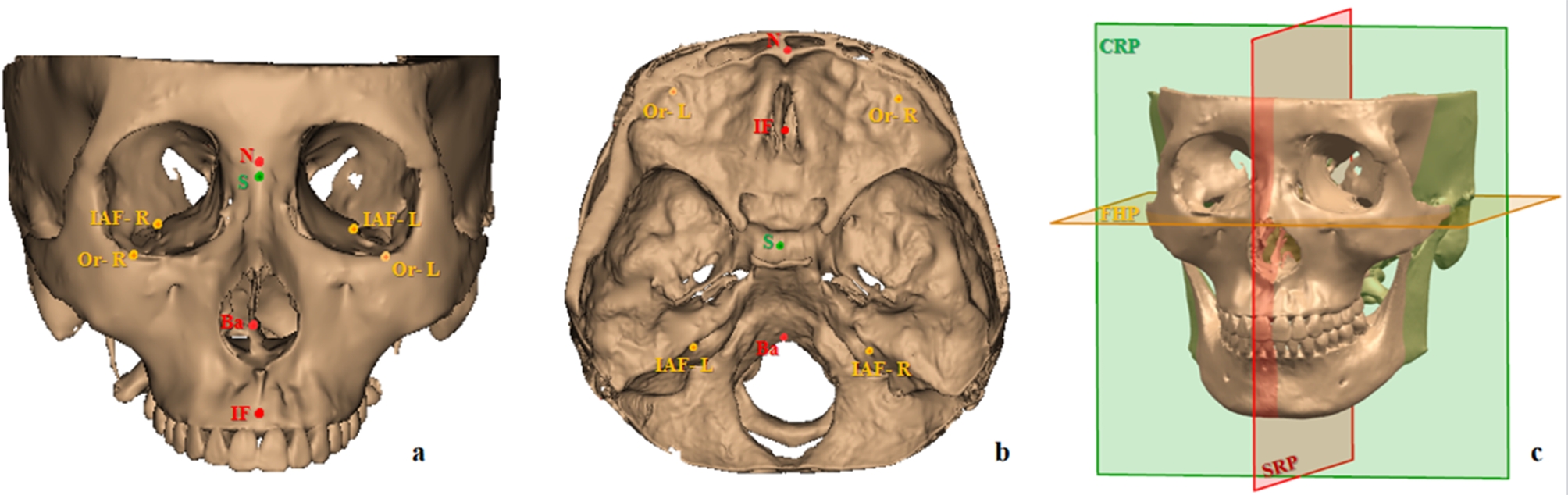
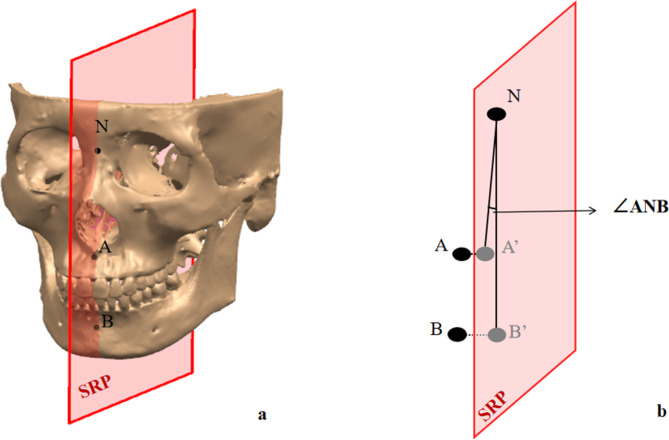
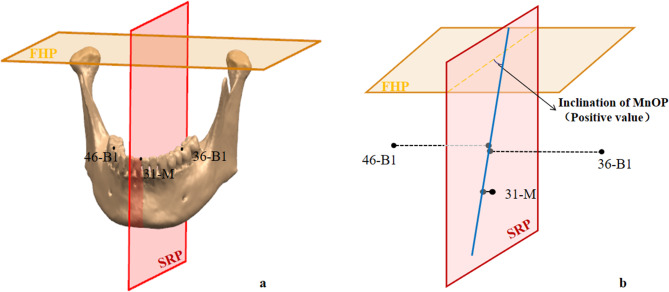
Overall, 115 three-dimensional (3D) models were reconstructed using deep learning-based cone-beam computed tomography (CBCT) segmentation, and their accuracy in supporting cusps was compared with that of intraoral scanning models. The anatomical landmarks of seven OPs and three APMP metrics were identified, and their values were measured on the sagittal reference plane. The receiver operating characteristic curves of inclinations of seven OPs in distinguishing different anteroposterior skeletal patterns and correlations between inclinations of these OPs and APMP metrics were calculated and compared. For the OP inclination with the highest area under the curve (AUC) values and correlation coefficients, the regression models between this OP inclination and APMP metrics were further calculated.
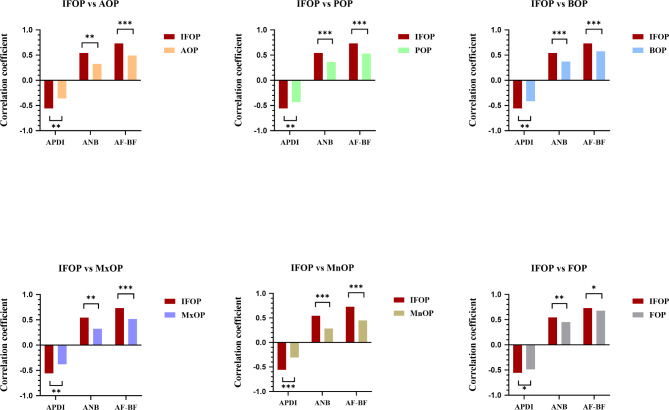
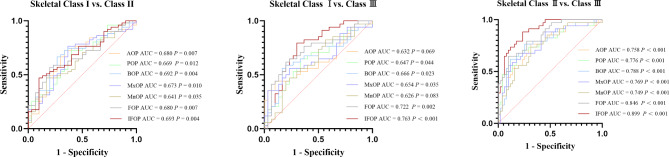
The deviations in supporting cusps between deep learning-based and intraoral scanning models were < 0.300 mm. The improved functional OP (IFOP) inclination could distinguish different skeletal classification determinations (AUC = 0.693, AUC = 0.763, AUC = 0.899, all P values < 0.01) and the AUC value in skeletal Classes II and III determination was statistically higher than the inclinations of other OPs (all P values < 0.01). Moreover, the IFOP inclination showed statistical correlations with APMP metrics (r = -0.557, r = 0.543, r = 0.731, all P values < 0.001) and had the highest correlation coefficients among all OP inclinations (all P values < 0.05). The regression analysis models of IFOP inclination and APMP metrics were y = -0.917x + 91.144, y = 0.395x + 0.292, and y = 0.738x - 2.331.
Constructing the OP using deep learning-based 3D models from CBCT data is feasible. IFOP inclination could be used in predicting the APMP changes. A steeper IFOP inclination corresponded to a more retrognathic mandibular posture.
目前仍缺乏对咬合平面(OP)倾斜度预测下颌前后位置(APMP)变化的全面分析。本研究旨在分析不同OP倾斜度与APMP指标之间的关系,并探讨OP倾斜度预测APMP变化的可行性。
总体而言,使用基于深度学习的锥束计算机断层扫描(CBCT)分割技术重建了115个三维(3D)模型,并将其支持牙尖的准确性与口内扫描模型进行了比较。确定了七个OP和三个APMP指标的解剖标志点,并在矢状参考平面上测量了它们的值。计算并比较了七个OP倾斜度在区分不同前后骨骼模式方面的受试者工作特征曲线,以及这些OP倾斜度与APMP指标之间的相关性。对于曲线下面积(AUC)值和相关系数最高的OP倾斜度,进一步计算了该OP倾斜度与APMP指标之间的回归模型。
基于深度学习的模型与口内扫描模型在支持牙尖方面的偏差<0.300mm。改良功能OP(IFOP)倾斜度能够区分不同的骨骼分类判定(AUC = 0.693、AUC = 0.763、AUC = 0.899,所有P值<0.01),且在骨骼II类和III类判定中的AUC值在统计学上高于其他OP的倾斜度(所有P值<0.01)。此外,IFOP倾斜度与APMP指标具有统计学相关性(r = -0.557、r = 0.543、r = 0.731,所有P值<0.001),并且在所有OP倾斜度中具有最高的相关系数(所有P值<0.05)。IFOP倾斜度与APMP指标的回归分析模型分别为y = -0.917x + 91.144、y = 0.395x + 0.292和y = 0.738x - 2.331。
利用基于深度学习的CBCT数据3D模型构建OP是可行的。IFOP倾斜度可用于预测APMP变化。IFOP倾斜度越陡,下颌后缩姿势越明显。